What Is the Best App to Learn Japanese in 2026: 7 Apps Compared

- WaniKani suits kanji and vocabulary through spaced repetition, while Bunpro suits grammar in the same structured style.
- LingoDeer suits beginners who want a full course with grammar notes, while Duolingo suits casual daily habit building.
- Busuu and Memrise suit speaking and vocabulary practice, while Rosetta Stone suits immersive listening and speaking.
- No single app covers everything, so pair a kanji or grammar app with speaking practice for balanced progress.
- Daily short sessions beat long rare sessions, so pick the app whose style keeps you coming back.
Quick comparison
| Product | Ideal for | Price from | Free version | |
|---|---|---|---|---|
 WaniKani | Kanji and vocabulary | See website | Free trial | Visit |
 Bunpro | Grammar study | See website | Free trial | Visit |
 LingoDeer | Structured beginner courses | See website | Yes | Visit |
 Duolingo | Daily habit building | Free | Yes | Visit |
 Busuu | Speaking and feedback | See website | Yes | Visit |
 Memrise | Vocabulary and listening | Free | Yes | Visit |
 Rosetta Stone | Immersive learning | See website | Free trial | Visit |
The best apps to learn Japanese
We compared official feature pages, pricing pages, app store listings, and public reviews for seven Japanese learning apps. Our pick for most beginners is LingoDeer for its structured course, with WaniKani close behind for learners who want serious kanji progress.
WaniKani
Ideal for: Kanji and vocabulary
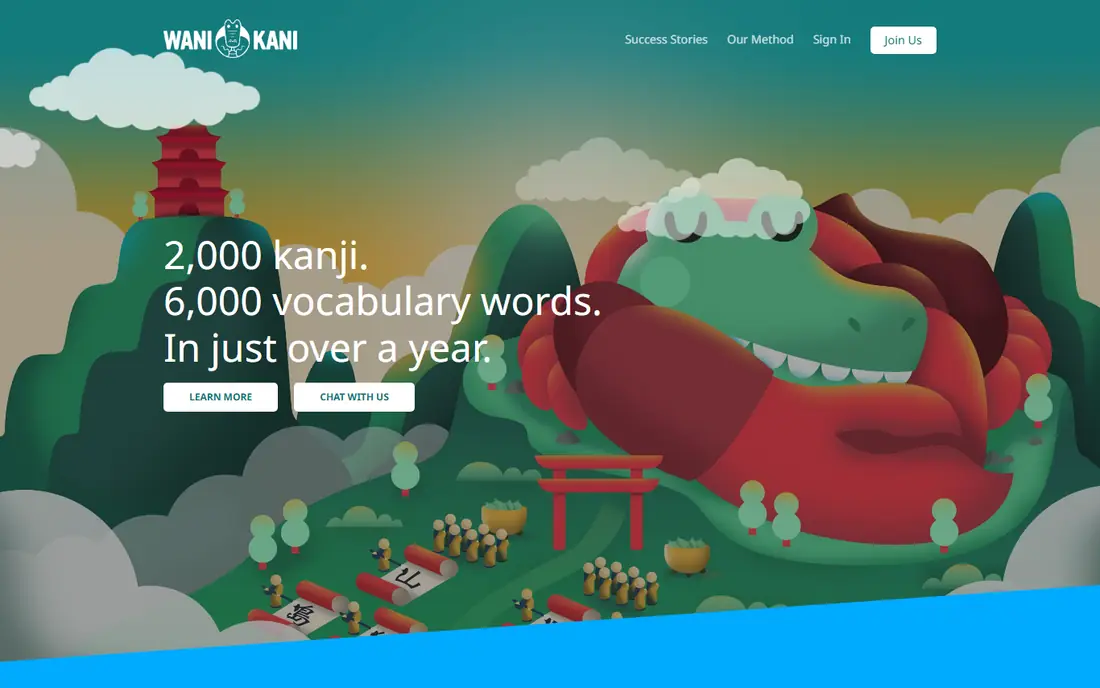
WaniKani teaches kanji through radicals, mnemonics, and spaced repetition, building from simple characters to complex ones across levels. Each kanji comes with readings and vocabulary, so you learn characters in context rather than as isolated shapes. The review system brings items back just before you forget them, which suits long-term memory.
WaniKani does not teach grammar or conversation, so you need another app for those skills. The free levels cover the start, but serious progress needs a subscription. For learners who want to read Japanese, WaniKani is the most effective kanji tool in this list.
- Structured kanji levels
- Mnemonics for readings
- Spaced repetition
- Kanji focus only
- Subscription needed after early levels
Bunpro
Ideal for: Grammar study
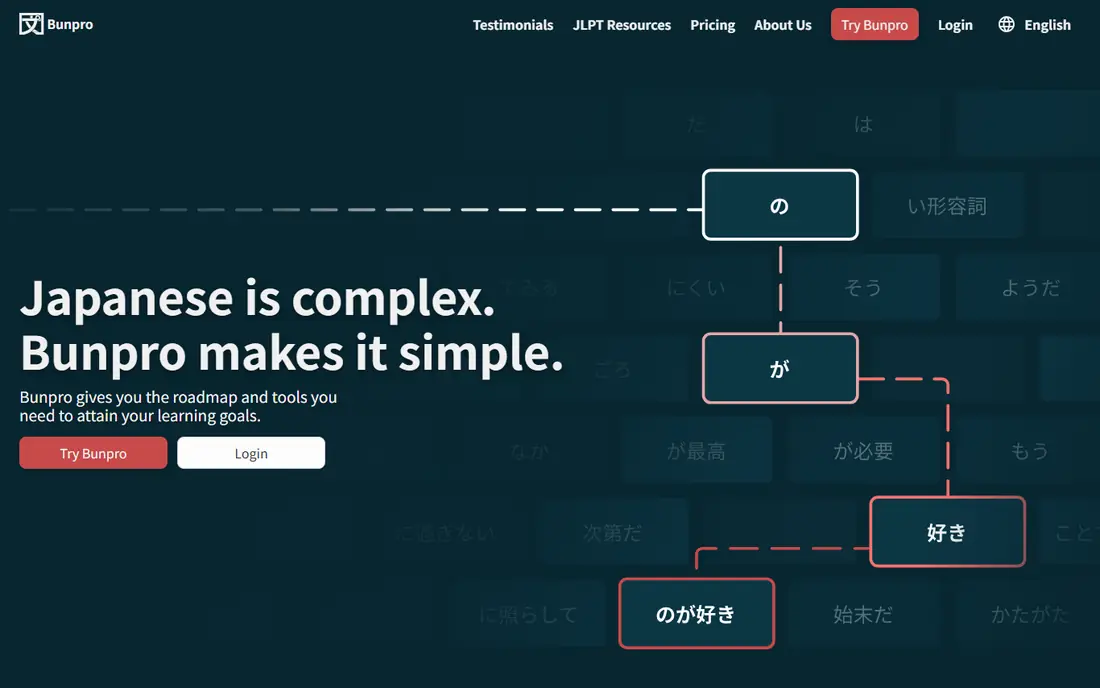
Bunpro organizes Japanese grammar by level, from beginner particles to advanced patterns, with explanations and example sentences for each point. Reviews use spaced repetition and ask you to fill in the missing grammar, which tests real understanding rather than passive reading. Paths follow common textbook orders, so you can match Bunpro to a class or self-study plan.
Bunpro is a study tool, not a conversation app, so speaking needs a separate practice route. The interface is plain compared with game-style apps, which suits serious learners more than casual ones. For grammar, Bunpro pairs naturally with WaniKani for a strong reading foundation.
- Grammar points by level
- Example sentences
- Spaced repetition reviews
- Less speaking practice
- Interface is study-focused
LingoDeer
Ideal for: Structured beginner courses

LingoDeer offers structured Japanese courses that teach kana, vocabulary, grammar, and sentences in order, with clear grammar notes after each lesson. That structure suits beginners who want to know why a sentence works, not just repeat it. Offline mode helps commuters, and the app covers reading, listening, and speaking exercises in each unit.
Advanced content is thinner than beginner content, so intermediate learners may need to move on to Bunpro and native materials. The community is also smaller than Duolingo. For a first year of Japanese, LingoDeer gives the clearest guided path here.
- Full courses with grammar notes
- Kana and kanji support
- Offline mode
- Higher levels are thinner
- Less community than Duolingo
Duolingo
Ideal for: Daily habit building
Duolingo is the easiest app to use every day. Short lessons, streaks, and rewards keep motivation up, and the free course covers kana, vocabulary, and basic sentences. That daily habit matters, since language progress depends on regular contact more than on any single method. The app works well as a warm-up or a supplement to a main course.
Grammar explanations are thin, and the course will not carry you to fluency alone. Treat Duolingo as a habit builder and vocabulary top-up, paired with LingoDeer, Bunpro, or a tutor for depth. For building a daily Japanese habit from zero, Duolingo is a fine start.
- Fun daily lessons
- Streaks and rewards
- Free core course
- Thin grammar explanations
- Limited speaking depth
Busuu
Ideal for: Speaking and feedback
Busuu combines structured lessons with speaking practice and feedback from native speakers in its community. You can submit writing and speaking exercises and get corrections, which helps learners who lack a local practice partner. Lessons follow levels from beginner to intermediate, with review and vocabulary tools built in.
Japanese content is smaller than Busuu courses for languages like Spanish or French, so advanced learners may run out of material. Full access also needs a premium plan. For learners who want speaking feedback without a tutor, Busuu is a useful middle path.
- Conversation lessons
- Feedback from native speakers
- Structured levels
- Japanese content is smaller than major languages
- Premium needed for full course
Memrise
Ideal for: Vocabulary and listening
Memrise teaches vocabulary and phrases through spaced repetition and short video clips of native speakers, which helps listening and pronunciation. The format suits quick daily reviews, travel phrases, and building a base of useful words. Community courses add extra vocabulary sets beyond the official course.
Grammar teaching is lighter than in LingoDeer or Bunpro, and course quality can vary. Memrise works best as a supplement for words and listening, not as a main course. Pair it with a grammar app and you cover the two skills most beginners neglect.
- Video clips of native speakers
- Spaced repetition
- Fun review modes
- Less grammar structure
- Content quality varies by course
Rosetta Stone
Ideal for: Immersive learning
Rosetta Stone teaches through images, audio, and matching exercises without translation, aiming to build intuition the way a child learns a first language. Speech recognition gives feedback on pronunciation, and units build from simple words to longer sentences. That immersion suits learners who dislike grammar drills and want to think in Japanese early.
The lack of grammar explanations frustrates some learners, especially with Japanese particles and verb forms. The price is also higher than many rivals. For learners who enjoy immersion and want strong listening and speaking habits, Rosetta Stone remains a respected option.
- Immersive image-based lessons
- Speech recognition
- Structured units
- No translations or grammar notes
- Higher price
How we picked these
We compared official feature pages, pricing pages, app store listings, and public reviews for each app, and we favored apps that still work in October 2026 and teach real Japanese skills rather than only phrase lists. We did not claim hands-on testing, and we weighed kana and kanji coverage, grammar depth, speaking practice, and free plan value. Where a price was unclear at writing time we wrote "See website" rather than guessing.
What to check before you choose
Start with your goal. Travel phrases suit Duolingo or Memrise, reading suits WaniKani plus Bunpro, and a full beginner course suits LingoDeer. Test kana learning early, since an app that teaches hiragana and katakana clearly will save you weeks of confusion later. Check whether the app teaches polite and plain forms, since both matter in real Japanese.
Plan for two apps rather than one. A kanji or grammar app plus a speaking or listening app covers more skills than any single tool. Set a daily time you can keep, even ten minutes, and use the app review system rather than cramming. After a few months, add native material like graded readers or simple shows to move beyond app sentences.
Also plan how you will move beyond app lessons. Apps build vocabulary, kana, and grammar well, but real Japanese comes from reading, listening, and speaking with real material and people. After a few months, add graded readers, simple news, children's shows, or podcasts at your level, and look for a tutor or language exchange partner for speaking practice. A tutor can correct pronunciation and particles in ways an app cannot, even in a short weekly session. Keep a notebook of sentences you actually want to use, such as phrases for travel, work, or hobbies, since personal sentences stick better than generic drills. Review older material regularly, since spaced repetition only works if you keep showing up for reviews.
Time planning matters as much as app choice. Ten to twenty minutes a day beats a long weekend session, because language memory fades fast without regular contact. Set a simple routine: new lessons in the morning, reviews at lunch, and a short listening or reading session in the evening if time allows. Do not chase streaks at the cost of understanding: if reviews pile up, pause new lessons until reviews are under control. Check whether your app teaches both polite and plain forms, since Japanese social levels confuse many learners who only meet one form. Finally, be patient with kanji: progress feels slow for months, then reading suddenly gets easier as characters compound into familiar words.
Frequently asked questions
What is the best app to learn japanese for beginners?
LingoDeer is our beginner pick for its structured course and grammar notes, with Duolingo as a good habit builder alongside it. WaniKani helps once you start kanji, and Bunpro helps once grammar gets serious. Start with one main course and add a second app after a month.
Can I learn Japanese with only an app?
An app can build a strong base in kana, vocabulary, grammar, and listening, but speaking with real people and reading native material matter for fluency. Use apps for daily study, then add conversation practice, tutors, or language exchange when you can hold basic sentences.
How long does it take to learn Japanese with an app?
Basic conversation can take several months of daily study, while reading and comfortable conversation take years. Kanji adds time, since thousands of characters need steady review. Daily short sessions with spaced repetition beat weekend cramming for long-term recall.
Is WaniKani worth it for kanji?
WaniKani is worth it if reading Japanese is a main goal, since its level system and mnemonics give steady kanji progress. If you only need spoken Japanese for travel, a phrase app may suit you better. Try the free levels first to see if the style fits you.
Do I need to learn hiragana and katakana first?
Yes. Kana are the foundation of written Japanese, and romaji-only learning slows reading later. Most apps here teach kana early, and learning both scripts in the first weeks pays off for every later lesson.