What Is the Best Cell Phone Company in 2026: 7 Providers Compared

- Check coverage where you live and travel before you compare prices, because a cheap plan on a weak network is poor value.
- Prepaid brands on major networks often cost less for the same coverage, but they may slow down first when the network is busy.
- Unlimited plans differ on premium data, hotspot data, and video quality, so read those limits, not just the headline price.
- Family plans, trade in deals, and autopay discounts change the real monthly cost, so compare the total after discounts.
Quick comparison
| Product | Ideal for | Price from | Free version | |
|---|---|---|---|---|
 Verizon | Widest reliable coverage | See website | No | Visit |
 AT&T | Bundles and family plans | See website | No | Visit |
 T-Mobile | Value unlimited plans | See website | No | Visit |
 Visible | Simple prepaid unlimited | See website | No | Visit |
 Mint Mobile | Low cost prepaid plans | See website | No | Visit |
 Google Fi Wireless | International travel and flexible data | See website | No | Visit |
 US Mobile | Custom plans and multi network choice | See website | No | Visit |
The best cell phone companies
The best cell phone company depends on where you live, how much data you use, and whether you want perks, and no single carrier wins on all three at once.
We compared coverage, plan prices, data allowances, and perks across major carriers and prepaid brands, and our pick for most people is a carrier with strong local coverage and a plan that fits real data use, not the largest advertised allowance.
In this guide, we walk through each option in turn, starting with who it suits best, then looking at what it does well and where it falls short, so you can compare like with like. We also cover pricing in plain terms, including where a price is quote based or where a free plan covers only part of the service, because the headline price rarely tells the full story. By the end, you should have a short list of two or three options worth a closer look, rather than a long list of names with no clear differences.
Verizon
Ideal for: Widest reliable coverage
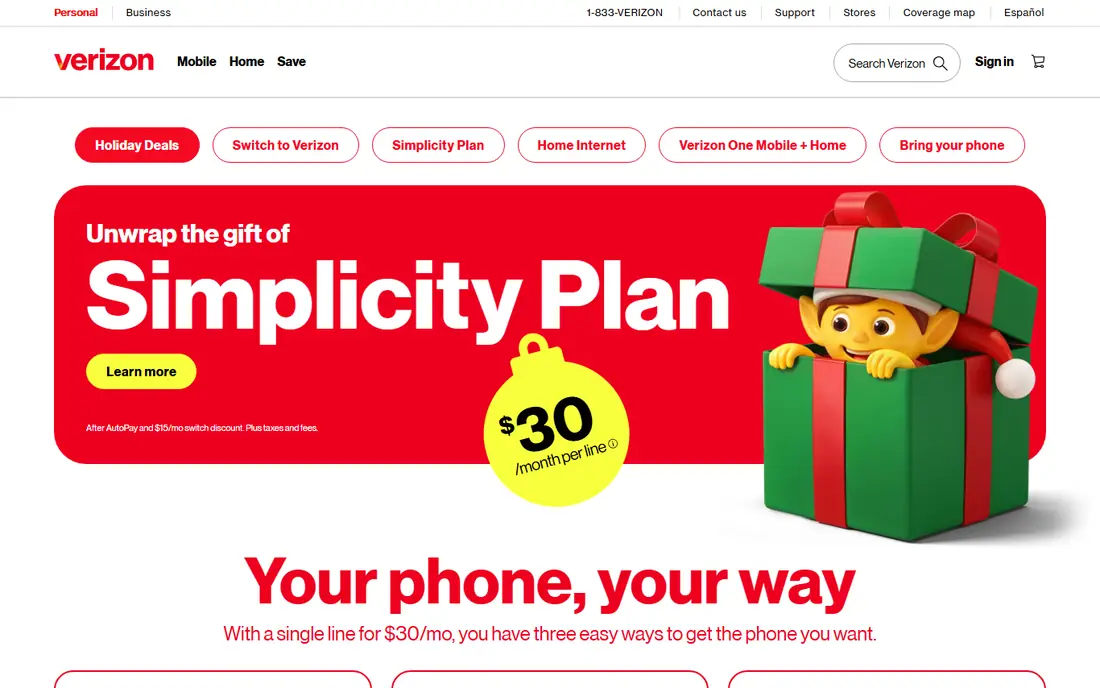
Verizon is the default pick for people who travel widely or live outside major cities, because its coverage holds up in more places than most rivals. Its plans range from basic unlimited to premium tiers with more hotspot data and perks, so heavy users can buy up rather than switch carriers.
Perks such as streaming bundles and device deals can cut the real cost for households that already pay for those services. Network performance is a consistent strength, with fast speeds in cities and usable service in many rural areas.
Prices are among the highest in the market, and taxes and fees add to the advertised rate, so check the full monthly total before you sign.
On balance, Verizon stands out for Widest reliable coverage, with strengths that include Strong coverage; fast network; many plan options. The main drawbacks to weigh are Premium plans are pricey; fees add up. If those trade offs fit your situation and your budget, it is worth putting on your short list, and if they do not, compare it with the next options in this guide before you decide, since a small difference in price, coverage, or support can matter a lot over a year of use.
- Strong coverage
- Fast network
- Many plan options
- Premium plans are pricey
- Fees add up
AT&T
Ideal for: Bundles and family plans
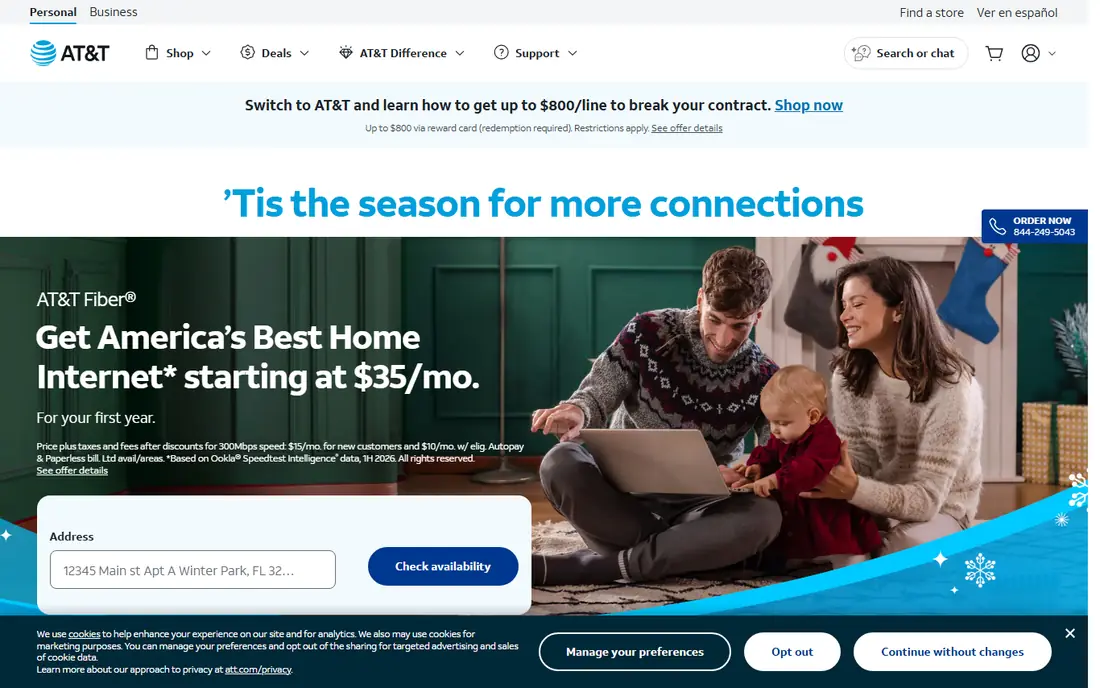
AT&T suits households that want one bill for phones, home internet, and streaming perks, because its bundles can bring the combined cost down. Its network coverage is strong across the United States, and its plan range covers light users through heavy hotspot users.
Families often get the best value here, since per line prices fall as lines are added, and device deals reward longer commitments. The carrier also offers a large phone range, from budget models to flagship devices, with trade in credits on many of them.
The catch is price, since premium plans and add ons climb quickly, and some discounts expire, so confirm how long each saving lasts.
On balance, AT&T stands out for Bundles and family plans, with strengths that include Strong coverage; good bundles; wide phone range. The main drawbacks to weigh are Top plans are expensive; discount terms vary. If those trade offs fit your situation and your budget, it is worth putting on your short list, and if they do not, compare it with the next options in this guide before you decide, since a small difference in price, coverage, or support can matter a lot over a year of use.
- Strong coverage
- Good bundles
- Wide phone range
- Top plans are expensive
- Discount terms vary
T-Mobile
Ideal for: Value unlimited plans
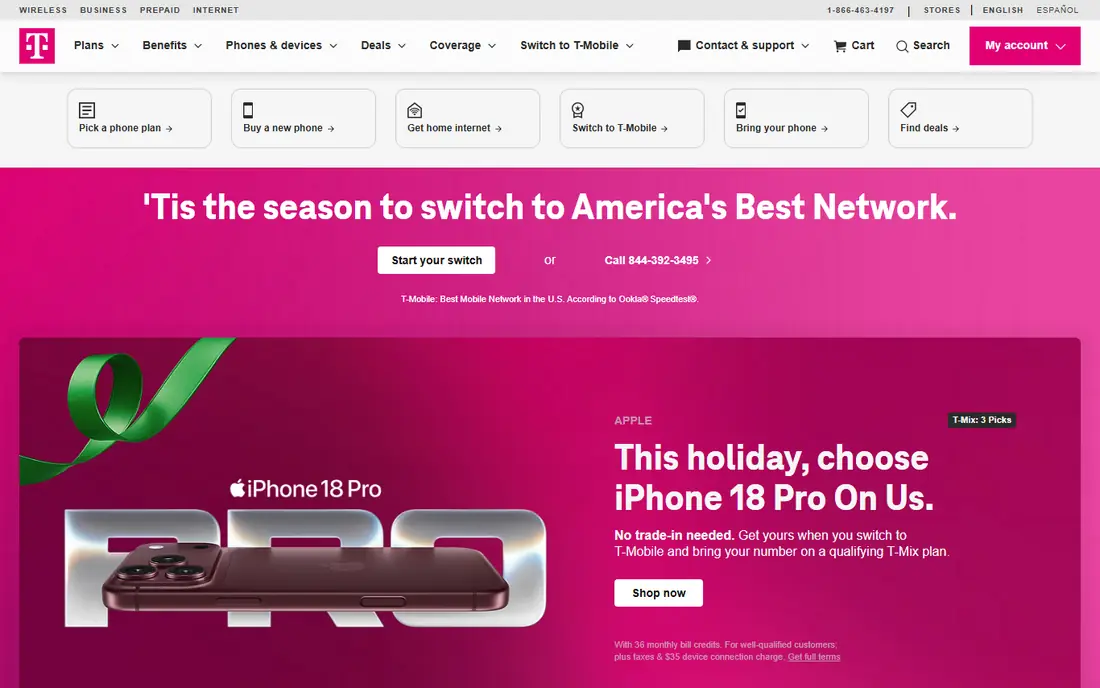
T-Mobile is our pick for value unlimited plans, because its headline unlimited prices undercut rivals while including taxes and fees on many plans. Its 5G network is broad in cities and suburbs, and perks such as streaming subscriptions and travel benefits add real value for many customers.
Families and heavy data users benefit most, since the per line cost falls with more lines and premium data allowances are generous. The carrier also offers home internet in many areas, which can simplify a household bill.
Rural coverage still trails the leader in some areas, and the many plan tiers take care to compare, so test coverage near home first.
On balance, T-Mobile stands out for Value unlimited plans, with strengths that include Competitive unlimited pricing; broad 5G; perks included. The main drawbacks to weigh are Rural coverage can lag rivals; plan tiers confuse. If those trade offs fit your situation and your budget, it is worth putting on your short list, and if they do not, compare it with the next options in this guide before you decide, since a small difference in price, coverage, or support can matter a lot over a year of use.
- Competitive unlimited pricing
- Broad 5G
- Perks included
- Rural coverage can lag rivals
- Plan tiers confuse
Visible
Ideal for: Simple prepaid unlimited
Visible is a prepaid brand on the Verizon network, and it suits people who want unlimited data without a store visit or a complicated plan menu. Its pricing is simple, with a small number of plans, and taxes and fees are included in the advertised price on current plans.
Coverage follows the Verizon network, which is a strong base for travelers and for people outside big cities. The app based setup is quick, and you can bring most compatible phones you already own.
The trade off is priority, since data can slow first during congestion, and support is mainly through chat and the app rather than stores.
On balance, Visible stands out for Simple prepaid unlimited, with strengths that include Single unlimited plan style; low price; Verizon network. The main drawbacks to weigh are Speeds may slow when busy; support is mostly digital. If those trade offs fit your situation and your budget, it is worth putting on your short list, and if they do not, compare it with the next options in this guide before you decide, since a small difference in price, coverage, or support can matter a lot over a year of use.
- Single unlimited plan style
- Low price
- Verizon network
- Speeds may slow when busy
- Support is mostly digital
Mint Mobile
Ideal for: Low cost prepaid plans
Mint Mobile suits light to moderate users who are happy to pay for several months at once in return for a much lower monthly rate. It runs on the T-Mobile network, so coverage and speeds are strong in cities and suburbs where that network is solid.
Plans come in several data sizes, which helps people who know their use and do not want to pay for unlimited data they never touch. Setup is app based, number porting is straightforward, and family plans can cut costs further.
The catch is the upfront payment for the best rates, and data speeds slow after the monthly allowance, so check your use first.
On balance, Mint Mobile stands out for Low cost prepaid plans, with strengths that include Low multi month prices; T-Mobile network; easy switching. The main drawbacks to weigh are Best prices need upfront payment; data slows after cap. If those trade offs fit your situation and your budget, it is worth putting on your short list, and if they do not, compare it with the next options in this guide before you decide, since a small difference in price, coverage, or support can matter a lot over a year of use.
- Low multi month prices
- T-Mobile network
- Easy switching
- Best prices need upfront payment
- Data slows after cap
Google Fi Wireless
Ideal for: International travel and flexible data
Google Fi Wireless is built for travelers and for people whose data use changes month to month, because its flexible plan charges mainly for the data you use. International roaming is a genuine strength, with service in many countries without swapping SIM cards, which suits frequent travelers.
Plan changes are easy in the app, and family plans let each member use data flexibly rather than forcing one shared allowance. The service runs on partner networks, so coverage in the United States is generally solid in populated areas.
Phone compatibility matters, since some features work best on phones designed for Fi, so check your device before switching.
On balance, Google Fi Wireless stands out for International travel and flexible data, with strengths that include Flexible data pricing; good roaming; easy plan changes. The main drawbacks to weigh are Coverage depends on partner networks; phone choice matters. If those trade offs fit your situation and your budget, it is worth putting on your short list, and if they do not, compare it with the next options in this guide before you decide, since a small difference in price, coverage, or support can matter a lot over a year of use.
- Flexible data pricing
- Good roaming
- Easy plan changes
- Coverage depends on partner networks
- Phone choice matters
US Mobile
Ideal for: Custom plans and multi network choice
US Mobile suits people who want to fine tune a plan, because you can pick a data amount that matches real use instead of jumping between fixed tiers. It offers a choice of underlying networks, which lets you pick the coverage that works best at your address.
Prices are low for light and moderate users, and family and multi line options keep costs down as lines are added. The app makes plan changes simple, and you can adjust data as your habits change.
As a smaller brand, support is digital first and perks are thin, so it fits self sufficient customers better than those who want store help.
On balance, US Mobile stands out for Custom plans and multi network choice, with strengths that include Custom data amounts; choice of networks; low prices. The main drawbacks to weigh are Smaller brand; support is digital first. If those trade offs fit your situation and your budget, it is worth putting on your short list, and if they do not, compare it with the next options in this guide before you decide, since a small difference in price, coverage, or support can matter a lot over a year of use.
- Custom data amounts
- Choice of networks
- Low prices
- Smaller brand
- Support is digital first
How we picked these
We compared official feature pages, pricing pages, app store listings, privacy policies, and public customer reviews for each option in this list, and we kept only options that are available in the United States and that clearly fit the topic of the article.
We gave weight to clear pricing, a usable free option or trial where one is offered, honest limits, and support that a real customer can reach, and we left out options whose pricing was hidden, whose main offer did not match the topic, or whose website did not clearly belong to the product.
We also checked that each product is still offered and working in October 2026, and we noted where a feature, a plan, or a price could not be verified from the vendor, in which case we wrote See website rather than guessing. That approach means some prices in this guide are deliberately general, and we recommend confirming the current price on the vendor website before you buy, since plans and promotions change.
How to pick a cell phone company without overpaying
Start with a coverage map and, better still, ask neighbors or coworkers on each network how service holds up at home, at work, and on your commute. A carrier that looks strong nationally can still have weak spots in your town, and that matters more than any national claim.
Next, check your actual data use in your phone settings for the last three months, because many people pay for unlimited data while using only a few gigabytes. If your use is light, a prepaid or capped plan can save a large amount each year without changing daily use.
Finally, add up the full monthly bill, including taxes, fees, device payments, and any discount that expires after a year. A plan that looks cheap for three months and then jumps in price is a different deal, so read the fine print before you switch.
Frequently asked questions
What is the best cell phone company overall?
There is no single winner, because coverage varies by location and plans vary by data use, but the major carriers each lead in different areas. Compare coverage at your address, your monthly data use, and the total bill, and pick the carrier that scores best on all three for you.
Is prepaid as good as a major carrier plan?
Prepaid brands often use the same major networks, so coverage is similar, but data may slow down first during congestion and perks are usually fewer. If you use moderate data and want a lower bill, prepaid is often the better value.
How much data do most people need?
Many people use under 10 gigabytes a month when they are on Wi-Fi at home and work, while heavy video streaming, hotspot use, and travel push use much higher. Check your last three months of use before choosing between a capped plan and unlimited.
Should I buy my phone from the carrier?
Carrier deals can cut the phone price a lot, but they often require a long plan commitment and monthly bill credits. Buying a phone outright gives you freedom to switch carriers, so compare the total cost over two years, not just the upfront price.
Can I keep my number when I switch?
Yes, in most cases you can port your number to a new carrier, and the new carrier usually handles the transfer. Do not cancel the old plan until the number has moved, or you may lose the number.