Best Real Estate Insights Companies in 2026: 8 Platforms Compared

- 1
 CoreLogicDeep property dataVisit
- 2
 CoStar GroupCommercial real estate dataVisit
- 3
 HouseCanaryValuation and analyticsVisit
- 4
 ATTOMProperty data licensingVisit
- 5
 ReonomyCommercial property searchVisit
- Data depth matters more than dashboard polish, since decisions rest on the underlying records.
- Investors need different tools from agents, so match the platform to your actual job.
- Pricing is often by subscription and varies by data access, so check what your tier includes.
Quick comparison
| Product | Ideal for | Price from | Free version | |
|---|---|---|---|---|
| CoreLogic | Deep property data | See website | No | Visit |
| CoStar Group | Commercial real estate data | See website | No | Visit |
| HouseCanary | Valuation and analytics | See website | No | Visit |
| ATTOM | Property data licensing | See website | No | Visit |
| Reonomy | Commercial property search | See website | No | Visit |
 Cherre | Connected real estate data | See website | No | Visit |
 Local Logic | Location insights | See website | No | Visit |
 Placer.ai | Foot traffic insights | See website | No | Visit |
The best real estate insights companies
Real estate insights companies turn property, market, and transaction data into decisions for buyers, investors, and professionals. The platforms below differ in data depth, geographic coverage, and price, and we compared them on data sources, analytics tools, and the audience each one serves, using their own product pages and public descriptions.
Disclaimer: This article is general information only and is not financial or investment advice. Property decisions carry risk, so verify data and get professional advice before buying or investing.
CoreLogic
Ideal for: Deep property data

CoreLogic is our pick for professionals who need deep property data. Its records and analytics serve lenders, investors, and insurers, though its enterprise pricing puts it beyond casual buyers.
What stands out is extensive property and mortgage data for professionals The honest catch is enterprise pricing, and not built for casual buyers Prices and plan details change, so confirm the current offer on the vendor site before you commit.
Choose CoreLogic when your decisions need the deepest property records available.
- Extensive property and mortgage data
- Analytics for lenders and investors
- Fraud and risk tools
- Enterprise pricing
- Not built for casual home buyers
CoStar Group
Ideal for: Commercial real estate data
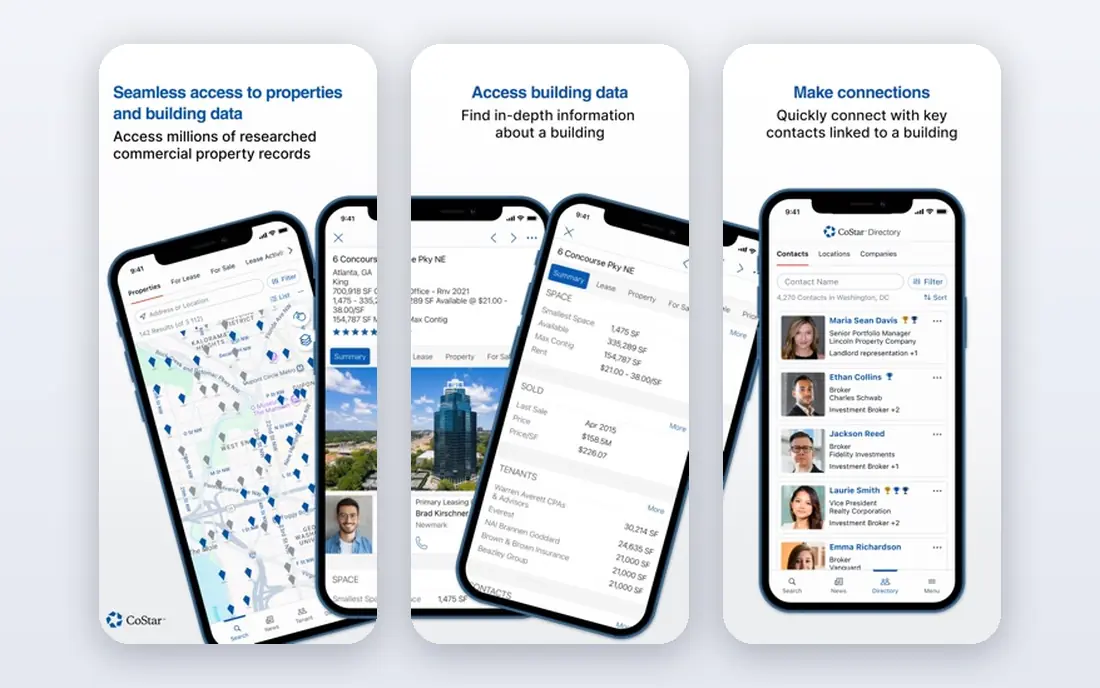
CoStar Group leads for commercial real estate, with data and research that residential platforms do not match. Its leasing and sales tools suit brokers and investors in commercial property.
What stands out is commercial property data and research at scale The honest catch is commercial focus, so residential buyers get less from it Before buying, confirm pricing and plan limits on the vendor site, since published details can change.
Pick CoStar when your work is commercial property, not homes.
- Commercial property data and analytics
- Large research team
- Leasing and sales tools
- Commercial focus, so residential buyers get less value
- Pricing by subscription
HouseCanary
Ideal for: Valuation and analytics

HouseCanary suits investors and professionals who need valuations and market analytics. Its automated valuation models and APIs fit firms that build property decisions into software and workflows.
What stands out is automated valuations and market analytics with APIs The honest catch is pricing varies by data access, and consumer access is limited Check the vendor site for the latest pricing, since plans, tiers, and terms change over time.
Use it when valuation accuracy and API access matter to your work.
- Automated valuations
- Market analytics
- Data APIs for professionals
- Pricing by plan and data access
- Consumer access is limited
ATTOM
Ideal for: Property data licensing
ATTOM is a data provider for businesses that need property records at scale. Its licensing model suits firms building products or analysis on property data, rather than individuals browsing homes.
What stands out is a large property database licensed to businesses The honest catch is licensing suits businesses, not individual buyers For current pricing, check the vendor site before deciding, since plans and prices change over time.
Choose ATTOM when you need property data to power a product or analysis.
- Large property database
- Data licensing
- Analytics for businesses
- Data licensing model suits businesses, not individual buyers
- Pricing by quote
Reonomy
Ideal for: Commercial property search
Reonomy suits commercial brokers and investors who need ownership and property search in one place. Its sales tools help professionals find and contact owners, which is a different job from residential browsing.
What stands out is commercial search with ownership data for professionals The honest catch is commercial focus, and subscription pricing Prices and plan details change, so confirm the current offer on the vendor site before you commit.
Pick Reonomy for commercial prospecting and ownership research.
- Commercial property search and ownership data
- Sales tools
- Market analytics
- Commercial focus
- Subscription pricing
Cherre
Ideal for: Connected real estate data
Cherre is a platform pick for firms that need property data connected across sources. Its analytics and APIs suit data teams, though smaller users may find the platform heavy.
What stands out is connected property data from many sources in one platform The honest catch is enterprise complexity and cost for smaller users Before buying, confirm pricing and plan limits on the vendor site, since published details can change.
Use Cherre when your team needs connected data across many sources.
- Connects property data from many sources
- Analytics platform
- API access
- Enterprise platform, so smaller users may find it complex and costly
Local Logic
Ideal for: Location insights
Local Logic suits firms that need neighborhood and location context, from livability to amenities. Its scores add context to listings, though it does not replace full property data platforms.
What stands out is neighborhood and location data with livability scores The honest catch is a narrower focus than full property platforms Check the vendor site for the latest pricing, since plans, tiers, and terms change over time.
Choose Local Logic when location context is the missing piece in your analysis.
- Location and neighborhood data
- Scores for livability factors
- APIs
- Narrower focus than full property platforms
- Pricing by data access
Placer.ai
Ideal for: Foot traffic insights
Placer.ai is different because it measures foot traffic, which helps retail and commercial decisions. Its visitation data shows how places actually perform, though it does not value properties directly.
What stands out is foot traffic analytics for retail and commercial locations The honest catch is it measures movement, not property values directly For current pricing, check the vendor site before deciding, since plans and prices change over time.
Pick Placer.ai when location performance, not valuation, is your question.
- Foot traffic and visitation analytics
- Retail and commercial location insights
- Focus is movement data, not property values
- Pricing by plan
How we picked these
We compared official feature pages, pricing pages, app store listings, privacy policies, and public reviews for each option, and we kept only options that exist and work in October 2026 and that truly fit this topic. We favored options with clear pricing, a track record we could check, and honest limits we could state plainly. Where a price or plan could not be confirmed from the vendor itself, we wrote See website rather than guessing.
We also weighed who each option suits best, since the right choice for a large team is often the wrong choice for a small one. That is why the list below mixes well-known leaders with smaller options that do one thing well.
Where prices were not published, we said so rather than estimating. A vendor that hides pricing is not automatically a bad choice, but buyers should ask for a written quote before comparing it with a vendor that publishes prices openly.
Finally, we checked that every website listed is the product's own official homepage and that it loads. A product with a broken or mismatched homepage was not kept on the list, since readers should be able to reach the real vendor from this article without guessing.
How to choose a real estate insights platform
Start with your decision, since data needs follow decisions. An investor needs valuations and market trends, a broker needs listings and ownership, and a retailer needs foot traffic. Buying the wrong data type wastes money even at a low price.
Next, check geographic coverage for your markets. Some platforms cover the whole country deeply, while others are stronger in certain regions or property types. Test your own markets before signing.
Finally, compare what your subscription tier actually includes. Data access, API limits, and user seats vary by tier, and the headline price often excludes the data you need most.
Before you commit money, compare total cost and read the full terms, not only the headline rate or fee. For insurance and lending, that means limits, exclusions, deductibles, and claim steps. For investment related choices, it means fees, risks, and exit terms. Get quotes from at least three providers on identical terms, and keep written copies of every offer so comparisons stay honest.
A last check is the exit path. Ask how to cancel, what fees apply, and what happens to your data or coverage when you leave. A provider with a clear exit path is usually confident in its service, while a provider that hides exit terms deserves a second look before you commit money.
One more habit helps in every market on this list: read recent customer reviews that mention problems, not only praise. Reviews that describe how a company handled a failure tell you more about service than five-star reviews do. Look for patterns across many reviews rather than one angry or glowing outlier.
Another useful step is to write down your must-have features before you start comparing. Without a short list, it is easy to be swayed by a feature you will never use or a discount that hides a missing essential. A must-have list keeps comparisons honest and makes the final choice easier to defend.
Finally, keep a copy of every quote, term sheet, and confirmation you receive. Written records make it easy to compare offers fairly and to resolve disputes if the delivered service differs from what was promised. A vendor that puts terms in writing is usually a safer choice than one that relies on verbal promises.
Frequently asked questions
What does a real estate insights company do?
It collects property, market, and transaction data and turns it into analytics, valuations, and reports that buyers, investors, and professionals use to decide.
Which platform is best for investors?
HouseCanary and CoreLogic suit investors needing valuations and deep data. CoStar and Reonomy suit commercial investors, while Placer.ai suits retail location decisions.
Are these platforms for home buyers?
Most are built for professionals. Home buyers usually get enough from listing sites and agent tools, while these platforms serve firms that need data at scale.
How is pricing set?
Usually by subscription, with tiers for data access, API use, and seats. Enterprise data licensing is often by quote.
Can I trust automated valuations?
They are useful estimates, not appraisals. Use them to compare and screen properties, and get a professional appraisal before a major purchase decision.