Best Risk Software for Enterprises in 2026: 8 Options Compared

- 1
 LogicGateteams wanting flexible risk workflowsVisit
- 2
 ServiceNow GRCenterprises already on ServiceNowVisit
- 3
 Resolverenterprises wanting risk plus incident toolsVisit
- 4
 MetricStreamlarge enterprises needing full GRC depthVisit
- 5
 RSA Archerenterprises wanting a proven GRC platformVisit
- ServiceNow GRC suits enterprises already running ServiceNow workflows.
- LogicGate suits teams that want flexible risk workflows without heavy code.
- AuditBoard suits companies that want risk plus audit and compliance together.
- Check whether the tool covers enterprise risk, operational risk, or both, since many tools favor one side.
Quick comparison
| Product | Ideal for | Price from | Free version | |
|---|---|---|---|---|
| LogicGate | teams wanting flexible risk workflows | See website | No | Visit |
| ServiceNow GRC | enterprises already on ServiceNow | See website | No | Visit |
| Resolver | enterprises wanting risk plus incident tools | See website | No | Visit |
| MetricStream | large enterprises needing full GRC depth | See website | No | Visit |
| RSA Archer | enterprises wanting a proven GRC platform | See website | No | Visit |
 AuditBoard | companies wanting risk plus audit together | See website | No | Visit |
 OneTrust | companies wanting risk plus privacy and trust tools | See website | No | Visit |
 Riskonnect | enterprises wanting integrated risk management | See website | No | Visit |
The best risk software for enterprises
Enterprise risk software helps large organizations identify, assess, and manage risks across operations, compliance, cyber, and third parties in one system. The right platform depends on whether risk sits in one team or spans the whole enterprise. We compared governance, risk, and compliance platforms used by large companies.
LogicGate
Ideal for: teams wanting flexible risk workflows
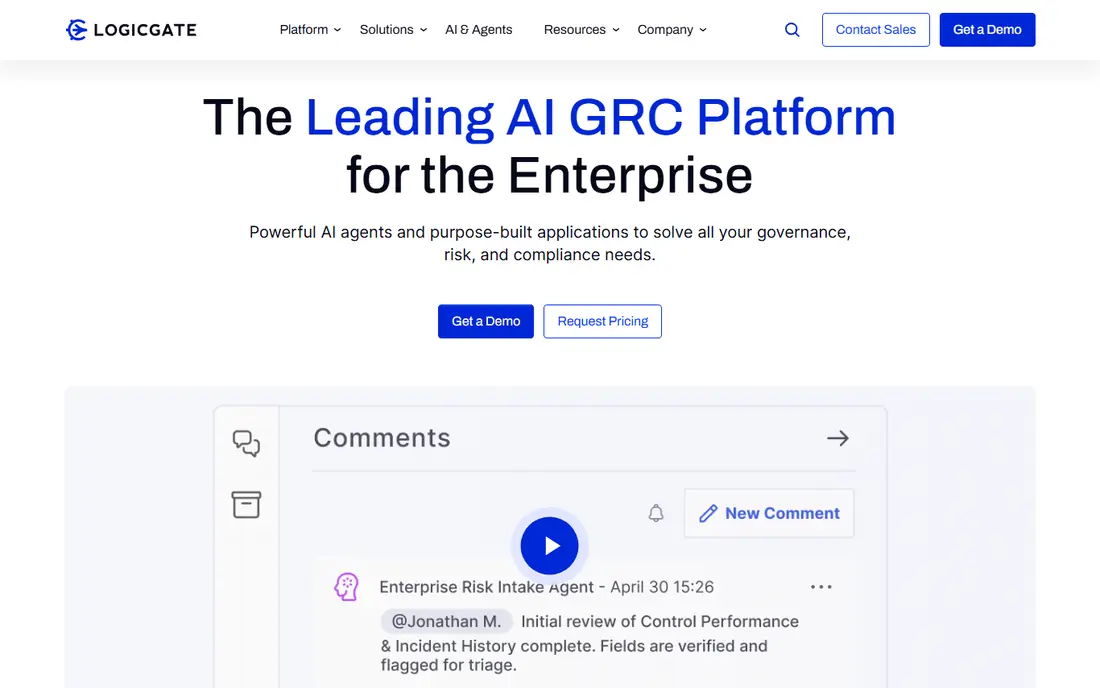
LogicGate lets risk teams build workflows for assessments, controls, and issues without heavy code, using a flexible platform. It suits teams that want to adapt risk processes fast. Very large enterprises should check breadth against full GRC suites. That focus makes it a practical match for teams wanting flexible risk workflows. On pricing, the starting point is see website, and the free plan status is no. Its strengths include no-code risk workflows; flexible risk apps; reporting. The trade-off to weigh is pricing by quote; enterprise breadth varies by package. We suggest checking the current plan limits on the vendor site before you commit, since tiers and trial terms change, and confirming that the plan you pick covers the seats, storage, or usage your team actually needs.
- No-code risk workflows
- Flexible risk apps
- Reporting
- Pricing by quote
- Enterprise breadth varies by package
ServiceNow GRC
Ideal for: enterprises already on ServiceNow
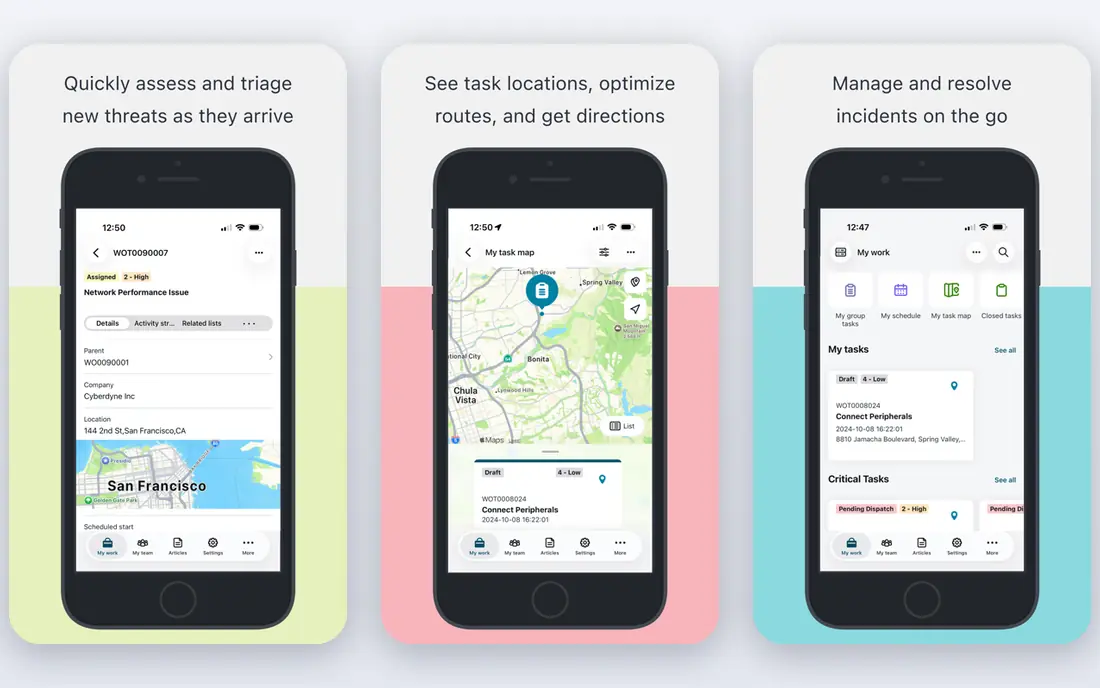
ServiceNow GRC brings risk, policy, audit, and compliance into ServiceNow workflows that many large enterprises already run. It suits organizations standardizing on ServiceNow for operations. Firms outside ServiceNow face a larger adoption effort. That focus makes it a practical match for enterprises already on ServiceNow. On pricing, the starting point is see website, and the free plan status is no. Its strengths include grc inside servicenow workflows; strong integration; enterprise scale. The trade-off to weigh is enterprise pricing; best inside servicenow. We suggest checking the current plan limits on the vendor site before you commit, since tiers and trial terms change, and confirming that the plan you pick covers the seats, storage, or usage your team actually needs.
- GRC inside ServiceNow workflows
- Strong integration
- Enterprise scale
- Enterprise pricing
- Best inside ServiceNow
Resolver
Ideal for: enterprises wanting risk plus incident tools

Resolver combines risk management with incident and investigation tools for enterprises, with configurable workflows. It suits organizations that want risk and incident data connected. Scoping matters, since the platform covers several areas. That focus makes it a practical match for enterprises wanting risk plus incident tools. On pricing, the starting point is see website, and the free plan status is no. Its strengths include risk, incident, and investigation tools; configurable; reporting. The trade-off to weigh is pricing by quote; breadth needs scoping. We suggest checking the current plan limits on the vendor site before you commit, since tiers and trial terms change, and confirming that the plan you pick covers the seats, storage, or usage your team actually needs.
- Risk, incident, and investigation tools
- Configurable
- Reporting
- Pricing by quote
- Breadth needs scoping
MetricStream
Ideal for: large enterprises needing full GRC depth
MetricStream offers deep governance, risk, and compliance coverage for large, regulated enterprises, with content and workflows for many frameworks. It suits companies with heavy regulatory duties. Implementation is a major project. That focus makes it a practical match for large enterprises needing full GRC depth. On pricing, the starting point is see website, and the free plan status is no. Its strengths include deep grc coverage; enterprise scale; regulatory content. The trade-off to weigh is enterprise pricing; implementation is significant. We suggest checking the current plan limits on the vendor site before you commit, since tiers and trial terms change, and confirming that the plan you pick covers the seats, storage, or usage your team actually needs.
- Deep GRC coverage
- Enterprise scale
- Regulatory content
- Enterprise pricing
- Implementation is significant
RSA Archer
Ideal for: enterprises wanting a proven GRC platform
RSA Archer is a long-established GRC platform used by large enterprises for risk, compliance, and audit workflows. It suits organizations that want a proven, broad platform. Newer rivals may feel more modern, and implementation needs care. That focus makes it a practical match for enterprises wanting a proven GRC platform. On pricing, the starting point is see website, and the free plan status is no. Its strengths include proven grc platform; broad use cases; large customer base. The trade-off to weigh is enterprise pricing; complexity and legacy feel. We suggest checking the current plan limits on the vendor site before you commit, since tiers and trial terms change, and confirming that the plan you pick covers the seats, storage, or usage your team actually needs.
- Proven GRC platform
- Broad use cases
- Large customer base
- Enterprise pricing
- Complexity and legacy feel
AuditBoard
Ideal for: companies wanting risk plus audit together
AuditBoard connects risk management with audit, controls, and compliance in a modern platform. It suits companies that want audit and risk teams working from shared data. Pure enterprise risk specialists should compare depth. That focus makes it a practical match for companies wanting risk plus audit together. On pricing, the starting point is see website, and the free plan status is no. Its strengths include risk plus audit and compliance; modern interface; cross-framework tools. The trade-off to weigh is pricing by quote; audit focus over pure risk. We suggest checking the current plan limits on the vendor site before you commit, since tiers and trial terms change, and confirming that the plan you pick covers the seats, storage, or usage your team actually needs.
- Risk plus audit and compliance
- Modern interface
- Cross-framework tools
- Pricing by quote
- Audit focus over pure risk
OneTrust
Ideal for: companies wanting risk plus privacy and trust tools
OneTrust combines privacy, risk, and trust tools for enterprises facing many regulatory duties. It suits companies that want privacy and risk governance connected. The breadth of the platform needs careful scoping. That focus makes it a practical match for companies wanting risk plus privacy and trust tools. On pricing, the starting point is see website, and the free plan status is no. Its strengths include privacy, risk, and trust tools; broad regulatory coverage; enterprise scale. The trade-off to weigh is pricing by quote; breadth can complicate scoping. We suggest checking the current plan limits on the vendor site before you commit, since tiers and trial terms change, and confirming that the plan you pick covers the seats, storage, or usage your team actually needs.
- Privacy, risk, and trust tools
- Broad regulatory coverage
- Enterprise scale
- Pricing by quote
- Breadth can complicate scoping
Riskonnect
Ideal for: enterprises wanting integrated risk management
Riskonnect offers integrated risk management with options for claims, safety, and third-party risk for large enterprises. It suits organizations that want several risk areas in one system. Implementation needs planning. That focus makes it a practical match for enterprises wanting integrated risk management. On pricing, the starting point is see website, and the free plan status is no. Its strengths include integrated risk platform; claims and safety options; enterprise scale. The trade-off to weigh is pricing by quote; implementation takes planning. We suggest checking the current plan limits on the vendor site before you commit, since tiers and trial terms change, and confirming that the plan you pick covers the seats, storage, or usage your team actually needs.
- Integrated risk platform
- Claims and safety options
- Enterprise scale
- Pricing by quote
- Implementation takes planning
How we picked these
We compared official feature pages, pricing pages, app store listings, privacy policies, and public reviews for each option, and we kept only products that exist, work in October 2026, and fit the topic directly. We did not claim hands-on testing we did not do, and we left out products whose fit was weak even when they are well known in a nearby category. Price and plan details change often, so where a vendor does not publish a clear price we write See website rather than guessing. The notes below reflect what each vendor publishes about its own product, not a promise about results for any single team.
How to choose enterprise risk software
Start with the risk domains you must cover, such as enterprise, operational, cyber, third-party, and compliance risk, and the reporting your board and regulators expect. A tool strong in IT risk may be weak in enterprise risk aggregation, and vice versa. Map your risk taxonomy before you compare, since retrofitting it later is painful. Check workflow flexibility, data integration, and reporting, since risk data must flow from business units, audits, and external feeds into one view. Ask how assessments, controls, issues, and incidents connect, and how the system handles risk appetite and scoring. Request a demo with your own risk register, not a generic one. Roll out one risk domain first, agree on scoring and ownership, and review risk data quality monthly, since a register full of stale risks misleads leadership. Keep the process light enough that business owners actually update their risks, and tie risk reporting to decisions, not just to board packs.
Frequently asked questions
What is enterprise risk software?
It helps large organizations record, assess, monitor, and report risks across the business, linking risks to controls, issues, incidents, and owners. It is often part of governance, risk, and compliance software.
What is GRC software?
GRC stands for governance, risk, and compliance, covering policies, risk management, controls, audits, and regulatory duties in connected workflows. Enterprise risk tools are often sold as part of GRC suites.
Do small companies need enterprise risk software?
Small companies usually manage risk with simpler tools and spreadsheets, moving to dedicated platforms when risk, regulation, or scale makes spreadsheets unreliable. Mid-sized firms often start with one risk domain.
How much does risk software cost?
Pricing is usually quoted for enterprises and varies with users, modules, and data volume. Expect a sales and implementation process for most platforms.
Can risk software prevent losses?
No software prevents losses on its own. It helps organizations see, prioritize, and act on risks earlier, but outcomes depend on ownership, controls, and decisions, not on the tool alone.