Who Offers the Best Network Monitoring Service in 2026: 8 Options Compared

- 1
 SolarWinds Network Performance Monitorlarge networks with many devicesVisit
- 2
 Datadogcloud and hybrid infrastructure teamsVisit
- 3
 PRTG Network Monitorsmall and midsize teams that want sensors fastVisit
- 4
 Zabbixteams that want an open source optionVisit
- 5
 Nagios XIteams with established Nagios workflowsVisit
- Our pick for most readers depends on budget and scale, so compare the starting price and free plan for who offers the best network monitoring service before you commit.
- The strongest options for who offers the best network monitoring service are clear about what is included, what costs extra, and how support works.
- For who offers the best network monitoring service, a short trial or a free tier is the safest way to check fit before a long contract.
- Check official pricing pages, because plans and limits for who offers the best network monitoring service change during the year.
Quick comparison
| Product | Ideal for | Price from | Free version | |
|---|---|---|---|---|
| SolarWinds Network Performance Monitor | large networks with many devices | See website | See website | Visit |
| Datadog | cloud and hybrid infrastructure teams | See website | See website | Visit |
| PRTG Network Monitor | small and midsize teams that want sensors fast | See website | See website | Visit |
| Zabbix | teams that want an open source option | See website | See website | Visit |
| Nagios XI | teams with established Nagios workflows | See website | See website | Visit |
 ManageEngine OpManager | Windows centred IT teams | See website | See website | Visit |
 LogicMonitor | managed service providers and growing teams | See website | See website | Visit |
 Auvik | managed service providers | See website | See website | Visit |
The best offers the best network monitoring service
We compared official feature pages, pricing pages, app store listings, privacy policies, and public reviews to build this list for who offers the best network monitoring service. The options below cover different budgets and needs, so use the comparison table to narrow the list, then read the write up for the two or three options that fit your situation best.
SolarWinds Network Performance Monitor
Ideal for: large networks with many devices
For readers comparing who offers the best network monitoring service, SolarWinds Network Performance Monitor stands out first because it is built for large networks with many devices. SolarWinds Network Performance Monitor is built for large networks with many devices, and its main strength is that deep device health, interface, and traffic views in one console. We weighed that strength against its limits on official feature and pricing pages. For many readers, that balance is why it earns a place here, even though no option suits every buyer.
The honest catch is that can be complex to set up and priced for larger teams. Before you buy, check current plan details on the official site, confirm any free plan or trial, and test the core task you need most. If that task feels awkward in a trial, move to the next option rather than hoping a paid plan will fix it.
- Deep device health, interface, and traffic views in one console
- Clear official feature and pricing pages
- Fits large networks with many devices
- Can be complex to set up and priced for larger teams
- Pricing and limits should be confirmed on the official site
Datadog
Ideal for: cloud and hybrid infrastructure teams
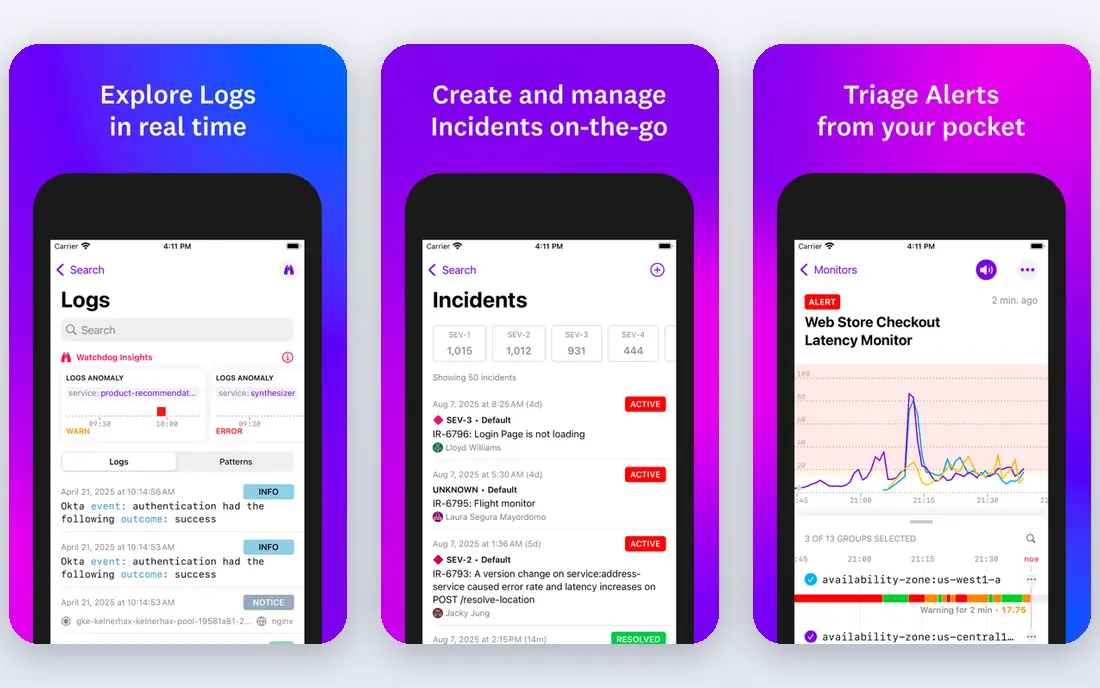
If your main need is cloud and hybrid infrastructure teams, Datadog deserves a close look. Datadog is built for cloud and hybrid infrastructure teams, and its main strength is that wide coverage across servers, networks, and applications. We weighed that strength against its limits on official feature and pricing pages. For many readers, that balance is why it earns a place here, even though no option suits every buyer.
The honest catch is that costs can grow as monitored hosts and metrics increase. Before you buy, check current plan details on the official site, confirm any free plan or trial, and test the core task you need most. If that task feels awkward in a trial, move to the next option rather than hoping a paid plan will fix it.
- Wide coverage across servers, networks, and applications
- Clear official feature and pricing pages
- Fits cloud and hybrid infrastructure teams
- Costs can grow as monitored hosts and metrics increase
- Pricing and limits should be confirmed on the official site
PRTG Network Monitor
Ideal for: small and midsize teams that want sensors fast
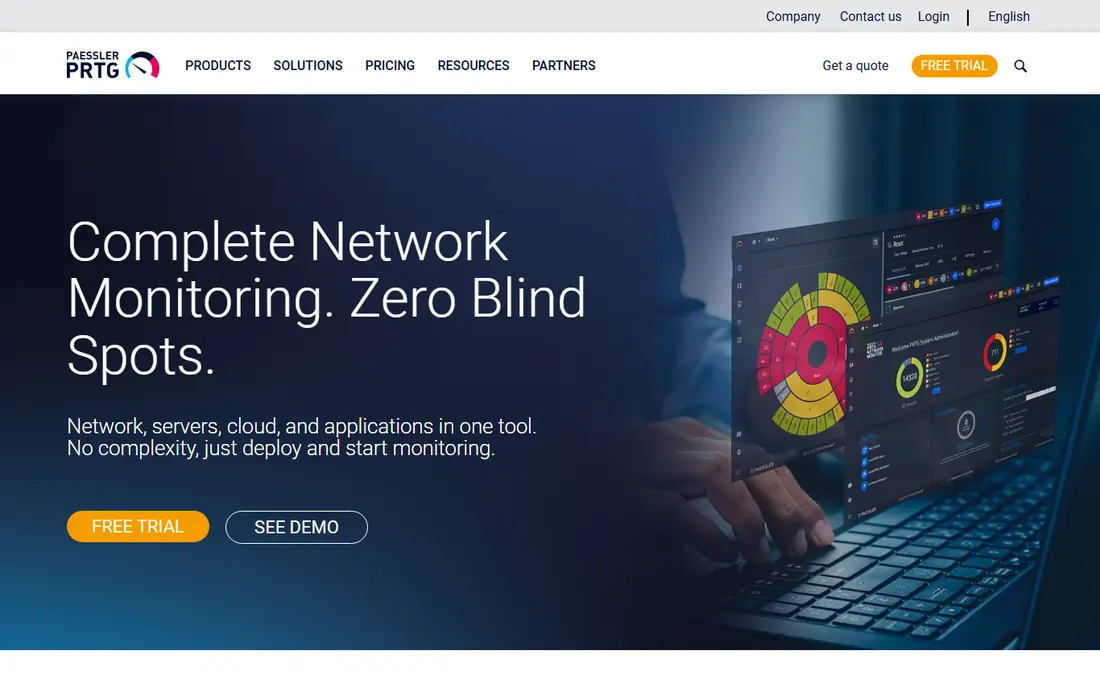
Among the options here, PRTG Network Monitor fits small and midsize teams that want sensors fast particularly well. PRTG Network Monitor is built for small and midsize teams that want sensors fast, and its main strength is that sensor based setup that covers common devices quickly. We weighed that strength against its limits on official feature and pricing pages. For many readers, that balance is why it earns a place here, even though no option suits every buyer.
The honest catch is that the interface can feel busy once sensor counts grow. Before you buy, check current plan details on the official site, confirm any free plan or trial, and test the core task you need most. If that task feels awkward in a trial, move to the next option rather than hoping a paid plan will fix it.
- Sensor based setup that covers common devices quickly
- Clear official feature and pricing pages
- Fits small and midsize teams that want sensors fast
- The interface can feel busy once sensor counts grow
- Pricing and limits should be confirmed on the official site
Zabbix
Ideal for: teams that want an open source option
Start with Zabbix when teams that want an open source option is the priority. Zabbix is built for teams that want an open source option, and its main strength is that flexible monitoring without a per device licence fee. We weighed that strength against its limits on official feature and pricing pages. For many readers, that balance is why it earns a place here, even though no option suits every buyer.
The honest catch is that setup and tuning take real technical time. Before you buy, check current plan details on the official site, confirm any free plan or trial, and test the core task you need most. If that task feels awkward in a trial, move to the next option rather than hoping a paid plan will fix it.
- Flexible monitoring without a per device licence fee
- Clear official feature and pricing pages
- Fits teams that want an open source option
- Setup and tuning take real technical time
- Pricing and limits should be confirmed on the official site
Nagios XI
Ideal for: teams with established Nagios workflows
For teams with established Nagios workflows, Nagios XI is a practical place to begin. Nagios XI is built for teams with established Nagios workflows, and its main strength is that long track record and a large library of checks. We weighed that strength against its limits on official feature and pricing pages. For many readers, that balance is why it earns a place here, even though no option suits every buyer.
The honest catch is that the interface feels older than newer rivals. Before you buy, check current plan details on the official site, confirm any free plan or trial, and test the core task you need most. If that task feels awkward in a trial, move to the next option rather than hoping a paid plan will fix it.
- Long track record and a large library of checks
- Clear official feature and pricing pages
- Fits teams with established Nagios workflows
- The interface feels older than newer rivals
- Pricing and limits should be confirmed on the official site
ManageEngine OpManager
Ideal for: Windows centred IT teams
Readers focused on Windows centred IT teams will find ManageEngine OpManager a strong candidate. ManageEngine OpManager is built for Windows centred IT teams, and its main strength is that practical device, server, and virtual machine monitoring. We weighed that strength against its limits on official feature and pricing pages. For many readers, that balance is why it earns a place here, even though no option suits every buyer.
The honest catch is that some advanced views sit in higher tiers. Before you buy, check current plan details on the official site, confirm any free plan or trial, and test the core task you need most. If that task feels awkward in a trial, move to the next option rather than hoping a paid plan will fix it.
- Practical device, server, and virtual machine monitoring
- Clear official feature and pricing pages
- Fits Windows centred IT teams
- Some advanced views sit in higher tiers
- Pricing and limits should be confirmed on the official site
LogicMonitor
Ideal for: managed service providers and growing teams
When managed service providers and growing teams matters most, LogicMonitor is worth shortlisting. LogicMonitor is built for managed service providers and growing teams, and its main strength is that agentless collection with useful dashboards and alerts. We weighed that strength against its limits on official feature and pricing pages. For many readers, that balance is why it earns a place here, even though no option suits every buyer.
The honest catch is that pricing is quoted, so small teams must ask for a figure. Before you buy, check current plan details on the official site, confirm any free plan or trial, and test the core task you need most. If that task feels awkward in a trial, move to the next option rather than hoping a paid plan will fix it.
- Agentless collection with useful dashboards and alerts
- Clear official feature and pricing pages
- Fits managed service providers and growing teams
- Pricing is quoted, so small teams must ask for a figure
- Pricing and limits should be confirmed on the official site
Auvik
Ideal for: managed service providers
A shortlist for managed service providers should include Auvik. Auvik is built for managed service providers, and its main strength is that automatic network mapping that saves documentation time. We weighed that strength against its limits on official feature and pricing pages. For many readers, that balance is why it earns a place here, even though no option suits every buyer.
The honest catch is that it is aimed at MSP workflows more than one off home use. Before you buy, check current plan details on the official site, confirm any free plan or trial, and test the core task you need most. If that task feels awkward in a trial, move to the next option rather than hoping a paid plan will fix it.
- Automatic network mapping that saves documentation time
- Clear official feature and pricing pages
- Fits managed service providers
- It is aimed at MSP workflows more than one off home use
- Pricing and limits should be confirmed on the official site
How we picked these
We picked these options for who offers the best network monitoring service by comparing official feature pages, pricing pages, app store listings, privacy policies, and public reviews. We did not claim hands-on testing that did not happen. Instead, we focused on whether each option truly fits the topic, whether its pricing is clear, and whether its strengths and limits are easy to find on its own site.
We also favoured options with clear support and documentation, and we left out products that did not fit the topic, even when they are well known in a nearby category. Prices change, so the safest step is to confirm the current plan on the vendor site before you pay. That method keeps this list useful for ordinary buyers, not only for specialists.
What to check before you buy network monitoring
Start by writing down the one job you need who offers the best network monitoring service to do well, then judge every option on that job first. Price matters, but a low price is poor value if the tool misses that core job, and a high price is hard to justify if you only use a small part of the product. Look at setup time, support options, and how easy it is to leave, because switching costs are part of the real price.
Next, check limits that are easy to miss, such as user seats, storage, locations, or monthly allowances, and ask whether those limits fit your normal use, not only your lightest week. Read the privacy and security pages when the product will hold customer or business data, and confirm who can see that data and how it is stored.
Questions to ask before you pay
Ask what is included in the base price, what triggers an upgrade, and how support works when something goes wrong. Ask how long setup takes, whether you can export your data, and what happens at renewal. The answers to those questions often separate a good fit from a costly mistake, and they are worth getting in writing for business purchases.
Frequently asked questions
How do I choose between agent based and agentless monitoring?
For who offers the best network monitoring service, the short answer depends on your budget, your team size, and how often you will use the product. Start with the options in this list that match your main need, check their official pricing and free plan details, and try one before committing to a long term plan. That simple check prevents most bad purchases in this category.
Do I need network monitoring if I already have server monitoring?
For who offers the best network monitoring service, the short answer depends on your budget, your team size, and how often you will use the product. Start with the options in this list that match your main need, check their official pricing and free plan details, and try one before committing to a long term plan. That simple check prevents most bad purchases in this category.
How many devices can these tools cover?
For who offers the best network monitoring service, the short answer depends on your budget, your team size, and how often you will use the product. Start with the options in this list that match your main need, check their official pricing and free plan details, and try one before committing to a long term plan. That simple check prevents most bad purchases in this category.
Can I try network monitoring before paying?
For who offers the best network monitoring service, the short answer depends on your budget, your team size, and how often you will use the product. Start with the options in this list that match your main need, check their official pricing and free plan details, and try one before committing to a long term plan. That simple check prevents most bad purchases in this category.
What alerts matter most for a small team?
For who offers the best network monitoring service, the short answer depends on your budget, your team size, and how often you will use the product. Start with the options in this list that match your main need, check their official pricing and free plan details, and try one before committing to a long term plan. That simple check prevents most bad purchases in this category.