Zoomsphere Alternatives in 2026: 7 Tools Compared

- 1
 Sprout SocialAll-in-one social managementVisit
- 2
 HootsuiteMany accounts and teamsVisit
- 3
 BufferSimple schedulingVisit
- 4
 AgorapulseAgency inbox and schedulingVisit
- 5
 SendibleAgency social managementVisit
- Sprout Social suits teams that want scheduling, engagement, and analytics in one polished platform.
- Hootsuite suits teams that manage many social accounts with streams and team workflows.
- Buffer suits small teams and creators who want simple scheduling and analytics.
- Agorapulse and Sendible suit agencies that need client management and inbox tools.
- SocialPilot suits budget teams, while Brand24 suits teams that need social listening more than scheduling.
Quick comparison
| Product | Ideal for | Price from | Free version | |
|---|---|---|---|---|
| Sprout Social | All-in-one social management | See website | Free trial | Visit |
| Hootsuite | Many accounts and teams | See website | Free trial | Visit |
| Buffer | Simple scheduling | See website | Yes | Visit |
| Agorapulse | Agency inbox and scheduling | See website | Free trial | Visit |
| Sendible | Agency social management | See website | Free trial | Visit |
 SocialPilot | Budget social scheduling | See website | Free trial | Visit |
 Brand24 | Social listening | See website | Free trial | Visit |
The best Zoomsphere alternatives
We compared official feature pages, pricing pages, and public reviews for seven Zoomsphere alternatives. Our pick for most teams is Sprout Social for its balance of scheduling, engagement, and analytics, with Buffer close behind for smaller teams.
Sprout Social
Ideal for: All-in-one social management
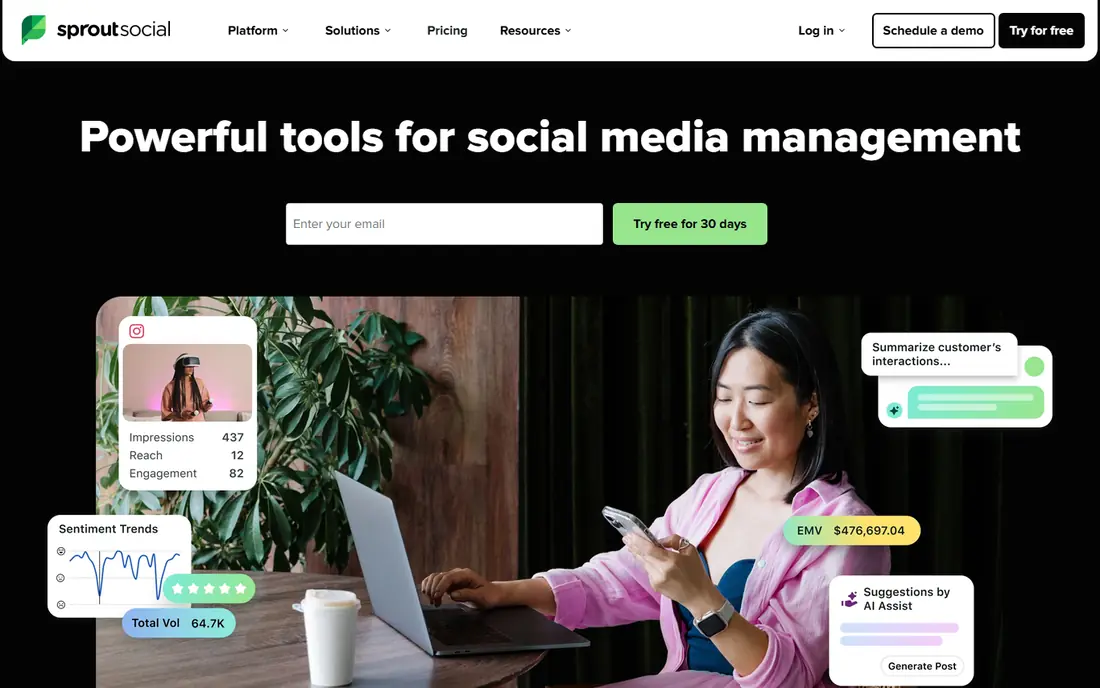
Sprout Social combines scheduling, a unified inbox, analytics, and listening in a polished platform for teams and agencies. You can plan content, reply to comments and messages in one inbox, and report on performance by channel and campaign. Team workflows with approvals suit brands that need control before posts go live.
Pricing is higher than Buffer or SocialPilot, and some features sit on higher tiers. For teams that want one strong platform for publishing, engagement, and reporting, Sprout Social is our top pick.
- Scheduling, inbox, and analytics
- Team workflows
- Strong reports
- Higher price
- Some features need higher tiers
Hootsuite
Ideal for: Many accounts and teams

Hootsuite manages many social accounts from one dashboard, with streams for monitoring keywords, mentions, and feeds, plus scheduling and team assignments. That breadth suits agencies and large brands with many profiles and team members. Analytics and listening tools round out the platform.
The interface can feel busy, and pricing rises with users and features. For teams juggling many accounts, Hootsuite gives the broadest network coverage here.
- Many social networks
- Streams and monitoring
- Team assignments
- Interface can feel busy
- Pricing rises with users
Buffer
Ideal for: Simple scheduling
Buffer is known for simple social scheduling: build a queue, set times, and let posts go out across channels. Analytics show what performed, and the interface stays clean for small teams and creators. A free plan covers basic scheduling, which helps individuals test before paying.
Engagement and listening tools are lighter than Sprout or Hootsuite, so teams that need a full inbox may want another tool. For simple, reliable scheduling, Buffer is hard to beat.
- Simple scheduling and queues
- Analytics
- Easy interface
- Engagement tools are lighter
- Listening is limited
Agorapulse
Ideal for: Agency inbox and scheduling
Agorapulse combines a unified social inbox with scheduling, reporting, and team collaboration, which suits agencies that reply to many comments and messages daily. Inbox tools help teams assign, label, and track conversations without missing replies. Reports cover performance by profile and campaign.
Pricing rises with profiles, and listening tools are add-ons rather than core. For agencies that prioritize inbox work alongside scheduling, Agorapulse is a strong choice.
- Unified inbox
- Scheduling and reports
- Team collaboration
- Price rises with profiles
- Listening is an add-on
Sendible
Ideal for: Agency social management
Sendible is built for agencies, with client management, scheduling, reporting, and content tools in one dashboard. Agencies can manage many clients, set approvals, and send white-label reports. That agency focus makes Sendible popular with small and mid-size social agencies.
The interface is functional rather than polished, and some network features need care to set up. For agencies that need client workflows at a fair price, Sendible is a practical pick.
- Agency client management
- Scheduling and reports
- Content tools
- Interface is functional
- Some networks need care
Brand24
Ideal for: Social listening
Brand24 focuses on social listening: tracking brand mentions, keywords, and competitors across social and web, with sentiment analysis and alerts. Teams can spot PR issues early, find influencers, and measure share of voice. That listening depth suits brands that care about reputation and trends.
Brand24 is not a full scheduling platform, so pair it with Buffer or Sprout for publishing. For listening-first teams, Brand24 is the best specialist here.
- Social listening and mentions
- Sentiment analysis
- Alerts
- Not a full scheduler
- Best paired with a scheduling tool
How we picked these
We compared official feature pages, pricing pages, and public reviews for each tool, and we favored tools that still work in October 2026 and cover real social jobs: scheduling, engagement, analytics, or listening. We did not claim hands-on testing, and we weighed network coverage, team workflows, reporting, and price. Where a price was unclear at writing time we wrote "See website" rather than guessing.
What to check before you choose
Start with your main job. Scheduling favors Buffer and SocialPilot, engagement favors Sprout and Agorapulse, and listening favors Brand24. Check network coverage for the channels you actually use, since tools differ on newer networks and features like Reels or Stories scheduling. Test approval workflows if a team or client must sign off posts.
Next, check analytics against your reporting needs. Agencies need white-label reports, while in-house teams need campaign and team performance views. Finally, trial with real accounts and content for two weeks, since scheduling quirks and inbox gaps only show up in daily use.
Also build a content routine that the tool can support, rather than buying a tool and hoping content appears. Plan posts around a few content pillars that match your brand, such as tips, customer stories, behind-the-scenes work, and product news, and rotate them across the week. Batch-create content in one session, then schedule it across the month, leaving room for timely posts when news breaks. Use the tool analytics to learn which pillars earn replies and shares, not just likes, since conversation signals real interest. Reply to comments and messages promptly, since social algorithms and customers both reward accounts that engage rather than just broadcast. Keep a simple content calendar that the whole team can see, so posts do not clash or repeat.
Team workflow and brand safety matter as much as scheduling. Set approval rules for sensitive topics, legal claims, and customer responses, and keep a short brand guide for tone, images, and hashtags. Assign clear roles: who creates, who approves, and who replies, so nothing stalls when someone is away. Archive old posts and reports, since a past campaign that worked is a template for the next one. Check each network rules for scheduling, since some formats and features do not schedule cleanly from third-party tools. Finally, review tool costs against real use: a platform with ten seats may be wasteful for a two-person team, while a cheap tool that cannot handle approvals may cost more in mistakes than it saves in fees.
One more tactic improves social results without more posting: repurposing strong content across formats. A blog post can become a short video, a carousel, a thread, and several quote graphics, each suited to a different network, without inventing new ideas each time. Track which format works best on each channel, since a long video may thrive on one network while a short image post wins on another. Repurposing also keeps messaging consistent, since every version draws from one approved source. Keep a simple library of approved images, captions, and hashtags so repurposing stays fast and on brand. Teams that repurpose well publish more consistently with less burnout, and consistency is what social algorithms and audiences reward most.
A final check for social tools is reporting for the people who approve budgets. A manager who sees follower counts alone may miss the real story, so report reach, replies, clicks, and conversions together, with a short note on what changed and why. That honest reporting builds trust for the social budget and helps the team focus on work that moves results, not just activity.
Frequently asked questions
What are the best zoomsphere alternatives?
Sprout Social is our pick for all-round social management, while Hootsuite suits many accounts and Buffer suits simple scheduling. Agorapulse and Sendible suit agencies, SocialPilot suits budgets, and Brand24 suits listening. Match the tool to your main social job.
Is Sprout Social better than Hootsuite?
Sprout suits teams that want a polished inbox, analytics, and reporting workflow. Hootsuite suits teams that manage many accounts with streams and monitoring. Both are strong, so trial both with your accounts and compare daily workflows.
Can I manage social media for free?
Buffer offers a free plan for basic scheduling, and most tools here offer trials. Free plans limit accounts, posts, and analytics, so growing teams usually pay. For a single creator with few accounts, a free plan may be enough.
What is social listening?
Social listening tracks mentions, keywords, and competitors across social and web to spot trends, issues, and opportunities. Tools like Brand24 and Sprout listening features help brands react fast to feedback and measure reputation. Listening differs from scheduling, which publishes content.
How do I choose a social tool for an agency?
Agencies need client management, approvals, white-label reports, and multi-account scheduling. Sendible, Agorapulse, and Sprout cover those needs at different prices. Check per-client costs and report options before signing, since agency pricing scales with clients.
SocialPilot
Ideal for: Budget social scheduling
SocialPilot offers affordable social scheduling with bulk scheduling, client management, and basic analytics. Small teams and agencies can manage many accounts without enterprise prices, and bulk tools save time for content-heavy calendars. That value is the main draw.
Analytics and inbox tools are lighter than Sprout or Agorapulse. For budget teams that mainly need reliable scheduling, SocialPilot gives strong value.