Start with H2O.ai if you need Sovereign AI on your own infrastructure. Listed starting prices: Cloudera Data Platform from $0.04 per CCU per hour. If your case is different, Cloudera Data Platform suits hybrid data and AI across environments and Palantir Foundry suits operational decision-making with ontology. All 6 tools are compared below on price, free plan and limits.
Ainotely put together this guide to AI big data software for readers who want a clear shortlist without reading every vendor page. It compares 6 tools on starting price, free plans, who each one suits and where each one falls short.
Key takeaways
This list starts with H2O.ai, which is built for Sovereign AI on your own infrastructure.
Databricks Data Intelligence Platform fits unified data and AI engineering.
No starting price is published for H2O.ai, Palantir Foundry, Google Cloud BigQuery and others; expect a quote.
Palantir Foundry comes with a trade-off: conceptual model needs upfront design.
Neither H2O.ai nor Databricks Data Intelligence Platform, nor any of the other 4 tools, has a permanent free plan; trials and quotes are the norm.
H2O.ai targets Sovereign AI on your own infrastructure. Running AI on your own infrastructure brings operational responsibilities, including capacity planning and maintenance.
Drawbacks to consider: Infrastructure ownership brings operational burden.
Teams that want to keep AI workloads under direct infrastructure control are the primary fit. H2O.ai supplies a sovereign AI product for running predictive, generative and agentic AI on your own infrastructure, from the cloud to completely air-gapped environments. H2O.ai shows no starting price here, so confirm the cost on the vendor site. Free options: Not stated.
Think of Cloudera Data Platform for hybrid data and AI across environments. Organizations that operate entirely in one cloud may find a native service more straightforward.
Where it is weaker: Edge deployments add management overhead.
Worth adding: consider other tools when edge processing and multi-environment consistency are not requirements. On cost, Cloudera Data Platform starts like this: $0.04 per CCU per hour. Trial and free access: Not stated.
Best for: Operational decision-making with ontology
Palantir Foundry is built with operational decision-making with ontology in mind. Palantir Foundry is presented as an ontology and AI-powered operating system for the modern enterprise, with the idea of running your business as code. In daily use, more straightforward analytics projects may not justify that design effort.
Teams with complicated operational workflows and a have to integrate data into daily decision-making are the natural audience. On top of that, look at other products if your needs are restricted to ad hoc querying or entry-level reporting. Pricing for Palantir Foundry is not stated here, so ask the vendor for current figures. Free options: Not stated.
Drawbacks to consider: Most useful for complicated operational use cases.
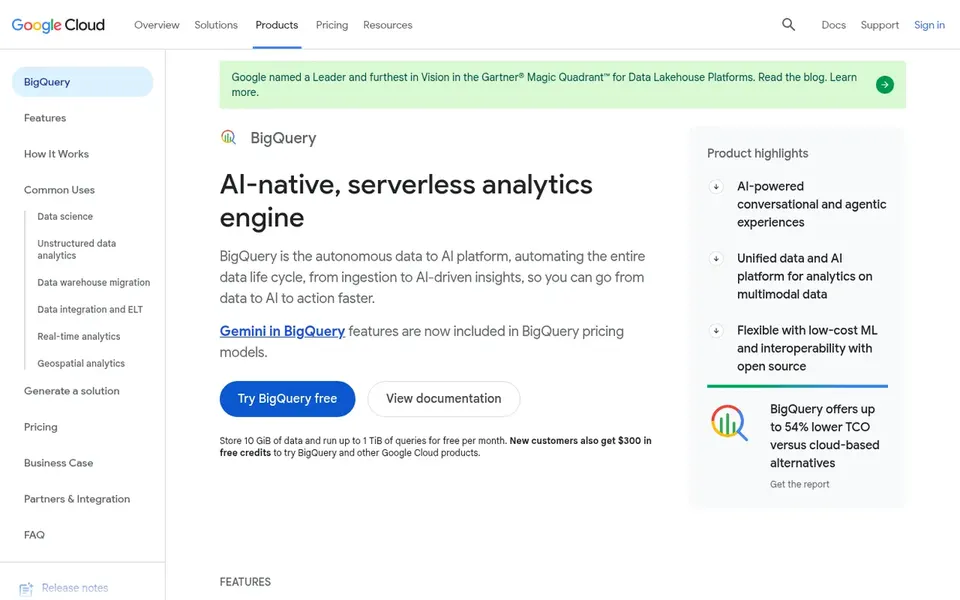
Google Cloud BigQuery is a good fit for serverless analytics on Google Cloud. Google Cloud BigQuery is described as an autonomous data and AI platform that automates the whole data life cycle, helping organizations go from data to AI to action quicker.
From a buyer's view, analytics and data science groups frequently use it as a central warehouse for large-scale querying. In daily use, BigQuery is most compelling inside the Google Cloud ecosystem, so organizations standardized on other clouds may prefer a system native to their environment. Pricing for Google Cloud BigQuery is not stated here, so ask the vendor for current figures. Free options: Not stated.
Drawbacks to consider: Wide automation may need oversight for governance.
Best for: Collaborative AI orchestration and governance
Dataiku is designed for collaborative AI orchestration and governance. The emphasis on outcomes means the product fits best when business goals and metrics are already defined.
Where it is weaker: May be more than small teams need.
Very small teams or highly specialized engineering groups may prefer a narrower tool. Look elsewhere if you need only raw compute or a single-purpose model training environment. This comparison lists no price for Dataiku; ask the vendor. Free access: Not stated.
Where it shines: Focus on measurable business outcomes.
Databricks Data Intelligence Platform works best for unified data and AI engineering. Databricks Data Intelligence Platform is a unified environment for data, analytics and AI.
Reasons to shortlist it: analytics and AI in one product.
From a buyer's view, smaller teams with narrow analytics needs may find a more focused tool simpler to adopt. Beyond that, teams that want to cut tool sprawl and link data engineering with AI development are the natural fit, notably when multiple roles have to collaborate on shared data assets. Databricks Data Intelligence Platform does not show a starting price in this comparison, so check the vendor site for current pricing. As for free access: Not stated. Where it is weaker: Wide scope can need dedicated product expertise.
Confirm the entry price on the vendor page. For H2O.ai, Palantir Foundry, Google Cloud BigQuery and others that means a quote rather than a fixed price.
Before choosing H2O.ai, weigh its main limit: infrastructure ownership layers on operational burden.
Before rolling out Cloudera Data Platform, verify the integrations your workflow depends on.
Run a one or two week pilot of Dataiku with the people who will use it every day.
Compare total cost, not headline price: for Google Cloud BigQuery, add extra seats, add-ons and any usage-based charges.
How we picked
Each tool was reviewed on what its vendor publishes: price, plan limits, core features and stated drawbacks. We did not run hands-on tests. Seat minimums, billing terms and add-ons can move the real cost, so the starting prices here are a guide and not a quote. The ranking is editorial: typical fit first, then clear pricing, then free access. If your needs are unusual, read the profiles rather than relying on position. This applies to all 6 AI big data software options compared here.
Every price and plan detail on this page comes from the vendors’ own websites. We did not run hands-on tests unless the text says so, and we do not publish star ratings or review scores. See how we score and our disclosure.
Keep your shortlist in one place
Paste prices, trial dates and notes from this guide into Ainotely, our AI note app. It files them into a topic and pulls out tasks like “cancel trial by Friday”. Free 7-day trial, no card needed.
Google Cloud BigQuery is an autonomous data and AI system that automates the data life cycle. It suits most naturally within Google Cloud. The right choice relies on your cloud strategy and how much unification you need.
Does any tool for AI big data software here have a free plan?
No tool in this list, H2O.ai and Databricks Data Intelligence Platform included, has a permanent free plan. Trials and quotes are the usual route, so plan a short evaluation period.
What should I look for in AI big data software?
Start with how your teams work: whether you need unified data engineering and AI, serverless analytics, or sovereign infrastructure. Then check governance, deployment choices and integration with existing systems.
Can I try these options before paying?
Not by default. None of the tools, from H2O.ai to Databricks Data Intelligence Platform, lists a free plan or a free trial here, so ask each vendor for a demo before committing.
Do these tools publish their prices?
Not all of them. H2O.ai, Palantir Foundry, Google Cloud BigQuery and others publish no starting price, so expect a quote request for those. The rest, Cloudera Data Platform included, show a starting price, though seats and billing terms still change the final cost.
Is H2O.ai the right pick for everyone comparing AI big data software?
No single tool suits every team. H2O.ai comes first because it fits Sovereign AI on your own infrastructure, while Cloudera Data Platform suits hybrid data and AI across environments and Palantir Foundry suits operational decision-making with ontology. Match the tool to your own size, budget and workflow before deciding.