Start with Soda if you need automatic AI-native quality checks. Listed starting prices: Soda from $750 a month. Monte Carlo is the stronger choice for Data observability across pipelines, while Ataccama ONE suits unified quality, observability and catalog. The other 3 tools in the list cover narrower or pricier cases.
Ainotely compared 6 AI data quality tools. The goal is a practical shortlist: published prices, free plan facts, best-fit use cases and honest limits for every entry.
Key takeaways
Soda takes the first slot, best suited to automatic AI-native quality checks.
Starting prices begin at $750 per month with Soda.
Soda stands alone as the one tool in this list with a free plan.
Soda comes with a trade-off: automation still needs good rule design.
Soda works best for automatic AI-native quality checks. It fits teams that want automatic quality monitoring without building every check by hand, notably those moving quick on analytics and AI projects.
Trade-offs to know: Automation still needs decent rule design.
On top of that, confirm supported sources and current capabilities on the vendor site before deciding. The starting price for Soda: $750 per month. A free plan is available with Soda. Best features of Soda: AI-native.
Monte Carlo is designed for Data observability across pipelines. Verify supported integrations and coverage on the vendor site.
As for the details, Monte Carlo is widely recognized for data observability, monitoring pipelines and surfacing anomalies so teams learn about data issues before downstream users do. Fit also relies on how your stack is instrumented. Check the vendor site for Monte Carlo pricing; none is listed in this comparison. Free plan details: Not stated.
Watch-outs: Observability focus differs from rule-based quality.
Best for: Unified quality, observability and catalog
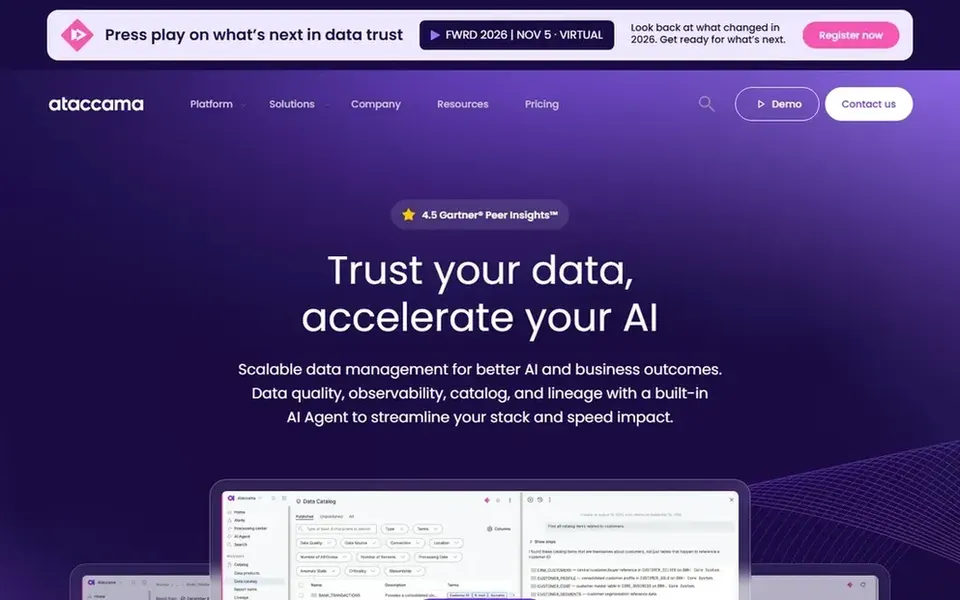
Ataccama ONE is a good fit for unified quality, observability and catalog. Ataccama ONE markets itself as agentic data trust software, combining data quality, observability, catalog and lineage with a built-in AI agent geared toward simplifying the stack. Beyond that, teams that only need straightforward pipeline assertions may find it broader than necessary.
The main drawbacks: Wide feature set takes time to adopt.
From a buyer's view, since it spans plenty of capabilities, adoption and setup can take real effort. Consider it when a unified data trust platform is the goal instead of a single narrow function. Ataccama ONE shows no starting price here, so confirm the cost on the vendor site. On free options: Free trial.
Bigeye makes the most sense for Observability plus AI governance. Bigeye positions itself as a data and AI trust product for large enterprises, combining thorough data observability, end-to-end lineage and agentic AI governance.
Drawbacks to consider: Enterprise orientation may be heavy for small teams.
Highlights: Merges observability. Pricing for Bigeye is not stated here, so ask the vendor for current figures. Trial and free access: Not stated.
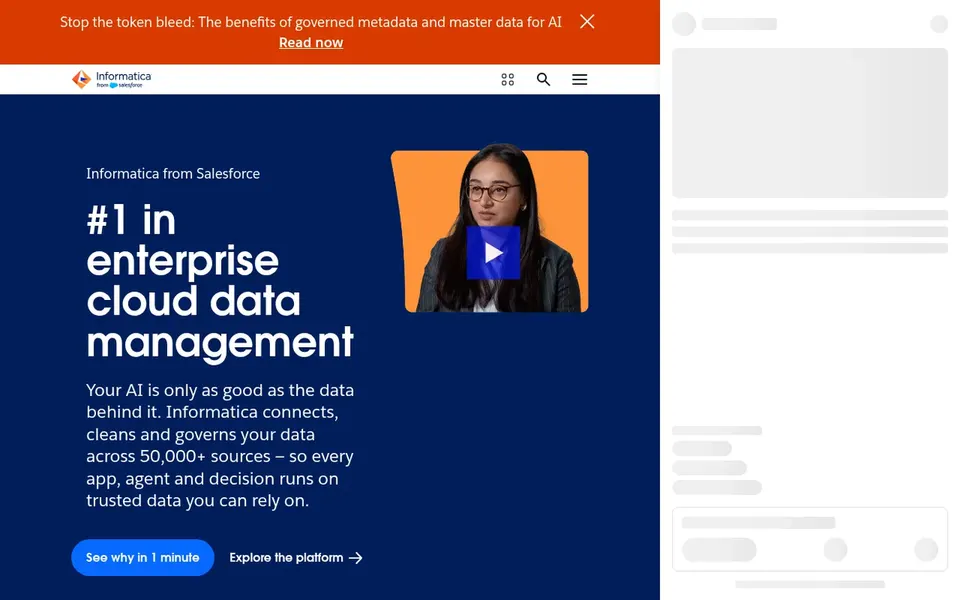
Informatica Data Quality was built for enterprise AI-ready data management. Informatica Data Quality sits within a wide enterprise cloud data management portfolio now under Salesforce, positioned around powering agents with AI-ready data. The system is made for enterprise scale, which can mean more configuration and governance overhead than a lean team wants.
Downsides: Full system may be more than small teams need.
Confirm current module scope on the vendor site before committing. From a buyer's view, teams already standardized on enterprise data products frequently find the alignment handy. In practice, smaller teams or those wanting only light pipeline checks may prefer a narrower tool. This comparison lists no price for Informatica Data Quality; ask the vendor. Free access: Not stated.
Great Expectations targets open source pipeline testing. Excellent Expectations gives you GX Core, an open source framework for testing, validating and documenting data quality across modern data pipelines, workflows and teams.
Honest limits: No vendor-managed observability layer.
No starting price is listed for Great Expectations here; confirm pricing on the vendor site. Free plan details: Not stated.
Ask Monte Carlo, Ataccama ONE, Bigeye and others for a written quote, since no starting price is shown.
Look at the free plan from Soda closely: its caps decide whether it is usable for real work.
Use real work to test the free trial from Ataccama ONE, rather than a demo project.
Before choosing Soda, weigh its main limit: automation still needs decent rule design.
Check how data leaves Ataccama ONE: formats, limits and whether exports are available on every plan.
Test how quickly Informatica Data Quality answers a pre-sales question; it hints at how support will feel later.
How we picked
Each tool was reviewed on what its vendor publishes: price, plan limits, core features and stated drawbacks. We did not run hands-on tests. Figures are shown as the vendors publish them. Billing terms, seat minimums and add-ons can change the real cost. We ordered the tools by general fit, then by how clearly pricing is shown, then by free access. A buyer with unusual needs may reorder them.
Every price and plan detail on this page comes from the vendors’ own websites. We did not run hands-on tests unless the text says so, and we do not publish star ratings or review scores. See how we score and our disclosure.
Keep your shortlist in one place
Paste prices, trial dates and notes from this guide into Ainotely, our AI note app. It files them into a topic and pulls out tasks like “cancel trial by Friday”. Free 7-day trial, no card needed.
How should I evaluate AI data quality tools before buying?
Then confirm integration coverage, lineage and governance support on vendor sites. A short pilot on real pipelines normally reveals fit faster than feature lists.
Do these tools publish their prices?
Not all of them. Monte Carlo, Ataccama ONE, Bigeye and others publish no starting price, so expect a quote request for those. The rest, Soda included, show a starting price, though seats and billing terms still change the final cost.
What is the difference between data quality and data observability tools?
Data quality tools usually apply defined rules and tests to validate data, whereas observability tools monitor pipelines and surface anomalies automatically. Plenty of systems now blend both. Match the mix to how much manual rule building your team can sustain.
How are the tools for AI data quality tools ordered?
The order follows typical fit for AI data quality tools, with Soda first and Great Expectations last, then price clarity and free access. It is editorial judgement, not a score, so another team could rank the tools differently.
Is Soda the right pick for everyone comparing AI data quality tools?
No single tool suits every team. Soda comes first because it fits automated AI-native quality checks, while Monte Carlo suits Data observability across pipelines and Ataccama ONE suits unified quality, observability and catalog. Match the tool to your own size, budget and workflow before deciding.
Can I try these options before paying?
Often, yes. Soda has a free plan and Ataccama ONE offers a free trial. Use your own data and a real task during the test, and check what the free tier or trial limits before you rely on it.