For enterprise commerce infrastructure for AI agents, commercetools is where this list starts. Listed starting prices: Medusa from $29 a month. Look at Salesforce Commerce Cloud for brands inside the Salesforce ecosystem, and at Fabric for AI visibility and catalog enrichment. The remaining 3 options are covered below with prices and limits.
If you are comparing AI headless ecommerce software, this page covers 6 tools in one place: what each is best for, what it costs to start, whether it has a free plan, and the main limit to know about.
Key takeaways
This list starts with commercetools, which is built for enterprise commerce infrastructure for AI agents.
The main caution on Salesforce Commerce Cloud: most valuable within Salesforce stack.
Medusa stands alone as the one tool in this list with a free plan.
Starting prices begin at $29 per month with Medusa.
Best for: Enterprise commerce infrastructure for AI agents
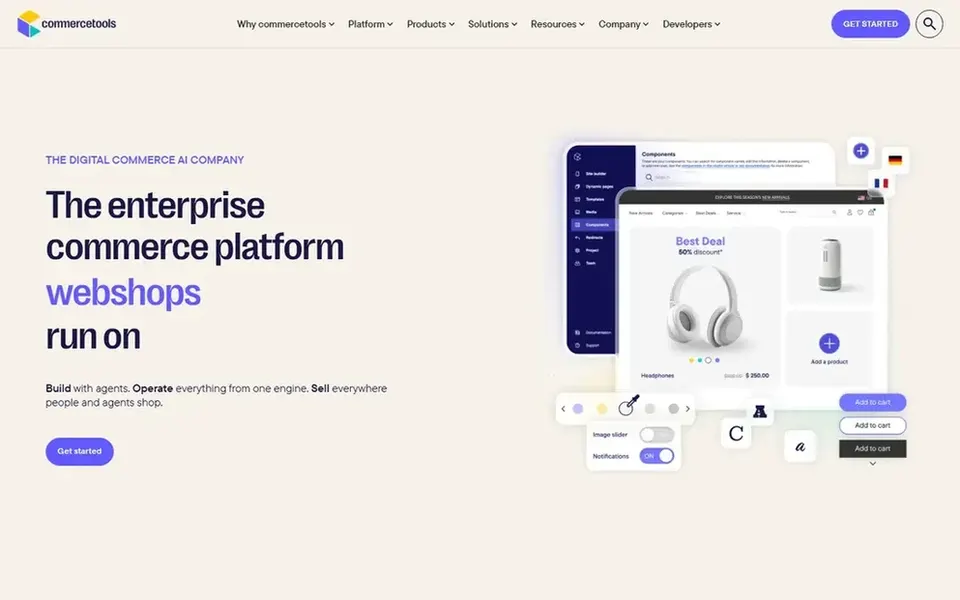
commercetools was built for enterprise commerce infrastructure for AI agents. commercetools describes itself as an enterprise commerce infrastructure for AI agents, letting teams build and operate commerce experiences across online, in-store, in-chat and agent-to-agent channels from one unified engine.
Smaller teams or brands that mainly need a quick storefront should weigh lighter choices like Medusa or Shopify Hydrogen before committing. No starting price is listed for commercetools here; confirm pricing on the vendor site. Trial and free access: Free trial.
Salesforce Commerce Cloud is built with brands inside the Salesforce ecosystem in mind. Implementation and integration need planning, and lighter headless choices may suit smaller catalogs.
Honest limits: Most valuable within Salesforce stack.
Commerce Cloud is Salesforce's commerce offering, pitched at brands that want shopping experiences connected to their broader customer and marketing data. Its value depends heavily on Salesforce adoption elsewhere in the business, so brands outside that stack may not capture the full benefit. Check the vendor site for Salesforce Commerce Cloud pricing; none is listed in this comparison. On free options: Not stated.
Fabric is a good fit for AI visibility and catalog enrichment. Fabric's emphasis is catalog enrichment and AI visibility instead of being a complete storefront platform.
So most teams will pair it with a commerce engine. On top of that, Fabric centres on merchandising for AI shopping, enriching your product catalog so answer engines like ChatGPT, Gemini and Perplexity recommend your brand, and tracking your AI visibility so you can be the answer when shoppers ask. Fabric does not show a starting price in this comparison, so check the vendor site for current pricing. On free options: Not stated.
Limits to weigh: Value relies on AI search adoption.
Best for: Scalable multi-channel storefront operations
For scalable multi-channel storefront operations, BigCommerce is a natural candidate. BigCommerce markets itself as commerce made for momentum, powering modern buying experiences across brands, regions and channels from a single scalable foundation. Its strength is as a managed system instead of a bare commerce engine.
Where it falls short: Headless setups need additional development.
So teams wanting maximum architectural freedom may prefer commercetools or Medusa. Beyond that, headless builds also need front-end development work beyond the standard product experience. This comparison lists no price for BigCommerce; ask the vendor. On free options: Not stated.
Best for: Developers wanting an open-source commerce core
Medusa works best for developers wanting an open-source commerce core. Flexibility includes responsibility: teams need development capacity to build, host and maintain their stack.
Where it is weaker: Needs development resources.
It suits engineering-led teams that want to own their commerce core, customize freely and build storefronts or agent interfaces on top of an open foundation instead of a closed hosted product. Entry price for Medusa: $29 per month. Medusa offers a free plan.
Best for: Shopify merchants building custom storefronts
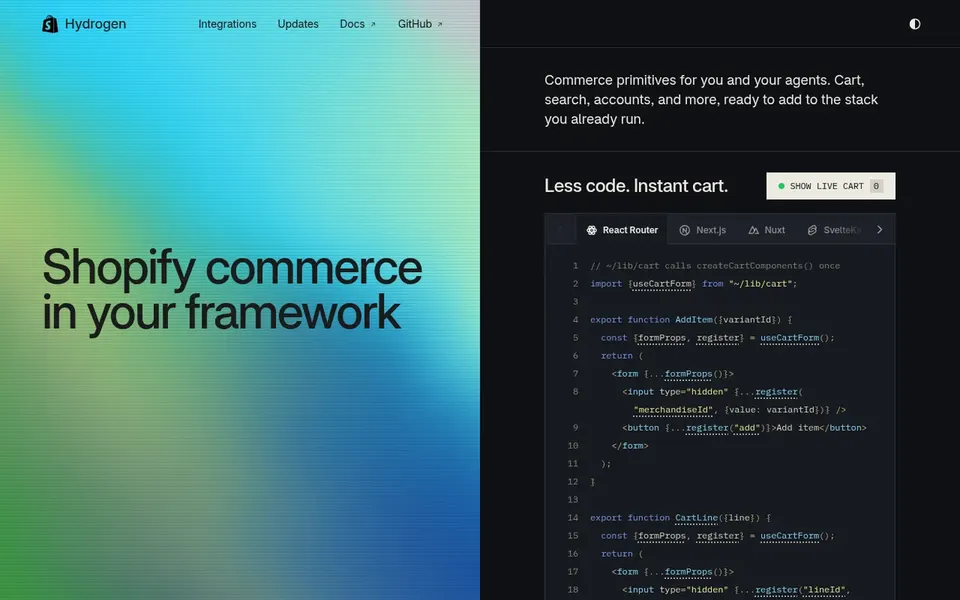
Shopify Hydrogen works best for Shopify merchants building custom storefronts. Hydrogen is Shopify's framework for building custom storefronts, described as commerce in your framework with commerce primitives for you and your agents. Beyond that, the primary limit is ecosystem lock-in: Hydrogen makes most sense when Shopify is your commerce engine, so brands wanting a completely engine-agnostic stack should look at commercetools or Medusa.
Points against: Tied to the Shopify ecosystem.
It also assumes real developer capacity, so more straightforward hosted storefronts may be a better fit for small teams. Teams comfortable with modern JavaScript frameworks will find the model familiar. Shopify Hydrogen does not show a starting price in this comparison, so check the vendor site for current pricing. Free plan details: Not stated.
Confirm the entry price on the vendor page. For commercetools, Salesforce Commerce Cloud, Fabric and others that means a quote rather than a fixed price.
Test the free plan from Medusa against your real workload before relying on it.
Run a trial of commercetools with real work before paying for a year; your own workflow is the best test.
Read the limits listed for commercetools first: targeted at bigger organizations.
Confirm you can export your data from BigCommerce, so leaving later does not mean losing records.
Confirm that Fabric connects to the apps your team already uses, on the plan you would actually buy.
How we picked
For each of the 6 tools we noted price, free plan or trial, fit for AI headless ecommerce software and the main limit, using vendor pages and documentation. Seat minimums, billing terms and add-ons can move the real cost, so the starting prices here are a guide and not a quote. We ordered the tools by general fit, then by how clearly pricing is shown, then by free access. A buyer with unusual needs may reorder them.
Every price and plan detail on this page comes from the vendors’ own websites. We did not run hands-on tests unless the text says so, and we do not publish star ratings or review scores. See how we score and our disclosure.
Keep your shortlist in one place
Paste prices, trial dates and notes from this guide into Ainotely, our AI note app. It files them into a topic and pulls out tasks like “cancel trial by Friday”. Free 7-day trial, no card needed.
Often, yes. Medusa has a free plan and commercetools offers a free trial. Use your own data and a real task during the test, and check what the free tier or trial limits before you rely on it.
How are the tools for AI headless ecommerce software ordered?
The order follows typical fit for AI headless ecommerce software, with commercetools first and Shopify Hydrogen last, then price clarity and free access. It is editorial judgement, not a score, so another team could rank the tools differently.
How does Shopify Hydrogen differ from commercetools?
Hydrogen is a framework for building storefronts on Shopify's commerce backend, so it fits merchants already on Shopify. commercetools is engine-agnostic enterprise infrastructure built for plenty of channels and agent-to-agent commerce. In practice, the decision typically comes down to ecosystem fit compared with architectural adaptability.
Which options for AI headless ecommerce software have a free plan?
Medusa is the only tool in this list with a free plan. Free plans usually cap users, projects or features, so check the limits on the vendor page. One other tool offers a trial instead.
Do these tools publish their prices?
Not all of them. commercetools, Salesforce Commerce Cloud, Fabric and others publish no starting price, so expect a quote request for those. The rest, Medusa included, show a starting price, though seats and billing terms still change the final cost.