For quick contract review and clause search, Robin AI is where this list starts. If your case is different, CoCounsel suits research-backed AI for professionals and Harvey suits wide legal AI for businesses and legal teams. The other 2 tools in the list cover narrower or pricier cases.
This Ainotely guide covers 5 AI legal assistant software for startups. Each profile lists a starting price, free plan details, strengths and drawbacks, so you can drop poor fits quickly.
Key takeaways
Robin AI takes the first slot, best suited to fast contract review and clause search.
CoCounsel comes with a trade-off: positioned for professionals broadly, not startups specifically.
For contract drafting and review in Word, Spellbook is worth a look.
None of the 5 tools, from Robin AI to Spellbook, has a free plan, so budget for a subscription or use a trial.
Focused on contracts rather than broader legal work
The 5 picks in detail
RA
#1
Robin AI
Best for: Quick contract review and clause search
Robin AI was built for fast contract review and clause search. Robin AI makes contracts more straightforward for legal teams with AI-powered contract software that reviews contracts rapidly and lets users search for a clause in seconds. As for the details, for startups signing a steady stream of agreements, this focus on speed and clause lookup can shorten review cycles and help commercial teams self-serve typical questions before legal gets involved.
Trade-offs to know: Contract-centric instead of full legal suite.
Robin is built around contracts, so litigation support, compliance programs and broader matter management sit outside its core. Worth adding: pick Robin when contract review speed and clause search are the everyday bottlenecks. This comparison lists no price for Robin AI; ask the vendor. Free access: Not stated.
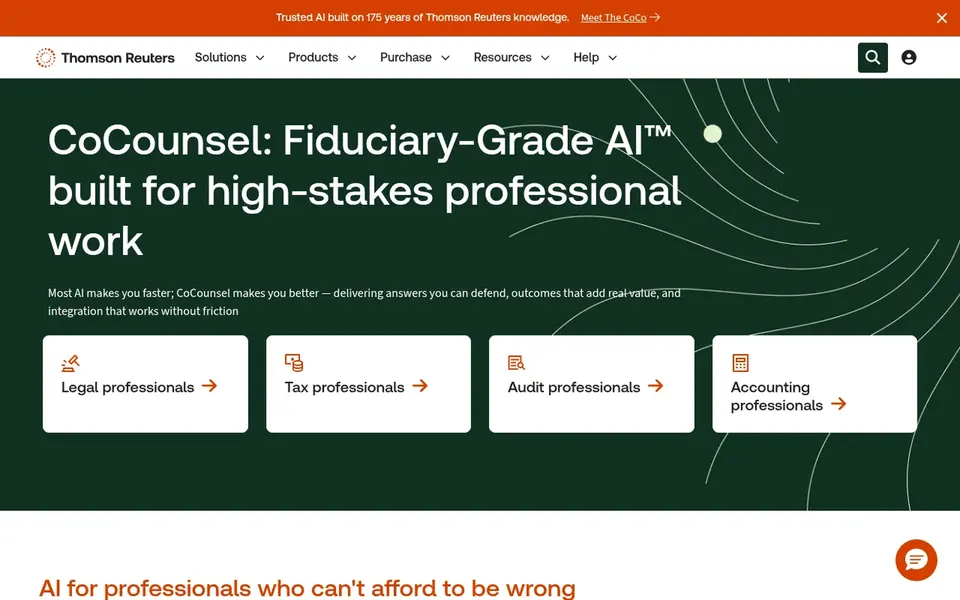
Pick CoCounsel if this describes you: research-backed AI for professionals. CoCounsel is framed around professionals and authoritative content instead of startup-specific workflows, so very small teams may not use its full depth.
If your work is largely contract drafting in Word, a contract-focused assistant may suit you better. CoCounsel shows no starting price here, so confirm the cost on the vendor site. As for free access: Free trial.
Trade-offs to know: Positioned for professionals broadly, not startups specifically.
Best for: Wide legal AI for businesses and legal teams
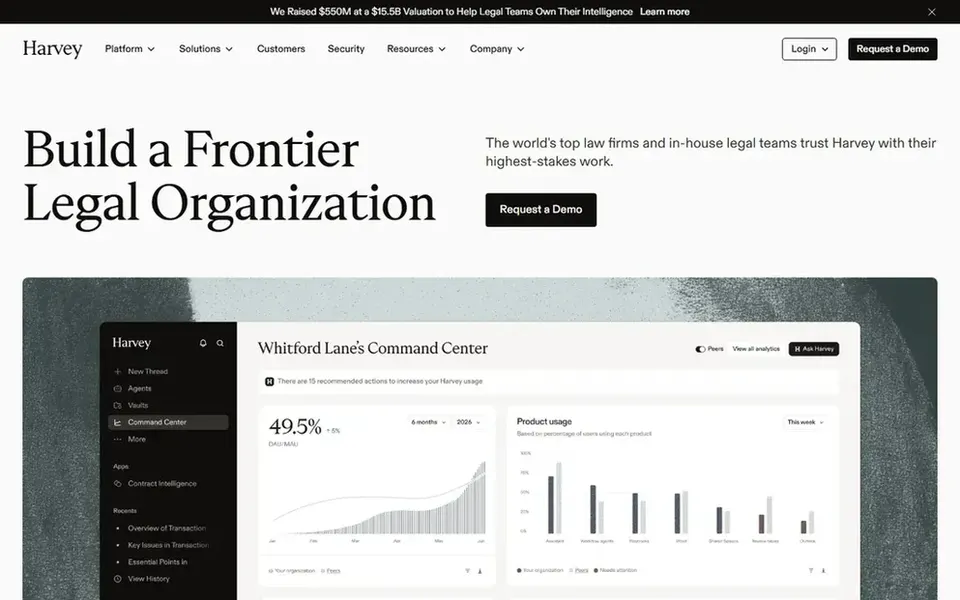
Harvey is aimed squarely at wide legal AI for businesses and legal teams. Harvey is AI software for legal and professional services, described as tailored for law businesses and corporate legal teams. It simplifies contract analysis, due diligence, compliance and litigation work.
Drawbacks to consider: Wide scope may exceed a startup's immediate needs.
Also, since Harvey is positioned around leading law businesses and corporate legal teams, very early startups with only occasional contract needs may find it more than required. Choose Harvey when legal work spans several functions. From a buyer's view, if your main need is quick drafting inside Word, a contract-focused tool may be a better fit. No starting price is listed for Harvey here; confirm pricing on the vendor site. On free options: Not stated.
For full legal workday coverage, LegalOn is a natural candidate. LegalOn describes itself as legal AI for the full legal workday: reviewing contracts, managing matters and searching every agreement in the system or in Word.
Where it is weaker: General positioning instead of startup-specific.
Worth adding: the breadth of LegalOn means more setup and learning than a single-purpose drafting assistant. LegalOn does not show a starting price in this comparison, so check the vendor site for current pricing. On free options: Not stated.
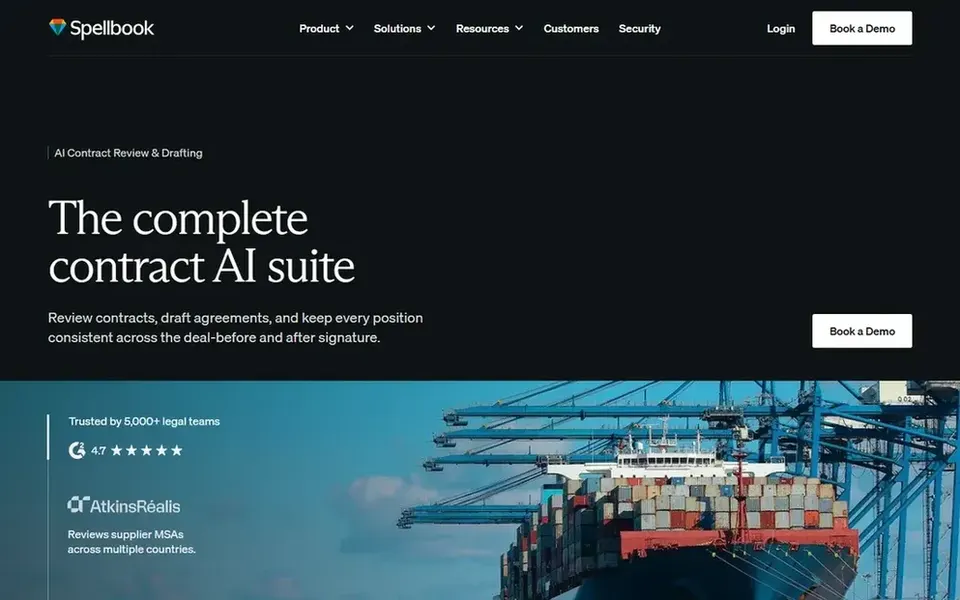
Spellbook makes the most sense for contract drafting and review in Word. Spellbook is an AI contract review and drafting system pitched at transactional lawyers. It uses models for example GPT-5, Claude and other LLMs to help legal teams draft and review contracts with greater precision, right inside Microsoft Word.
From a buyer's view, pick Spellbook when contract speed and accuracy inside Word are the priority and other legal tasks are handled separately. More specifically, Spellbook centers on contracts, so research, matter management and compliance workflows fall outside its scope. Startups that draft NDAs, vendor agreements and customer contracts in Word will find the in-place workflow practical and simple to adopt. Check the vendor site for Spellbook pricing; none is listed in this comparison. Trial and free access: Free trial.
Downsides: Concentrated on contracts instead of broader legal work.
Confirm the entry price with every vendor: no tool from Robin AI to Spellbook shows a fixed starting price.
Use real work to test the free trial from CoCounsel and Spellbook, rather than a demo project.
Read the limits listed for Robin AI first: contract-centric instead of full legal suite.
Map your must-have features to a specific Robin AI plan before you compare prices.
A short pilot of Spellbook with your real workflow tells you more than a feature table.
How we picked
Ainotely used vendor pricing pages and product documentation as the base, then compared plans, free access and documented limits for 5 tools. Prices and plan limits come from vendor pages and can change, so confirm them on the vendor site before you buy. Tools are placed by general fit for AI legal assistant software for startups, with price clarity and free access as tie-breakers. A different team can reasonably rank them differently.
Every price and plan detail on this page comes from the vendors’ own websites. We did not run hands-on tests unless the text says so, and we do not publish star ratings or review scores. See how we score and our disclosure.
Keep your shortlist in one place
Paste prices, trial dates and notes from this guide into Ainotely, our AI note app. It files them into a topic and pulls out tasks like “cancel trial by Friday”. Free 7-day trial, no card needed.
No. None of the tools, from Robin AI to Spellbook, shows a fixed starting price here, so budget time for quotes.
Can I try these tools before paying?
Often, yes. CoCounsel and Spellbook offer a free trial. Use your own data and a real task during the test, and check what the free tier or trial limits before you rely on it. Each of the 5 options in this AI legal assistant software for startups guide has its own card above with the price, free plan and limits.
Can AI legal assistants replace outside counsel for a startup?
Numerous startups use them to deal with routine contracts and prepare questions, then involve qualified counsel for complicated or high-risk matters. Treat output as a starting point that a person reviews.
Does any tool for AI legal assistant software for startups here have a free plan?
No tool in this list, Robin AI and Spellbook included, has a permanent free plan. CoCounsel, Spellbook offer a trial. Trials and quotes are the usual route, so plan a short evaluation period.
How are the tools for AI legal assistant software for startups ordered?
Robin AI sits first and Spellbook last because the order follows typical fit for AI legal assistant software for startups, then price clarity and free access. It is a judgement call, so read each profile for fit and limits.