This list puts Abridge first for health systems linking clinicians and patients. For a different need, Microsoft Nuance DAX Copilot covers automatic note drafting from patient visits and Suki covers ambient clinical documentation to cut burnout. The full list of 5 tools follows, with prices and free plan facts.
Short on time? The summary and table above give the quick view of 5 tools for AI meeting transcription software for healthcare, and the profiles that follow give the detail behind each entry.
Key takeaways
The list opens with Abridge, aimed at health systems linking clinicians and patients.
A fair warning about Nuance Dragon Medical One: not a general meeting transcriber.
Pricing across the list, from Abridge to Augmedix, is by quote only.
For Offloading clinical notes from clinicians, Augmedix is worth a look.
Best for: Health systems linking clinicians and patients
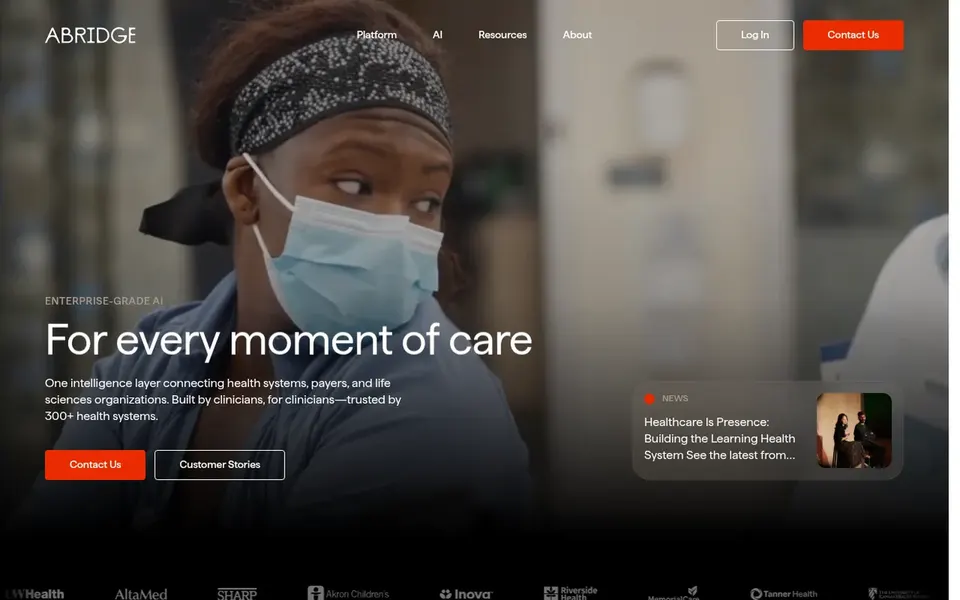
Abridge targets health systems linking clinicians and patients. Abridge describes itself as enterprise-grade clinical AI connecting health systems, payers and life sciences around clinicians and patients. Its framing emphasizes the full care relationship.
The enterprise orientation may be more than a small practice needs, and evaluation cycles can be longer. More specifically, check which care settings and integrations the vendor documents before shortlisting. This comparison lists no price for Abridge; ask the vendor. Free plan details: Not stated.
Best for: Automatic note drafting from patient visits
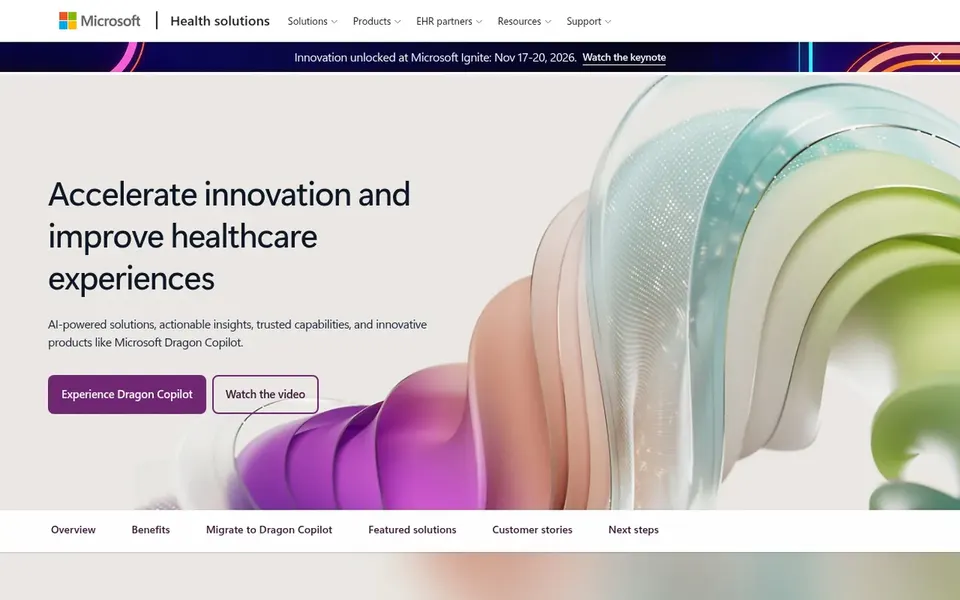
Microsoft Nuance DAX Copilot serves automatic note drafting from patient visits. Microsoft Nuance DAX Copilot is positioned as an AI assistant for clinical documentation within Microsoft's healthcare options.
In daily use, evaluate how it suits your existing record systems and review vendor documentation for supported scenarios before deciding. Pricing for Microsoft Nuance DAX Copilot is not stated here, so ask the vendor for current figures. Free options: Not stated.
Best for: Ambient clinical documentation to cut burnout
Choose Suki for ambient clinical documentation to cut burnout. Suki presents an Ambient Clinical Intelligence system that automates clinical documentation, aiming to cut burnout and return time to patient care.
Compare against specialty-focused scribes if your documentation is highly specialized. Suki does not show a starting price in this comparison, so check the vendor site for current pricing. Free options: Not stated.
Best for: Voice-driven clinical documentation workflows
Where Nuance Dragon Medical One fits: voice-driven clinical documentation workflows. Beyond that, if your need is ambient conversation-to-note capture across specialties, consider a dedicated ambient scribe instead.
Teams already using Microsoft healthcare tools may find the integration story appealing. Confirm supported workflows and integrations straight with the vendor before committing. Nuance Dragon Medical One shows no starting price here, so confirm the cost on the vendor site. On free options: Not stated.
Best for: Offloading clinical notes from clinicians
In short, Augmedix is for Offloading clinical notes from clinicians. Augmedix describes AI-centric options for human-centric medicine, taking care of notes so clinicians can link with patients.
In practice, compare note turnaround and integration choices against your practice requirements. Augmedix does not show a starting price in this comparison, so check the vendor site for current pricing. Free plan details: Not stated.
Limits to weigh: Documentation scope only. Main advantages: Human-centric positioning.
Confirm the entry price with every vendor: no tool from Abridge to Augmedix shows a fixed starting price.
Before choosing Abridge, weigh its main limit: enterprise-oriented scope.
Confirm the exact Microsoft Nuance DAX Copilot plan that includes your must-have features.
Test how quickly Augmedix answers a pre-sales question; it hints at how support will feel later.
Check the integration list for Abridge against the tools you run today, and note which ones need a higher plan.
How we picked
Each tool was reviewed on what its vendor publishes: price, plan limits, core features and stated drawbacks. We did not run hands-on tests. Treat prices as a snapshot: vendors change plans often, so check the vendor site for the figure that applies today. Tools are placed by general fit for AI meeting transcription software for healthcare, with price clarity and free access as tie-breakers. A different team can reasonably rank them differently.
Every price and plan detail on this page comes from the vendors’ own websites. We did not run hands-on tests unless the text says so, and we do not publish star ratings or review scores. See how we score and our disclosure.
Keep your shortlist in one place
Paste prices, trial dates and notes from this guide into Ainotely, our AI note app. It files them into a topic and pulls out tasks like “cancel trial by Friday”. Free 7-day trial, no card needed.
Is Abridge the right pick for everyone comparing AI meeting transcription software for healthcare?
No single tool suits every team. Abridge comes first because it fits health systems linking clinicians and patients, while Microsoft Nuance DAX Copilot suits automated note drafting from patient visits and Suki suits ambient clinical documentation to cut burnout. Match the tool to your own size, budget and workflow before deciding.
How are the tools for AI meeting transcription software for healthcare ordered?
The order follows typical fit for AI meeting transcription software for healthcare, with Abridge first and Augmedix last, then price clarity and free access. It is editorial judgement, not a score, so another team could rank the tools differently.
Do these tools publish their prices?
No. None of the tools, from Abridge to Augmedix, shows a fixed starting price here, so budget time for quotes.
Does any tool for AI meeting transcription software for healthcare here have a free plan?
No tool in this list, Abridge and Augmedix included, has a permanent free plan. Trials and quotes are the usual route, so plan a short evaluation period.
How should a small practice choose among these choices?
Start with the documentation workflow you already use and check which tools support it. Smaller practices may prefer focused ambient scribes, whereas bigger organizations may value enterprise-oriented platforms.