Our first pick is Luminance, best for contract intelligence across the enterprise. Alternatives: Spellbook for contract review and drafting in Word, and CoCounsel for AI backed by authoritative legal content. The full list of 6 tools follows, with prices and free plan facts.
Choosing AI tools for legal firms usually comes down to price, fit and limits. This Ainotely guide sets 6 tools side by side on those three points, with the facts kept short and checkable.
Key takeaways
The list opens with Luminance, aimed at contract intelligence across the enterprise.
Pricing across the list, from Luminance to Relativity aiR, is by quote only.
Neither Luminance nor Relativity aiR, nor any of the other 4 tools, has a permanent free plan; trials and quotes are the norm.
For eDiscovery and legal data intelligence, Relativity aiR is worth a look.
Check the limits for Kira Systems before you commit: primarily concentrated on due diligence and contract review.
Best for: Contract intelligence across the enterprise
Luminance is a good fit for contract intelligence across the enterprise. Luminance is made for enterprise-wide contract intelligence, so smaller businesses with restricted contract volume may find it excessive.
On top of that, Luminance supplies a Contract Intelligence Platform that turns business language into actionable insights to mitigate risk and unlock value for every team across the enterprise. This comparison lists no price for Luminance; ask the vendor. Trial and free access: Not stated.
Where it falls short: Focus on contract intelligence instead of general legal research.
Spellbook is a good fit for contract review and drafting in Word. Spellbook is an AI contract review and drafting product for transactional lawyers.
Its homepage states that it uses GPT-5, Claude, and other LLMs to help legal teams draft and review contracts with greater precision, right in Microsoft Word. Pricing for Spellbook is not stated here, so ask the vendor for current figures. Free options: Free trial.
What to check first: Centred on contracts rather than broader legal work.
Best for: AI backed by authoritative legal content
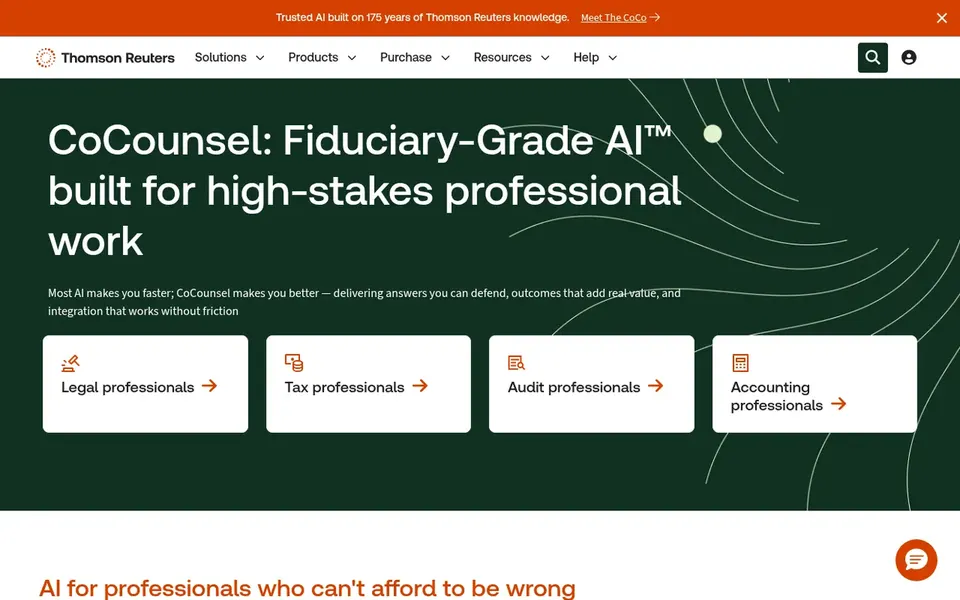
CoCounsel targets AI backed by authoritative legal content. CoCounsel is Thomson Reuters' AI technology for professionals, built by industry experts and backed by authoritative content.
Limits to weigh: May be most valuable for businesses already using Thomson Reuters products.
In daily use, CoCounsel is built to support professional work with trusted content, making it a natural fit for businesses that value dependable legal sources and strong data protection. No starting price is listed for CoCounsel here; confirm pricing on the vendor site. On free options: Free trial.
Kira Systems makes the most sense for due diligence and contract review. Kira Systems is specialized for due diligence and contract review, so it may not handle legal research or litigation needs. Beyond that, Kira extracts key provisions and answers deal-related questions, making it a solid fit for businesses engaged in mergers and acquisitions and other transactional due diligence.
Upsides: Answers deal-related questions.
Downsides: May need training for optimal use. Worth adding: Kira Systems, now part of Litera, centres on transforming contract review into contract intelligence. Its homepage notes that due diligence is where deals slow down and margins disappear, and that Litera helps from single transactions to complicated, multi-jurisdiction deals. Kira Systems shows no starting price here, so confirm the cost on the vendor site. On free options: Not stated.
Best for: Wide legal AI for businesses and legal teams
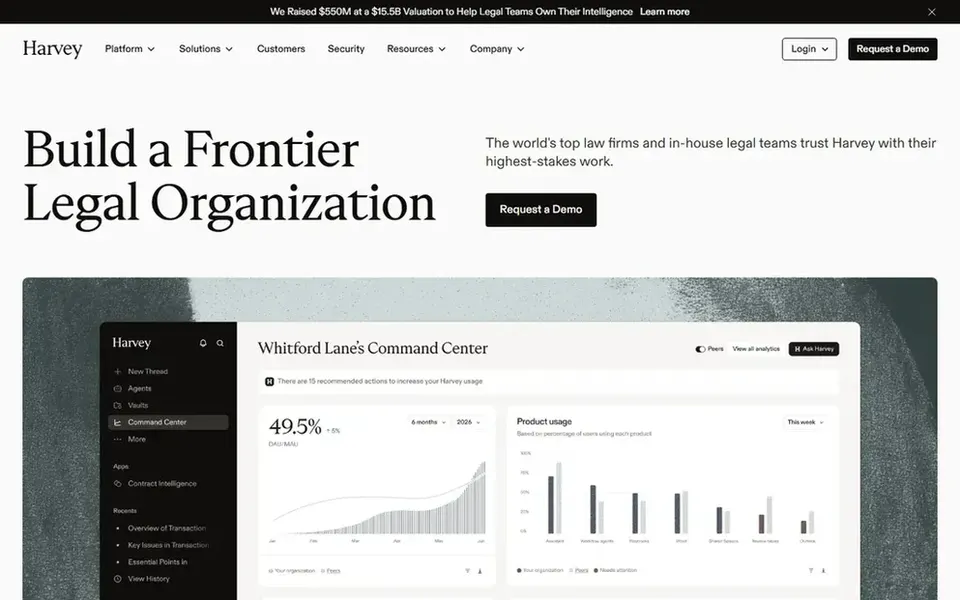
Choose Harvey for wide legal AI for firms and legal teams. Harvey is AI software built specifically for legal and professional services. More specifically, if your firm primarily needs contract drafting inside Word, a specialized tool like Spellbook could be a better fit.
Drawbacks to consider: Concentrated on large businesses and corporate legal departments.
The system simplifies contract analysis, due diligence, compliance, and litigation, making it a versatile choice for businesses that require support across several practice areas. Its wide scope means implementation may need more planning than a narrow contract review tool. No starting price is listed for Harvey here; confirm pricing on the vendor site. On free options: Not stated. Best features of Harvey: simplifies several legal workflows in one product.
Relativity aiR makes the most sense for eDiscovery and legal data intelligence. If your needs are primarily transactional, Spellbook or Luminance may be more appropriate. This makes it especially suited to litigation support, eDiscovery, and matters involving large volumes of data that require to be analyzed efficiently.
Limits to weigh: May not support contract drafting or legal research straight.
As for the details, Relativity aiR is centered on legal data intelligence. So it may not be the best fit for businesses seeking contract drafting or legal research assistance. It is most valuable for litigation and investigation workflows. Relativity aiR shows no starting price here, so confirm the cost on the vendor site. Free plan details: Not stated.
Ask each vendor, from Luminance to Relativity aiR, for a written quote; none of them publishes a starting price.
Run a trial of Spellbook and CoCounsel with real work before paying for a year; your own workflow is the best test.
Before choosing Luminance, weigh its main limit: may be more than needed for small businesses.
Read the plan comparison for Spellbook carefully; key features often start on a higher tier.
Verify that exporting from Kira Systems is possible on your plan and covers all your records.
How we picked
We compared the tools on published pricing, free plan or trial availability, feature coverage for AI tools for legal firms, and the limits each vendor documents. Where a vendor does not publish a price, the entry says quote. Where a price depends on seats or billing term, the entry says so. We ordered the tools by general fit, then by how clearly pricing is shown, then by free access. A buyer with unusual needs may reorder them.
Every price and plan detail on this page comes from the vendors’ own websites. We did not run hands-on tests unless the text says so, and we do not publish star ratings or review scores. See how we score and our disclosure.
Keep your shortlist in one place
Paste prices, trial dates and notes from this guide into Ainotely, our AI note app. It files them into a topic and pulls out tasks like “cancel trial by Friday”. Free 7-day trial, no card needed.
Often, yes. Spellbook and CoCounsel offer a free trial. Use your own data and a real task during the test, and check what the free tier or trial limits before you rely on it. For the full picture, the cards above cover all 6 entries of this AI tools for legal firms list, including price, free plan and limits.
Is Luminance the right pick for everyone comparing AI tools for legal firms?
No single tool suits every team. Luminance comes first because it fits contract intelligence across the enterprise, while Spellbook suits contract review and drafting in Word and CoCounsel suits AI backed by authoritative legal content. Match the tool to your own size, budget and workflow before deciding.
Do these tools publish their prices?
No. None of the tools, from Luminance to Relativity aiR, shows a fixed starting price here, so budget time for quotes. Pricing, free plan details and limits for all 6 tools in this AI tools for legal firms roundup sit on the individual cards above.
Are these AI tools suitable for small law businesses?
Some tools are designed with bigger businesses and corporate legal departments in mind, whereas others may be more accessible. As for the details, evaluate each tool's target user and complexity to find a fit for your firm's size.
Does any tool for AI tools for legal firms here have a free plan?
A permanent free plan is not offered by Luminance, Relativity aiR or the other tools here. Spellbook, CoCounsel offer a trial. Plan a short evaluation period instead.