Hyperproof leads the list, best for adaptable GRC with reduced duplicate work. Listed starting prices: Secureframe from $7,500 per year. For a different need, Secureframe covers automation backed by expert guidance and AuditBoard covers audit and risk system of record. All 6 tools are compared below on price, free plan and limits.
This Ainotely guide covers 6 compliance management software for startups. Each profile lists a starting price, free plan details, strengths and drawbacks, so you can drop poor fits quickly.
Key takeaways
Hyperproof sits first on this list: adaptable GRC with reduced duplicate work.
The main caution on OneTrust: broader privacy focus may not include every security certification need.
Neither Hyperproof nor Vanta, nor any of the other 4 tools, has a permanent free plan; trials and quotes are the norm.
Best results depend on connecting your existing systems
See website
Not stated
The 6 picks in detail
Hy
#1
Hyperproof
Best for: Adaptable GRC with reduced duplicate work
Think of Hyperproof for adaptable GRC with reduced duplicate work. If your goal is a quick, guided path to a single security certification, a certification-focused product may be more direct.
The main drawbacks: Less centered on pure certification automation alone.
Hyperproof shows no starting price here, so confirm the cost on the vendor site. As for free access: Not stated.
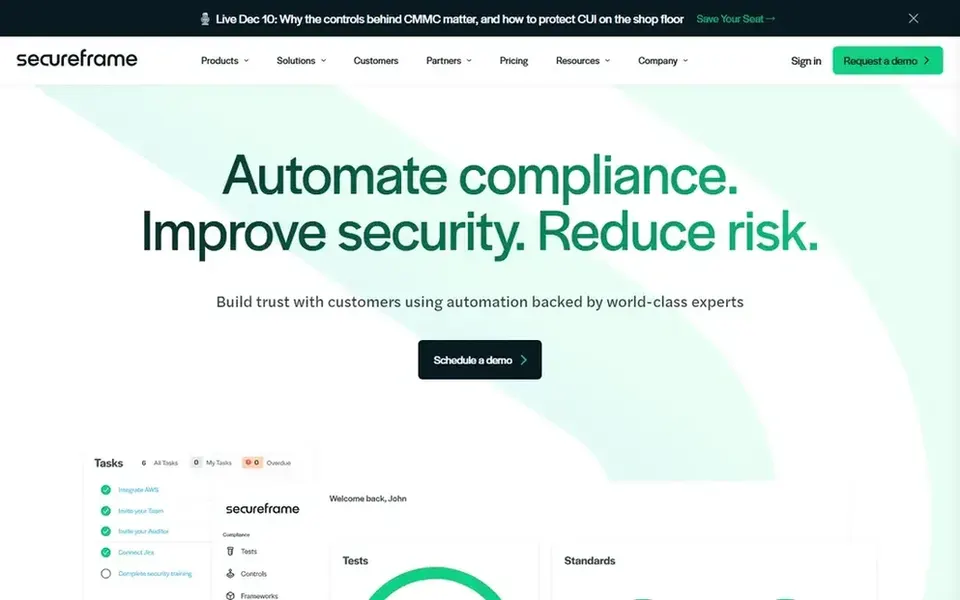
Secureframe is built with automation backed by expert guidance in mind. Secureframe presents itself as a way to get compliant, mitigate risk, and build trust with customers through automation backed by experts.
What to check first: Guidance-heavy approach may be more than some teams need.
Maintaining compliance still needs internal ownership of policies and evidence. On top of that, for startups, that combination can be valuable when internal compliance knowledge is thin and the team wants a guided path. What you pay to start with Secureframe: $7,500 per year. Trial and free access: Not stated.
Where AuditBoard fits: audit and risk system of record. The system is oriented toward audit and risk management, which can be more structure than an early startup needs. AuditBoard, now presented as the Optro GRC Intelligence Platform, describes itself as a trusted system of record that powers an intelligent system of action for risk.
Teams without defined audit processes may find adoption slower. Worth adding: startups with formal audit or risk programs, or those preparing for deeper enterprise scrutiny, may consider it as they mature. This comparison lists no price for AuditBoard; ask the vendor. As for free access: Not stated.
Drawbacks to consider: Audit-centered design may not fit startups without formal audit programs.
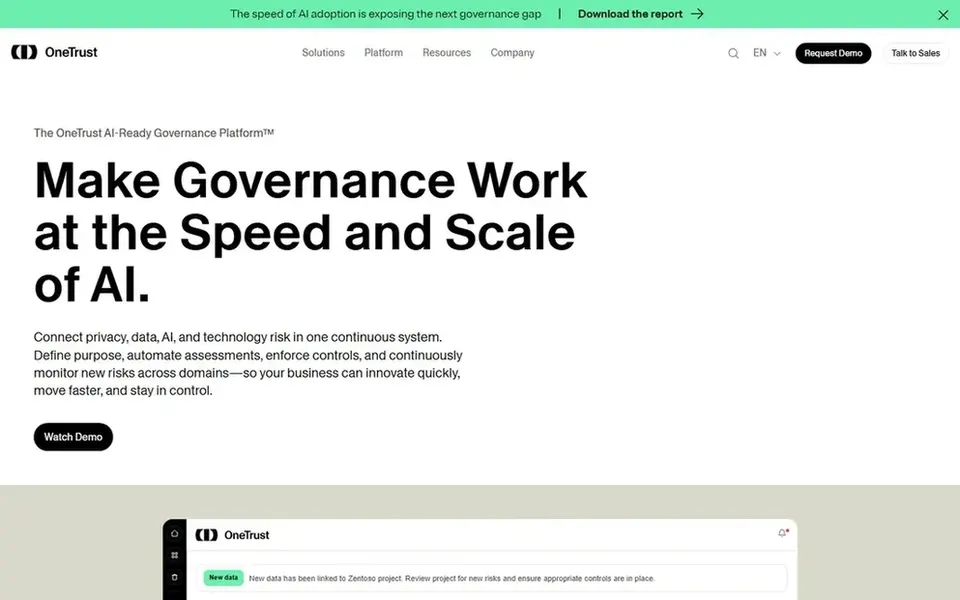
In short, OneTrust is for privacy, consent, and AI governance. Startups that deal with personal data, run marketing consent programs, or are building AI features may find its governance focus relevant early on.
Beyond that, OneTrust is oriented toward privacy and governance, so startups seeking a single tool for security certification automation may have to pair it with another system. If your main driver is a customer security questionnaire, a certification-focused tool may be the more straightforward starting point. OneTrust shows no starting price here, so confirm the cost on the vendor site. As for free access: Not stated.
Where it falls short: Broader privacy focus may not handle every security certification need.
Best for: Unified finance, risk, and sustainability reporting
For unified finance, risk, and sustainability reporting, Workiva is a natural candidate. Workiva provides a system with AI purpose-built for finance, audit, risk, and sustainability. Worth adding: startups with investor reporting, audit preparation, or sustainability disclosure needs may consider it when those requirements arrive early.
Trade-offs to know: Wide system can be complicated for small teams.
Where Workiva stands out: sustainability work.
From a buyer's view, Workiva is centered on financial and sustainability reporting instead of startup security certification automation. From a buyer's view, the system's breadth can be more than a small team needs before formal reporting obligations exist. Pricing for Workiva is not stated here, so ask the vendor for current figures. Free plan details: Not stated.
Best for: Automatic security certification readiness
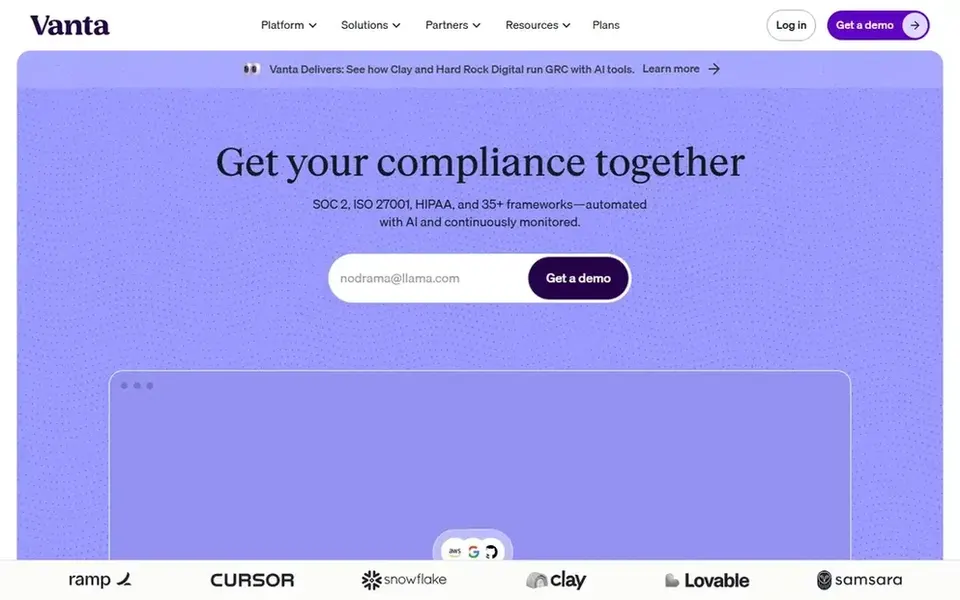
Vanta was built for automatic security certification readiness. Vanta is a compliance automation product built around security certifications like SOC 2, HIPAA, ISO standards, PCI, and GDPR. It automates monitoring and evidence collection so startups can move through certification work in weeks instead of months.
Where it is weaker: Wide framework coverage can feel complicated for very small teams.
Worth adding: the system is most handy once your core infrastructure and tools are in place, since automation relies on integrations and configured controls. If your priority is privacy and consent management instead of security certification, a dedicated privacy product may be a better fit. Pricing for Vanta is not stated here, so ask the vendor for current figures. As for free access: Not stated.
Confirm the entry price on the vendor page. For Hyperproof, AuditBoard, OneTrust and others that means a quote rather than a fixed price.
Read the limits listed for Hyperproof first: GRC breadth may need dedicated ownership.
Before rolling out Workiva, verify the integrations your workflow depends on.
Ask the daily users to test OneTrust on a live task before you roll it out to everyone.
Confirm minimum seats and billing terms with AuditBoard before you commit to an annual plan.
How we picked
Each tool was reviewed on what its vendor publishes: price, plan limits, core features and stated drawbacks. We did not run hands-on tests. Figures are shown as the vendors publish them. Billing terms, seat minimums and add-ons can change the real cost. We ordered the tools by general fit, then by how clearly pricing is shown, then by free access. A buyer with unusual needs may reorder them. The same method was used for each of the 6 compliance management software for startups picks on this page.
Every price and plan detail on this page comes from the vendors’ own websites. We did not run hands-on tests unless the text says so, and we do not publish star ratings or review scores. See how we score and our disclosure.
Keep your shortlist in one place
Paste prices, trial dates and notes from this guide into Ainotely, our AI note app. It files them into a topic and pulls out tasks like “cancel trial by Friday”. Free 7-day trial, no card needed.
How are the tools for compliance management software for startups ordered?
Hyperproof sits first and Vanta last because the order follows typical fit for compliance management software for startups, then price clarity and free access. It is a judgement call, so read each profile for fit and limits.
Can I try these tools before paying?
Not by default. None of the tools, from Hyperproof to Vanta, lists a free plan or a free trial here, so ask each vendor for a demo before committing.
Do these tools publish their prices?
Not all of them. Hyperproof, AuditBoard, OneTrust and others publish no starting price, so expect a quote request for those. The rest, Secureframe included, show a starting price, though seats and billing terms still change the final cost.
Is compliance automation enough for a first security certification?
Automation can cut manual evidence gathering and monitoring work, but it does not replace internal ownership of policies and controls. Startups still need someone accountable for maintaining practices and responding to auditor requests.
How do privacy-focused systems differ from certification tools?
Privacy-focused products emphasize consent management, data governance, and AI oversight, whereas certification tools focus on security controls and audit evidence. Beyond that, mapping your customer requirements first helps you decide which to prioritize.
When does a startup need a broader GRC system instead?
A broader GRC system becomes relevant when you must handle several risk types, formal audit programs, or cross-team reporting beyond a single certification. Until then, a focused certification automation tool is frequently more straightforward to adopt.