SAP Analytics Cloud comes first here, mainly for BI, planning and predictive analysis together. Look at Oracle Fusion Cloud EPM for Planning plus financial close in one suite, and at Pigment for modeling and planning with agentic AI. The remaining 3 options are covered below with prices and limits.
Choosing connected planning platforms usually comes down to price, fit and limits. This Ainotely guide sets 6 tools side by side on those three points, with the facts kept short and checkable.
Key takeaways
This list starts with SAP Analytics Cloud, which is built for BI, planning and predictive analysis together.
For continuous financial and operational planning, Board is worth a look.
SAP Analytics Cloud, Board and the 4 others all need a premium plan or a trial, since no free plan is listed.
Every tool from SAP Analytics Cloud to Board works by quote, with no list price shown.
Best for: BI, planning and predictive analysis together
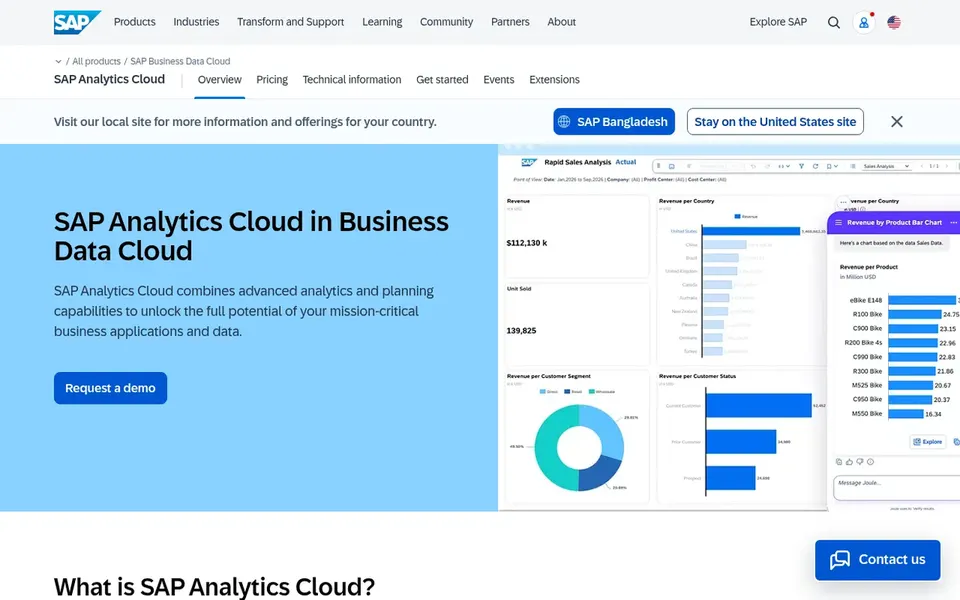
For BI, planning and predictive analysis together, SAP Analytics Cloud is a natural candidate. SAP Analytics Cloud brings business intelligence, planning and predictive analysis into one cloud analytics offering. Its homepage emphasizes data visualization and improved business intelligence, with planning as part of the same environment.
That makes it a practical choice for teams that want analytics and planning in a single place instead of stitching separate tools together. In daily use, as an analytics-first system, its planning capabilities may not match dedicated connected planning suites for very complicated, enterprise-wide models. No starting price is listed for SAP Analytics Cloud here; confirm pricing on the vendor site. On free options: Not stated.
Drawbacks to consider: Planning depth may trail dedicated planning suites.
Best for: Planning plus financial close in one suite
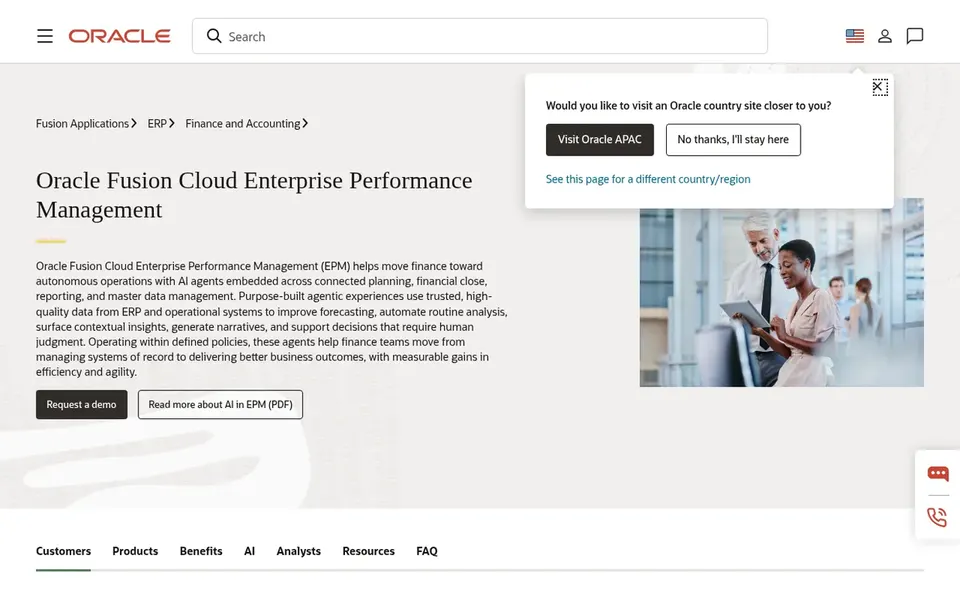
In short, Oracle Fusion Cloud EPM is for Planning plus financial close in one suite. Oracle Fusion Cloud EPM embeds AI agents for planning, financial close, reporting, tax and enterprise data management. That breadth makes it a fit for finance organizations that want planning connected to the rest of the close and reporting cycle instead of handled in separate tools.
From a buyer's view, if you only need connected planning without close, tax or data management, a focused planning tool may be more straightforward. As for the details, teams already using Oracle cloud applications will find the fit most natural, since planning data can align with the wider enterprise stack. Pick Oracle when an integrated finance system is the priority. The suite includes a lot, and that scope can mean more configuration and change management before teams see value. Oracle Fusion Cloud EPM shows no starting price here, so confirm the cost on the vendor site. Free plan details: Not stated.
Limits to weigh: Best value if you already run Oracle cloud.
Think of Pigment for modeling and planning with agentic AI. Pigment describes itself as agentic AI for enterprise business planning, letting teams analyze, model and plan in one integrated system.
Worth adding: as a newer system, it may have fewer established integrations than older enterprise suites, so check connectivity against your systems. No starting price is listed for Pigment here; confirm pricing on the vendor site. Trial and free access: Not stated.
Drawbacks to consider: Complicated models still need skilled owners.
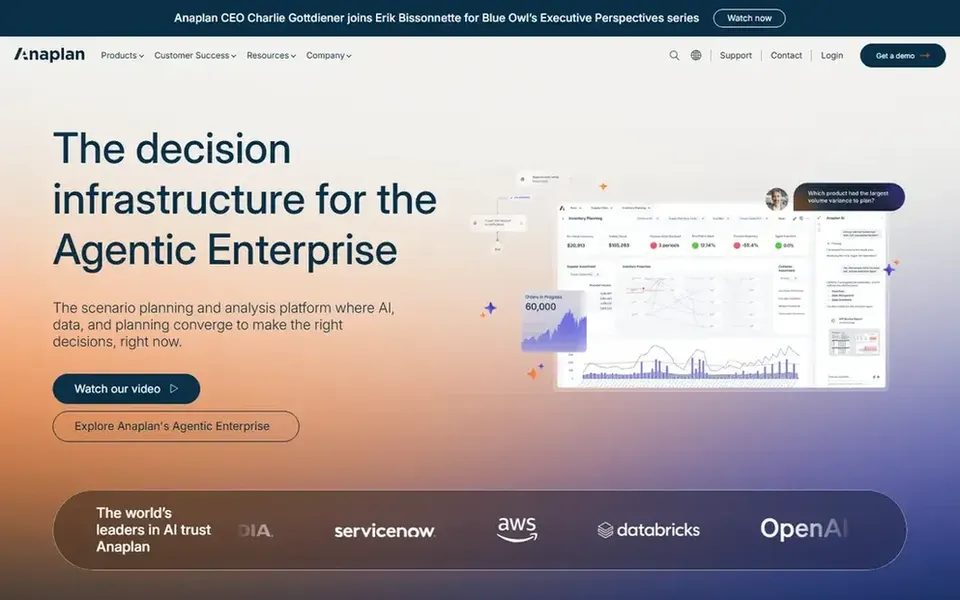
For scenario planning and analysis at scale, Anaplan is a natural candidate. Anaplan presents itself as decision infrastructure for agentic enterprises, with a system where AI, data and planning converge.
What Anaplan does well: Aimed at enterprise decision making.
Since it targets large enterprises, Anaplan can feel substantial for small teams or straightforward budgeting needs. Modeling and integration work generally needs dedicated owners. Anaplan does not show a starting price in this comparison, so check the vendor site for current pricing. Free plan details: Not stated.
What to check first: Connector and model setup can take effort.
Best for: Finance, workforce and operations planning
Workday Adaptive Planning targets finance, workforce and operations planning. It leans on AI-driven planning to help teams move beyond static budgets. In daily use, if your planning is largely straightforward budgeting and forecasting, the depth here may exceed your needs.
Where Workday Adaptive Planning stands out: workforce and operations data.
Where it is weaker: Tightest fit within the Workday ecosystem. For everyday use, firms already using Workday for HR or finance gain the most from the shared data. As for the details, very custom or highly technical modeling may call for a more adaptable product. On top of that, the combination of financial and workforce planning in one place fits organizations that plan headcount and spend together. Also, choose Adaptive when connected finance and workforce planning matter most. Workday Adaptive Planning shows no starting price here, so confirm the cost on the vendor site. On free options: Not stated.
Best for: Continuous financial and operational planning
Board is designed for continuous financial and operational planning. Choose Board when connecting financial and operational planning continuously is the objective.
Drawbacks to consider: Wide scope may need phased rollout.
No starting price is listed for Board here; confirm pricing on the vendor site. As for free access: Not stated.
Request quotes from SAP Analytics Cloud, Board and the others; the list shows no fixed prices.
Read the limits listed for SAP Analytics Cloud first: Planning depth may trail dedicated planning suites.
Before rolling out Workday Adaptive Planning, verify the integrations your workflow depends on.
Get the contract term, renewal terms and any onboarding fees from Anaplan in writing.
Price Board for your actual team size; headline prices rarely include add-ons or overage.
How we picked
For each of the 6 tools we noted price, free plan or trial, fit for connected planning platforms and the main limit, using vendor pages and documentation. Prices and plan limits come from vendor pages and can change, so confirm them on the vendor site before you buy. Tools are placed by general fit for connected planning platforms, with price clarity and free access as tie-breakers. A different team can reasonably rank them differently.
Every price and plan detail on this page comes from the vendors’ own websites. We did not run hands-on tests unless the text says so, and we do not publish star ratings or review scores. See how we score and our disclosure.
Keep your shortlist in one place
Paste prices, trial dates and notes from this guide into Ainotely, our AI note app. It files them into a topic and pulls out tasks like “cancel trial by Friday”. Free 7-day trial, no card needed.
Is SAP Analytics Cloud the right pick for everyone comparing connected planning platforms?
No single tool suits every team. SAP Analytics Cloud comes first because it fits BI, planning and predictive analysis together, while Oracle Fusion Cloud EPM suits Planning plus financial close in one suite and Pigment suits modeling and planning with agentic AI. Match the tool to your own size, budget and workflow before deciding.
Can I try these options before paying?
Not by default. None of the tools, from SAP Analytics Cloud to Board, lists a free plan or a free trial here, so ask each vendor for a demo before committing.
Does any tool for connected planning platforms here have a free plan?
No tool in this list, SAP Analytics Cloud and Board included, has a permanent free plan. Trials and quotes are the usual route, so plan a short evaluation period.
Do these tools publish their prices?
No. None of the tools, from SAP Analytics Cloud to Board, shows a fixed starting price here, so budget time for quotes.
What makes a planning system connected?
A connected planning product links financial and operational data so teams plan from a shared view instead of separate spreadsheets. Look for native integrations and a typical data model when evaluating choices.