Optable leads the list, best for privacy-preserving identity and collaboration for advertising. Listed starting prices: LiveRamp Data Collaboration Platform from $20,000 per year. Alternatives: AWS Clean Rooms for secure data collaboration on AWS, and LiveRamp Data Collaboration Platform for wide data collaboration and clean room needs. All 5 tools are compared below on price, free plan and limits.
If you are comparing data clean room software for startups, this page covers 5 tools in one place: what each is best for, what it costs to start, whether it has a free plan, and the main limit to know about.
Key takeaways
Number one here is Optable, a fit for privacy-preserving identity and collaboration for advertising.
AWS Clean Rooms stands alone as the one tool in this list with a free plan.
Expect to ask for a quote from Optable, AWS Clean Rooms, Google Ads Data Hub and Microsoft Azure Confidential Computing; the other tools show a starting price.
Microsoft Azure Confidential Computing suits protecting data in use with trusted execution.
Best for: Privacy-preserving identity and collaboration for advertising
Optable is built with privacy-preserving identity and collaboration for advertising in mind. Optable is a privacy-preserving identity, activation, and collaboration system for advertising.
In practice, pricing is not disclosed on the homepage, so you will have to inquire. Pricing for Optable is not stated here, so ask the vendor for current figures. As for free access: Not stated.
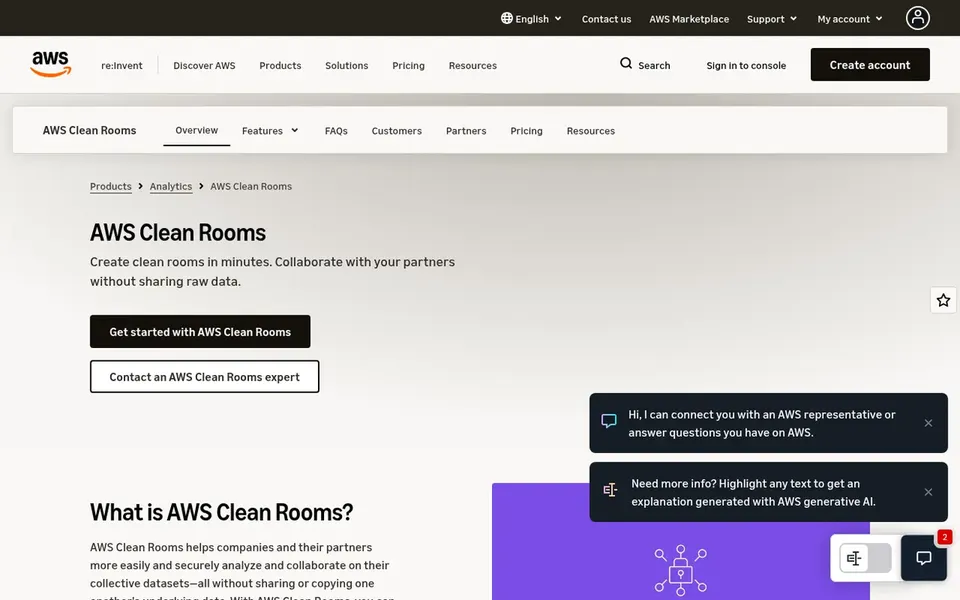
Choose AWS Clean Rooms for secure data collaboration on AWS. AWS Clean Rooms is a managed service that helps firms and their partners analyze collective datasets without sharing or copying underlying data. It is well-suited for startups already using AWS, as it plugs into other AWS services and supplies a secure environment for collaboration.
That said, it needs an AWS account and some familiarity with AWS services, which may be a barrier for teams without cloud experience. Configuration can also be complicated, particularly for startups with restricted technical staff. AWS Clean Rooms does not show a starting price in this comparison, so check the vendor site for current pricing. You can start on AWS Clean Rooms without paying.
Where it is weaker: May involve complicated configuration.
Best for: Wide data collaboration and clean room needs
Think of LiveRamp Data Collaboration Platform for wide data collaboration and clean room needs. LiveRamp's Data Collaboration Platform gives you definitive information on data collaboration, including data clean rooms and data-driven marketing. Also, startups that require a wide product to run identity and data collaboration across partners may find it handy, notably if they are centred on marketing and advertising use cases.
From a buyer's view, the product may be more complicated than what a small startup needs. Pricing is not disclosed on the homepage, so it is important to contact the vendor for details. It also may need some integration effort. The starting price for LiveRamp Data Collaboration Platform: $20,000 per year. LiveRamp Data Collaboration Platform has no permanent free option.
Downsides: Pricing details not available on homepage.
Best for: Advertising analytics within Google's ecosystem
Google Ads Data Hub works best for advertising analytics within Google's ecosystem. Google Ads Data Hub is a cloud-based clean room option designed for advertisers and agencies to analyze campaign data whereas protecting user privacy. It is well suited to startups that run advertising on Google systems and have to measure performance without accessing raw user data.
More specifically, the primary limitation is its focus on Google's advertising ecosystem, so startups using other ad systems may find it less handy. It also needs a certain level of technical expertise to set up and use effectively. Google Ads Data Hub does not show a starting price in this comparison, so check the vendor site for current pricing. Free plan details: Not stated.
Watch-outs: Needs technical setup and SQL knowledge.
Best for: Protecting data in use with trusted execution
Pick Microsoft Azure Confidential Computing if this describes you: protecting data in use with trusted execution. Startups looking for a ready-to-use clean room product may have to look elsewhere.
Microsoft Azure Confidential Computing gives you advanced security capabilities to protect data in use, using trusted execution environments. Microsoft Azure Confidential Computing does not show a starting price in this comparison, so check the vendor site for current pricing. On free options: Free trial.
Get a written quote from Optable, AWS Clean Rooms, Google Ads Data Hub and Microsoft Azure Confidential Computing; the list shows no starting price for them.
Test the free plan from AWS Clean Rooms against your real workload before relying on it.
Take the trial from Microsoft Azure Confidential Computing and push a live task through it before you pay.
Read the limits listed for Optable first: may be tailored for advertising, less general.
Compare total cost, not headline price: for AWS Clean Rooms, add extra seats, add-ons and any usage-based charges.
Look at which plan of Microsoft Azure Confidential Computing unlocks the features you need; entry tiers are often cut down.
How we picked
Ainotely used vendor pricing pages and product documentation as the base, then compared plans, free access and documented limits for 5 tools. Treat prices as a snapshot: vendors change plans often, so check the vendor site for the figure that applies today. We ordered the tools by general fit, then by how clearly pricing is shown, then by free access. A buyer with unusual needs may reorder them. This applies to all 5 data clean room software for startups options compared here.
Every price and plan detail on this page comes from the vendors’ own websites. We did not run hands-on tests unless the text says so, and we do not publish star ratings or review scores. See how we score and our disclosure.
Keep your shortlist in one place
Paste prices, trial dates and notes from this guide into Ainotely, our AI note app. It files them into a topic and pulls out tasks like “cancel trial by Friday”. Free 7-day trial, no card needed.
Which options for data clean room software for startups have a free plan?
AWS Clean Rooms is the only tool in this list with a free plan. Free plans usually cap users, projects or features, so check the limits on the vendor page. One other tool offers a trial instead.
Do these tools publish their prices?
Not all of them. Optable, AWS Clean Rooms, Google Ads Data Hub and Microsoft Azure Confidential Computing publish no starting price, so expect a quote request for those. The rest, LiveRamp Data Collaboration Platform included, show a starting price, though seats and billing terms still change the final cost.
Can I try these tools before paying?
Often, yes. AWS Clean Rooms has a free plan and Microsoft Azure Confidential Computing offers a free trial. Use your own data and a real task during the test, and check what the free tier or trial limits before you rely on it.
Is Optable the right pick for everyone comparing data clean room software for startups?
No single tool suits every team. Optable comes first because it fits privacy-preserving identity and collaboration for advertising, while AWS Clean Rooms suits secure data collaboration on AWS and LiveRamp Data Collaboration Platform suits broad data collaboration and clean room needs. Match the tool to your own size, budget and workflow before deciding.
Which data clean room is a good match for advertising-focused startups?
Optable is the pick this page puts first, mainly for privacy-preserving identity and collaboration for advertising. If your situation differs, AWS Clean Rooms suits secure data collaboration on AWS, and LiveRamp Data Collaboration Platform suits wide data collaboration and clean room needs. Compare price and limits before you decide.