Talend Data Fabric comes first here, mainly for integration, transformation and governance. If your case is different, IBM DataStage suits visual data pipeline design and Denodo Platform suits live data virtualization and governance. Prices, free plans and limits for all 5 tools follow.
Choosing data Fabric software for small business usually comes down to price, fit and limits. This Ainotely guide sets 5 tools side by side on those three points, with the facts kept short and checkable.
Key takeaways
Top of the list is Talend Data Fabric, which targets integration, transformation and governance.
Talend Data Fabric, Microsoft Fabric and the 3 others all need a premium plan or a trial, since no free plan is listed.
Microsoft Fabric suits unified analytics and data lakes.
Talend Data Fabric, Microsoft Fabric and the 3 others all sell by quote; expect sales conversations before you see a price.
One limit worth knowing about Databricks Data Intelligence Platform: engineering skills are an advantage.
Best for: Integration, transformation and governance
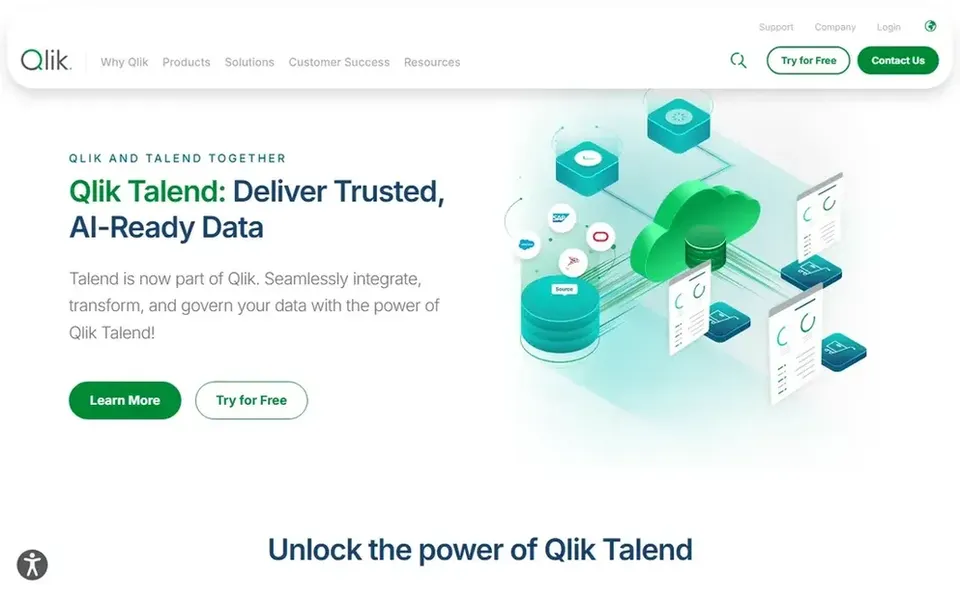
Talend Data Fabric makes the most sense for integration, transformation and governance. Talend Data Fabric is now part of Qlik, and the vendor describes the combined offering as a way to integrate, transform and govern data across any environment, built for AI, analytics and trusted decisions. Small companies with multiple source systems and a need for repeatable pipelines commonly look here, since the emphasis is on moving and cleaning data dependably instead of on offering an all-in-one analytics workspace.
Trade-offs to know: Integration focus instead of full analytics.
In daily use, since the product is now presented under the Qlik Talend Cloud banner, buyers should confirm the current packaging and roadmap straight with the vendor before committing. The product leans toward integration and governance, so a business wanting a single place for analysis and modeling may need extra tools. No starting price is listed for Talend Data Fabric here; confirm pricing on the vendor site. On free options: Not stated.
Think of IBM DataStage for visual data pipeline design. Small firms that primarily have to move and transform data between systems, with a clear picture of each pipeline, will find the visual approach approachable compared to hand-coded jobs. From a buyer's view, pipeline design still rewards some specialist knowledge, which can be a stretch for a very small team.
Where it falls short: Pipeline focus.
Strengths: Visual interface for pipeline design.
Worth adding: pick it when integration is the core problem and other data needs are restricted. DataStage concentrates on integration instead of acting as a complete data fabric with analytics and governance bundled in. So you may need companion tools for a full picture. IBM DataStage shows no starting price here, so confirm the cost on the vendor site. Free access: Free trial.
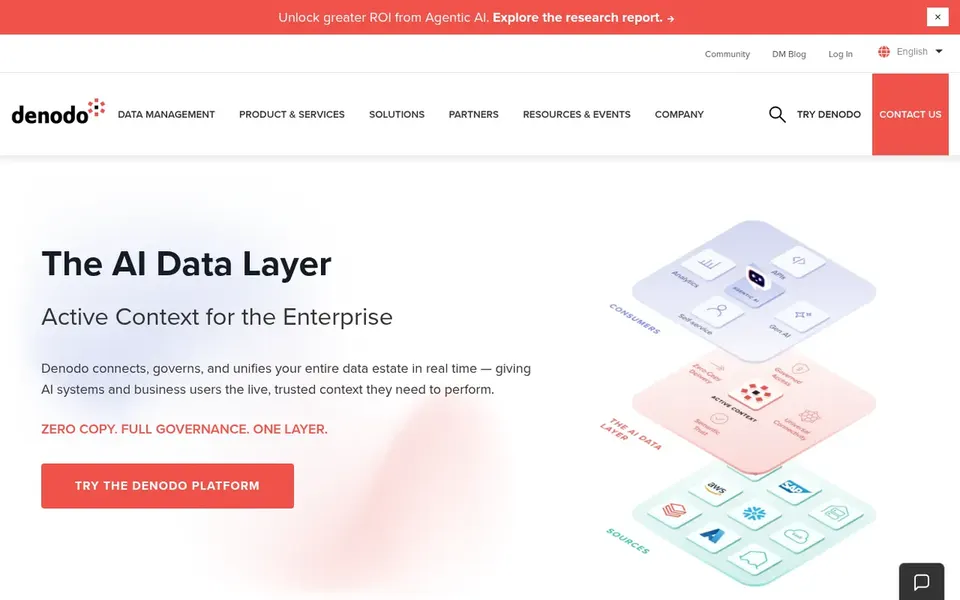
In short, Denodo Platform is for live data virtualization and governance. For a very small team with few sources, that effort may outweigh the benefit, and a more straightforward integration tool could suffice. Beyond that, Denodo Platform positions itself around connecting, governing and unifying a whole data estate in live, giving AI systems and business users live, trusted context.
Trade-offs to know: May be more than a tiny team needs.
That makes it relevant for small companies whose data sits across multiple systems and cannot easily be copied into one warehouse. Teams that require governed access to live sources, instead of batch copies, are the natural fit, especially where reporting relies on current operational data. Denodo Platform does not show a starting price in this comparison, so check the vendor site for current pricing. Free access: Not stated.
For Data, analytics and AI in one place, Databricks Data Intelligence Platform is a natural candidate. Databricks provides a unified product for data, analytics and AI, with a data-centric approach and support for simplifying ETL, data warehousing, governance and AI work. The system assumes a level of engineering comfort; teams without technical staff may find the concepts and configuration demanding.
It is also a substantial environment for a business whose needs are primarily straightforward reporting. Small firms with technical staff, or those planning to build AI capabilities on their data, commonly consider it since the same environment can host pipelines, warehouses and models instead of separate products. This comparison lists no price for Databricks Data Intelligence Platform; ask the vendor. Free access: Not stated.
Where it falls short: Can be complicated for non-technical teams.
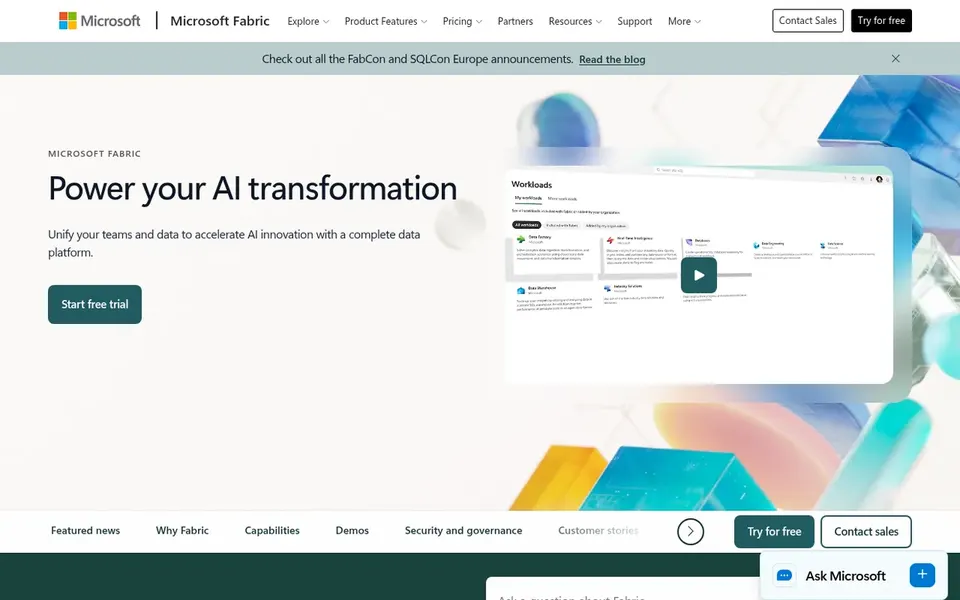
Where Microsoft Fabric fits: unified analytics and data lakes. Microsoft Fabric is an AI-powered analytics platform that unites data and services, including data science and data lakes. On top of that, a small team without dedicated data engineers may find the range of workloads and configuration choices heavy to adopt.
The value relies on how much of the Microsoft ecosystem you already use. The system's breadth is also its challenge. From a buyer's view, confirm current capabilities on the vendor site. Pricing for Microsoft Fabric is not stated here, so ask the vendor for current figures. Free options: Free trial.
Where it falls short: Breadth can overwhelm small teams.
Request quotes from Talend Data Fabric, Microsoft Fabric and the others; the list shows no fixed prices.
Run a trial of IBM DataStage and Microsoft Fabric with real work before paying for a year; your own workflow is the best test.
Before choosing Talend Data Fabric, weigh its main limit: product direction tied to Qlik transition.
Find out whether the entry plan of IBM DataStage covers your must-haves or only a trimmed-down version.
Compare total cost, not headline price: for Talend Data Fabric, add extra seats, add-ons and any usage-based charges.
How we picked
For each of the 5 tools we noted price, free plan or trial, fit for data Fabric software for small business and the main limit, using vendor pages and documentation. Where a price is missing, the vendor does not list one publicly or ties it to a quote. Always confirm before budgeting. We ordered the tools by general fit, then by how clearly pricing is shown, then by free access. A buyer with unusual needs may reorder them.
Every price and plan detail on this page comes from the vendors’ own websites. We did not run hands-on tests unless the text says so, and we do not publish star ratings or review scores. See how we score and our disclosure.
Keep your shortlist in one place
Paste prices, trial dates and notes from this guide into Ainotely, our AI note app. It files them into a topic and pulls out tasks like “cancel trial by Friday”. Free 7-day trial, no card needed.
Is Talend Data Fabric the right pick for everyone comparing data Fabric software for small business?
No single tool suits every team. Talend Data Fabric comes first because it fits integration, transformation and governance, while IBM DataStage suits visual data pipeline design and Denodo Platform suits real-time data virtualization and governance. Match the tool to your own size, budget and workflow before deciding.
Does any tool for data Fabric software for small business here have a free plan?
A permanent free plan is not offered by Talend Data Fabric, Microsoft Fabric or the other tools here. IBM DataStage, Microsoft Fabric offer a trial. Plan a short evaluation period instead.
What is data fabric software in straightforward terms?
It is a set of tools that link data spread across different systems and make it available in a governed, consistent way. Rather than copying everything into one place, a fabric layer helps people and applications reach trusted data wherever it lives.
How are the tools for data Fabric software for small business ordered?
Talend Data Fabric sits first and Microsoft Fabric last because the order follows typical fit for data Fabric software for small business, then price clarity and free access. It is a judgement call, so read each profile for fit and limits.
Can I try these tools before paying?
Often, yes. IBM DataStage and Microsoft Fabric offer a free trial. Use your own data and a real task during the test, and check what the free tier or trial limits before you rely on it.