Our first pick is Collibra, best for enterprise governance and AI control. Listed starting prices: Soda from $750 per month. Alternatives: Soda for automatic, code-friendly data quality checks, and Monte Carlo for dedicated pipeline anomaly monitoring. All 6 tools are compared below on price, free plan and limits.
This Ainotely guide covers 6 data observability software for pipelines. Each profile lists a starting price, free plan details, strengths and drawbacks, so you can drop poor fits quickly.
Key takeaways
Number one here is Collibra, a fit for enterprise governance and AI control.
Bigeye fits large enterprises needing lineage and AI governance.
Check the limits for Soda before you commit: observability is centered on quality checks.
Only Soda offers a free plan among these 6 tools.
Soda has the lowest monthly starting price in this list: $750 per month.
Collibra is designed for enterprise governance and AI control. Collibra describes itself as an enterprise AI control plane, governing context and control across data, models and agents for organizations that require certainty as AI adoption grows.
No starting price is listed for Collibra here; confirm pricing on the vendor site. Free options: Not stated.
Best for: Automatic, code-friendly data quality checks
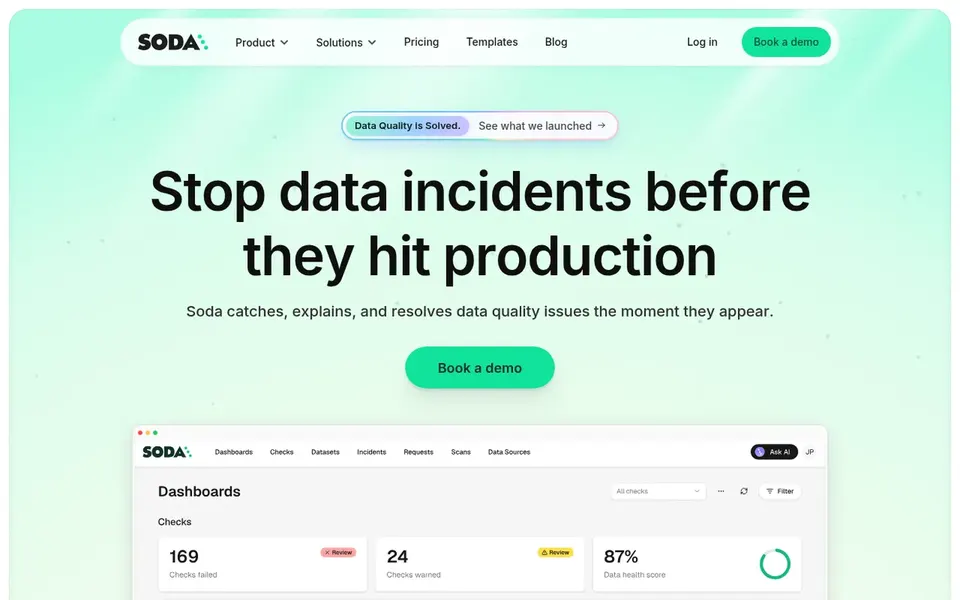
Soda serves automated, code-friendly data quality checks. It tends to fit analytics and data engineering teams that are comfortable defining checks and want automation to deal with the rest of the quality workflow.
Watch-outs: Deeper lineage may need another tool.
For everyday use, confirm which sources and pipeline patterns it includes before committing. On cost, Soda starts like this: $750 per month. Soda includes a free tier.
Where Monte Carlo fits: dedicated pipeline anomaly monitoring. Monte Carlo is one of the best known names in data observability, built around automatic monitoring that watches tables and pipelines for anomalies in freshness, volume, schema and distribution.
It usually suits data product and analytics engineering teams that want a dedicated reliability layer sitting between their pipelines and the people who consume the data. Monte Carlo shows no starting price here, so confirm the cost on the vendor site. Free plan details: Not stated.
The main drawbacks: Pricing and fit need vendor confirmation.
Think of Informatica for wide data management with observability. Data observability and quality capabilities sit within a much broader portfolio, which fits organizations that prefer to consolidate integration, quality and governance with a single long-standing vendor.
Honest limits: Observability is one part of the stack.
Also, teams wanting a light, monitoring-first tool may prefer Monte Carlo, Anomalo or Soda, so weigh consolidation benefits against added complexity. Check the vendor site for Informatica pricing; none is listed in this comparison. Free plan details: Not stated.
Best for: Automatic anomaly detection on data tables
Anomalo targets automatic anomaly detection on data tables. Public detail on the homepage is restricted, so verify supported warehouses, deployment models and alerting behavior with the vendor.
Where it falls short: Homepage provides restricted public detail.
Also, Anomalo is usually known as a data quality and observability product that automatically spots anomalies in tables, reducing the have to hand-write rules for every dataset. No starting price is listed for Anomalo here; confirm pricing on the vendor site. Free options: Not stated.
Best for: Large enterprises needing lineage and AI governance
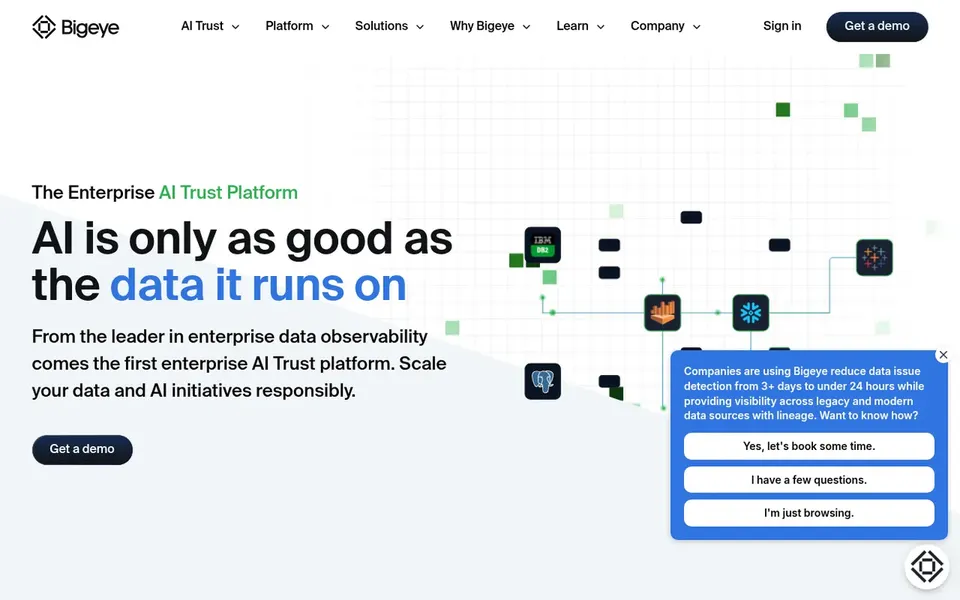
Think of Bigeye for large enterprises needing lineage and AI governance. Bigeye describes itself as a data and AI trust system for large enterprises, combining thorough data observability, end-to-end lineage and agentic AI governance.
If your priority is quick automatic quality checks at table and record level, Soda is a simpler place to start, and a catalog-first tool may include lineage needs. This comparison lists no price for Bigeye; ask the vendor. On free options: Not stated.
The main drawbacks: Enterprise focus may be heavy for small teams.
Ask Collibra, Monte Carlo, Informatica and others for a written quote, since no starting price is shown.
Look at the free plan from Soda closely: its caps decide whether it is usable for real work.
Read the limits listed for Collibra first: governance-first instead of monitoring-first.
Check the integration list for Soda against the tools you run today, and note which ones need a higher plan.
Confirm minimum seats and billing terms with Bigeye before you commit to an annual plan.
How we picked
We compared the tools on published pricing, free plan or trial availability, feature coverage for data observability software for pipelines, and the limits each vendor documents. Treat prices as a snapshot: vendors change plans often, so check the vendor site for the figure that applies today. Order on the page follows fit for the typical buyer first, then price transparency and free access. Your own requirements should decide the final pick.
Every price and plan detail on this page comes from the vendors’ own websites. We did not run hands-on tests unless the text says so, and we do not publish star ratings or review scores. See how we score and our disclosure.
Keep your shortlist in one place
Paste prices, trial dates and notes from this guide into Ainotely, our AI note app. It files them into a topic and pulls out tasks like “cancel trial by Friday”. Free 7-day trial, no card needed.
What does data observability software actually monitor?
Most products watch pipelines and tables for changes in freshness, volume, schema and value distribution, then alert the right people. Some add lineage, quality tests and governance context so issues can be traced and resolved quicker.
How are the tools for data observability software for pipelines ordered?
Collibra sits first and Bigeye last because the order follows typical fit for data observability software for pipelines, then price clarity and free access. It is a judgement call, so read each profile for fit and limits.
Is Collibra the right pick for everyone comparing data observability software for pipelines?
No single tool suits every team. Collibra comes first because it fits enterprise governance and AI control, while Soda suits automated, code-friendly data quality checks and Monte Carlo suits dedicated pipeline anomaly monitoring. Match the tool to your own size, budget and workflow before deciding.
What is the cheapest option for data observability software for pipelines in this list?
On published monthly entry prices, Soda is the lowest here at $750 per month. Entry price is only part of the cost, because seats, add-ons and billing terms can change the total. Each of the 6 options in this data observability software for pipelines guide has its own card above with the price, free plan and limits.
Can I try these tools before paying?
Often, yes. Soda has a free plan. Use your own data and a real task during the test, and check what the free tier or trial limits before you rely on it. All 6 picks in this data observability software for pipelines comparison show their pricing, free plan details and main limits on the cards above.