This list puts MarkLogic first for startups with complicated data integration needs. Listed starting prices: Redis from $5 a month. If your case is different, Azure Cosmos DB suits startups needing global distribution and low latency and Amazon DocumentDB suits AWS-centric startups with MongoDB workloads. All 6 tools are compared below on price, free plan and limits.
This Ainotely guide covers 6 document databases for startups. Each profile lists a starting price, free plan details, strengths and drawbacks, so you can drop poor fits quickly.
Key takeaways
MarkLogic is the opening pick, best for startups with complicated data integration needs.
Couchbase Capella is the one to check for startups needing multi-model and mobile sync.
Amazon DocumentDB, Redis, MongoDB Atlas: these are the 3 tools out of 6 that offer a free plan.
One limit worth knowing about MarkLogic: may be complicated for straightforward use cases.
Best for: Startups with complicated data integration needs
MarkLogic targets startups with complex data integration needs. MarkLogic is a multi-model data management product meant to solve complicated data challenges and unlock more value from data. It is AI-ready and supports document storage among other models.
More specifically, for straightforward document storage, lighter choices may be simpler to adopt. Worth adding: MarkLogic may be more complicated and enterprise-focused than a typical startup needs, with a steeper ramp-up time. As for the details, consider MarkLogic when you need its advanced multi-model capabilities. This comparison lists no price for MarkLogic; ask the vendor. Trial and free access: Free trial.
Best for: Startups needing global distribution and low latency
Where Azure Cosmos DB fits: startups needing global distribution and low latency. Startups that require to serve users globally with quick response times and want a managed service with automatic scaling will find Cosmos DB a good fit.
Cosmos DB's pricing can be complicated to predict, and optimizing costs needs careful monitoring. Teams not using Azure may face integration challenges. Check the vendor site for Azure Cosmos DB pricing; none is listed in this comparison. Free options: Not stated.
Drawbacks to consider: Complicated pricing model. Reasons to shortlist it: Global distribution.
Best for: AWS-centric startups with MongoDB workloads
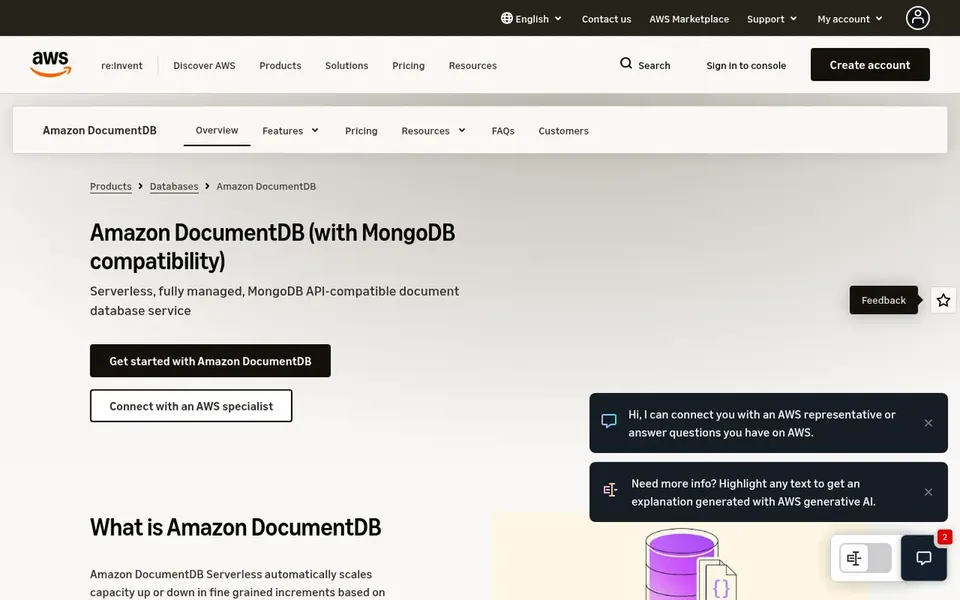
In short, Amazon DocumentDB is for AWS-centric startups with MongoDB workloads. It is aimed at teams already using AWS and looking to run MongoDB-like workloads without managing servers. If you need full MongoDB feature parity or run outside AWS, consider alternatives.
Limits to weigh: Compatibility may not handle all MongoDB features.
As for the details, DocumentDB is only available on AWS, so multi-cloud or hybrid strategies may need extra planning. Its MongoDB compatibility is not complete, and some advanced features may behave differently. Startups that have standardized on AWS and want a document database with automatic scaling and pay-as-you-go serverless pricing will find it a convenient choice. Amazon DocumentDB does not show a starting price in this comparison, so check the vendor site for current pricing. Amazon DocumentDB offers a free plan.
Best for: Startups needing quick in-memory data access
Redis is designed for startups needing quick in-memory data access. Redis is an in-memory data store known for live data for agents and apps. It is commonly used as a database, cache, and message broker.
Limits to weigh: Primarily in-memory.
Consider Redis as a complement to a document database instead of a replacement. More specifically, Redis is primarily an in-memory store, and whereas it supports persistence, it may not be ideal as a sole document database for large datasets. It also needs careful memory management. Price to start with Redis: $5 per month. Redis has a free plan.
Best for: Startups wanting a mature document database
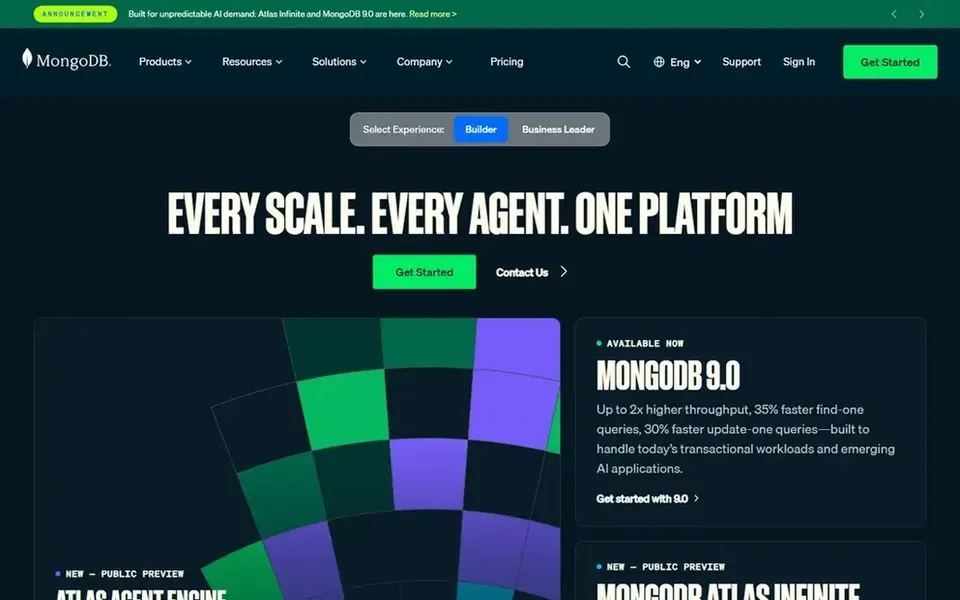
MongoDB Atlas is a good fit for startups wanting a mature document database. It is aimed at building AI applications and agents. Atlas may become complicated to optimize as data grows, and costs can rise with heavy usage.
For everyday use, teams with strict budget constraints or straightforward key-value needs might consider lighter choices. That said, for most startups building modern applications, Atlas offers a balanced starting point. Check the vendor site for MongoDB Atlas pricing; none is listed in this comparison. MongoDB Atlas includes a free tier.
Honest limits: Can need careful cost management at scale.
Best for: Startups needing multi-model and mobile sync
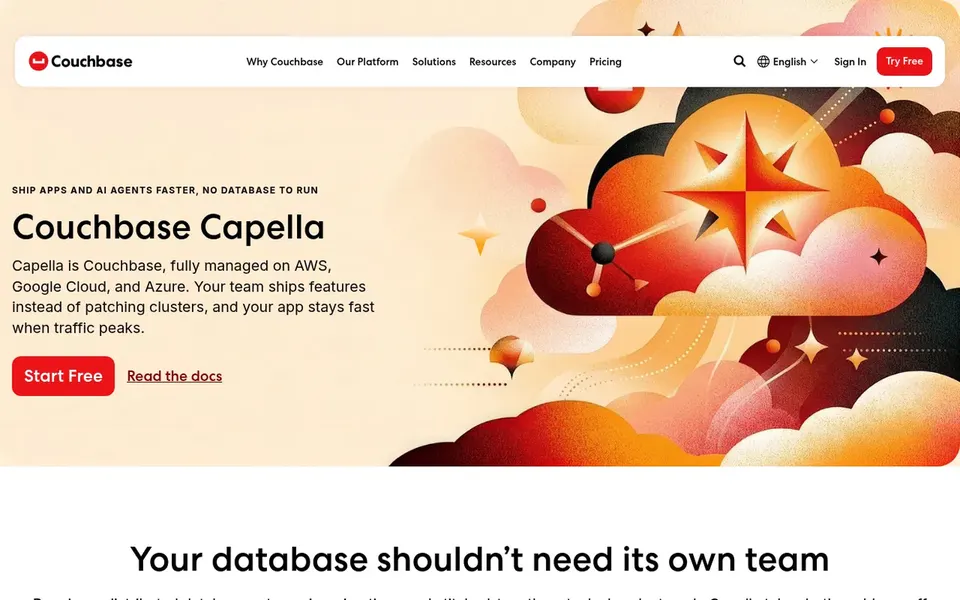
Couchbase Capella targets startups needing multi-model and mobile sync. Couchbase Capella is an operational data system that runs completely managed on AWS, Google Cloud, and Azure.
Limits to weigh: May be overkill for simple document needs.
On top of that, teams focused solely on document storage might find more straightforward choices simpler to adopt. No starting price is listed for Couchbase Capella here; confirm pricing on the vendor site. On free options: Not stated.
Get a written quote from MarkLogic, Azure Cosmos DB, Amazon DocumentDB and others; the list shows no starting price for them.
Look at free plan limits closely: Amazon DocumentDB, Redis and MongoDB Atlas have one, and the caps decide whether it is usable for real work.
Run a trial of MarkLogic with real work before paying for a year; your own workflow is the best test.
Before choosing MarkLogic, weigh its main limit: may be complex for straightforward use cases.
Look at the help docs and support options for Redis before you commit.
Compare total cost, not headline price: for Amazon DocumentDB, add extra seats, add-ons and any usage-based charges.
How we picked
We compared the tools on published pricing, free plan or trial availability, feature coverage for document databases for startups, and the limits each vendor documents. Prices and plan limits come from vendor pages and can change, so confirm them on the vendor site before you buy. Position on the page reflects fit for a typical buyer first, with price clarity and free access breaking ties. Treat it as a guide, not a ruling.
Every price and plan detail on this page comes from the vendors’ own websites. We did not run hands-on tests unless the text says so, and we do not publish star ratings or review scores. See how we score and our disclosure.
Keep your shortlist in one place
Paste prices, trial dates and notes from this guide into Ainotely, our AI note app. It files them into a topic and pulls out tasks like “cancel trial by Friday”. Free 7-day trial, no card needed.
Which options for document databases for startups have a free plan?
On this list, Amazon DocumentDB, Redis and MongoDB Atlas include a free plan. Caps on seats, usage or features are common, so test the free plan against your real workload. One other tool offers a trial instead.
Can I try these tools before paying?
Often, yes. Amazon DocumentDB, Redis and MongoDB Atlas have a free plan and MarkLogic offers a free trial. Use your own data and a real task during the test, and check what the free tier or trial limits before you rely on it.
Can I use Redis as my primary document database?
Redis is primarily an in-memory data store optimized for speed, not a traditional document database. It is commonly used alongside a document database for caching and live features.
How do I choose between MongoDB Atlas and Amazon DocumentDB?
MongoDB Atlas offers a mature document model and wide ecosystem across clouds, while Amazon DocumentDB is a completely managed, MongoDB API-compatible service on AWS. Choose Atlas for multi-cloud adaptability and full MongoDB features, and DocumentDB if you are AWS-centric and want a serverless choice.
What is the cheapest option for document databases for startups in this list?
On published monthly entry prices, Redis is the lowest here at $5 per month. Entry price is only part of the cost, because seats, add-ons and billing terms can change the total.
Do these tools publish their prices?
Not all of them. MarkLogic, Azure Cosmos DB, Amazon DocumentDB and others publish no starting price, so expect a quote request for those. The rest, Redis included, show a starting price, though seats and billing terms still change the final cost.