Qlik Sense is the first pick on this list for end-to-end data integration and analytics. Listed starting prices: Tableau from $15 per user a month. Domo is the stronger choice for governed data for AI-driven insights, while GoodData suits high-concurrency dashboards and agents. Prices, free plans and limits for all 5 tools follow.
Ainotely put together this guide to embedded business intelligence benefits for readers who want a clear shortlist without reading every vendor page. It compares 5 tools on starting price, free plans, who each one suits and where each one falls short.
Key takeaways
Qlik Sense sits first on this list: end-to-end data integration and analytics.
Tableau is the only tool of the 5 with a free plan.
Tableau fits visual analytics embedded in products.
Tableau is the lowest-priced starter here at $15 per user per month.
Best for: End-to-end data integration and analytics
Qlik Sense makes the most sense for end-to-end data integration and analytics. Qlik, now with Talend, documents a data fabric and end-to-end data integration, data quality and analytics options.
Where it falls short: Embedding is one part of a bigger stack.
This comparison lists no price for Qlik Sense; ask the vendor. Trial and free access: Not stated.
Domo is designed for governed data for AI-driven insights. Pick Domo when governance and data preparation benefits are central to how your product will deliver embedded insight.
Watch-outs: Embedding sits within a bigger data journey.
Beyond that, if you only have to drop a dashboard into an app, a narrower tool may be quicker. Its stated emphasis on governed data for AI agents means embedded experiences can draw on managed sources instead of ad hoc extracts. No starting price is listed for Domo here; confirm pricing on the vendor site. Trial and free access: Free trial.
Think of GoodData for high-concurrency dashboards and agents. GoodData.AI presents analytics, AI and agents on one data serving plane, running dashboards, data applications and agents on a governed foundation. Its documented focus is the continuous, high-concurrency demand that traditional data products were not meant to serve.
Honest limits: Simpler needs may not require it.
That makes it a fit for products expecting numerous simultaneous users and automatic agents hitting embedded analytics at once. Worth adding: teams should confirm their expected load profile before choosing it. The emphasis on demanding, high-concurrency workloads means smaller products may not use the product's core strengths. GoodData shows no starting price here, so confirm the cost on the vendor site. Free options: Free trial.
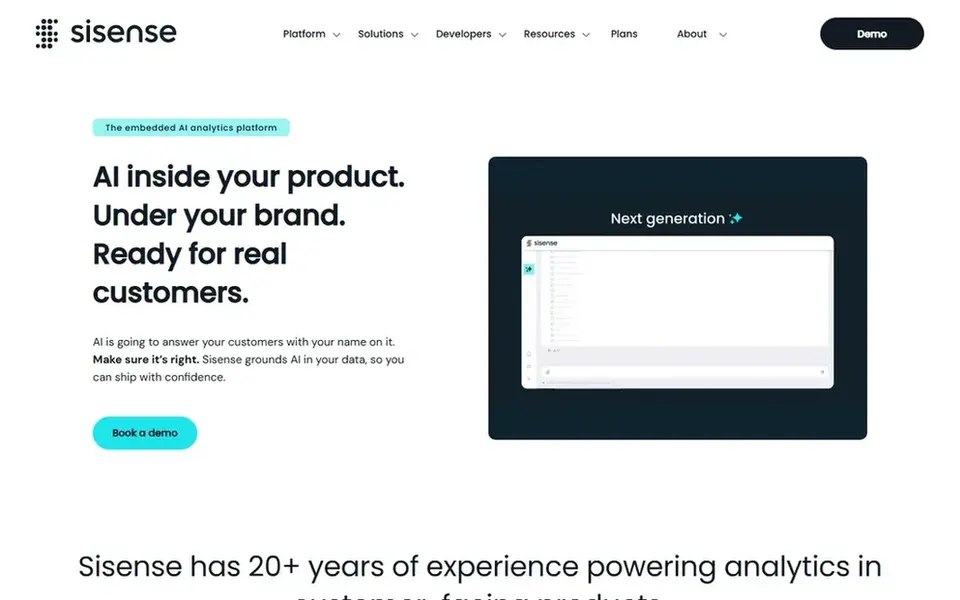
For adaptable embedding across skill levels, Sisense is a natural candidate. Sisense presents itself as an AI-powered embedded analytics system that unlocks insights and converts data into revenue.
Its documented benefit is adaptability: pro-code, low-code and no-code paths let different teams build and embed analytics at the depth their skills allow. For everyday use, having multiple build paths means teams must decide standards early, or embedded work can fragment across approaches. Sisense shows no starting price here, so confirm the cost on the vendor site. Trial and free access: Free trial.
Limits to weigh: Embedding still needs product planning.
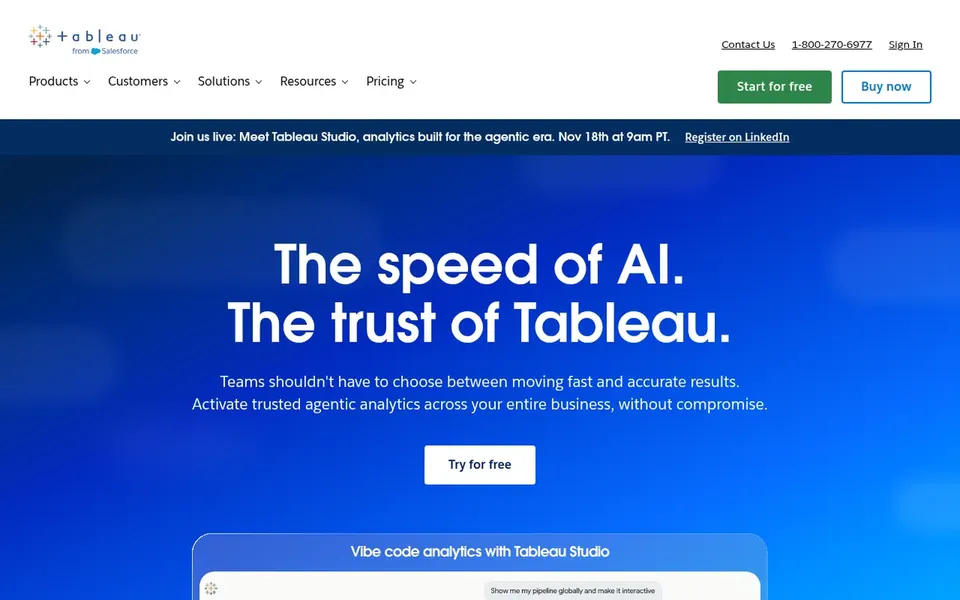
Tableau is a good fit for visual analytics embedded in products. Choose Tableau when visual exploration and wide data connectivity matter more than a minimal footprint. For embedded scenarios, that means product teams can surface interactive charts and dashboards inside their own applications, and analysts can iterate on visuals rapidly without heavy engineering work.
The benefit of rich visual adaptability includes configuration effort, since embedding Tableau into a product involves planning around data connections and sharing. In practice, Tableau is business intelligence and analytics software built around seeing and understanding data. Its documented strengths are connecting to almost any database, building visualizations by drag-and-drop, and sharing them with a click. In daily use, organizations that primarily need a light chart component inside an app may find a narrower embedded library more straightforward. Tableau cost at the entry level: $15 per user per month. A free plan is available with Tableau.
Confirm the entry price on the vendor page. For Qlik Sense, Domo, GoodData and Sisense that means a quote rather than a fixed price.
Test the free plan from Tableau against your real workload before relying on it.
Run a trial of Domo, GoodData and Sisense with real work before paying for a year; your own workflow is the best test.
Before choosing Qlik Sense, weigh its main limit: wide system needs coordination.
Check the integration list for Qlik Sense against the tools you run today, and note which ones need a higher plan.
Involve the people who will use Domo daily; a short pilot beats a long feature checklist.
How we picked
For each of the 5 tools we noted price, free plan or trial, fit for embedded business intelligence benefits and the main limit, using vendor pages and documentation. Prices and plan limits come from vendor pages and can change, so confirm them on the vendor site before you buy. The ranking is editorial: typical fit first, then clear pricing, then free access. If your needs are unusual, read the profiles rather than relying on position.
Every price and plan detail on this page comes from the vendors’ own websites. We did not run hands-on tests unless the text says so, and we do not publish star ratings or review scores. See how we score and our disclosure.
Keep your shortlist in one place
Paste prices, trial dates and notes from this guide into Ainotely, our AI note app. It files them into a topic and pulls out tasks like “cancel trial by Friday”. Free 7-day trial, no card needed.
Which options for embedded business intelligence benefits have a free plan?
Tableau is the only tool in this list with a free plan. Free plans usually cap users, projects or features, so check the limits on the vendor page. Several others offer a trial instead. Pricing, free plan details and limits for all 5 tools in this embedded business intelligence benefits roundup sit on the individual cards above.
Can I try these tools before paying?
Often, yes. Tableau has a free plan and Domo, GoodData and Sisense offer a free trial. Use your own data and a real task during the test, and check what the free tier or trial limits before you rely on it.
What is the cheapest option for embedded business intelligence benefits in this list?
On published monthly entry prices, Tableau is the lowest here at $15 per user per month. Entry price is only part of the cost, because seats, add-ons and billing terms can change the total. The 5 tool cards above repeat this per product for embedded business intelligence benefits, with the listed price or "pricing on request".
How are the tools for embedded business intelligence benefits ordered?
Qlik Sense sits first and Tableau last because the order follows typical fit for embedded business intelligence benefits, then price clarity and free access. It is a judgement call, so read each profile for fit and limits.