Our first pick is Oracle NetSuite, best for broad cloud ERP and financials. CMiC is the stronger choice for unifying accounting, projects and people, while Procore suits connecting site and office teams. Details, prices and limits for the rest of the 6 tools are below.
This Ainotely guide covers 6 options for ERP for construction management. Each profile lists a starting price, free plan details, strengths and drawbacks, so you can drop poor fits quickly.
Key takeaways
Oracle NetSuite sits first on this list: wide cloud ERP and financials.
A fair warning about CMiC: wide scope can mean longer setup.
Every tool from Oracle NetSuite to SAP S/4HANA works by quote, with no list price shown.
SAP S/4HANA suits large, complicated enterprise operations.
Oracle NetSuite targets wide cloud ERP and financials. Oracle NetSuite is a cloud ERP that merges financials, CRM, accounting, inventory management and more, with built-in AI to simplify work and turn data into action.
What users get: CRM and inventory.
Also, if you want contractor-focused job costing and project controls built in from the start, a construction-native product may be a better fit. NetSuite is a general business ERP, so construction-specific workflows frequently need customization or add-on options. Oracle NetSuite does not show a starting price in this comparison, so check the vendor site for current pricing. Free access: Not stated. What to check first: Construction needs customization.
Best for: Unifying accounting, projects and people
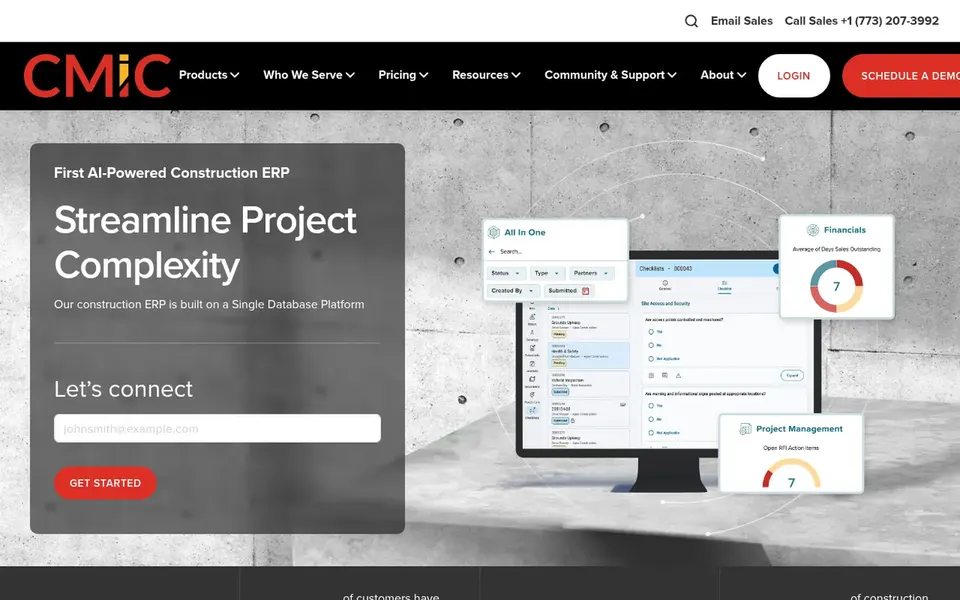
CMiC targets unifying accounting, projects and people. If your priority is a single specialized function such as field management, a narrower tool may be more straightforward.
On top of that, CMiC presents its construction management software as a way to run accounting, projects and people through one simplified system. CMiC does not show a starting price in this comparison, so check the vendor site for current pricing. Free options: Not stated.
Watch-outs: May be more than small businesses need.
Procore serves connecting site and office teams. It is a capable choice when project execution and site coordination are the priority and finance can be handled through connected tools.
Pricing for Procore is not stated here, so ask the vendor for current figures. As for free access: Not stated.
Honest limits: Not a full accounting suite on its own.
Where Viewpoint Vista fits: contractors needing job costing depth. Teams managing complicated jobs and margins frequently shortlist it for that depth.
Honest limits: Most useful for established contractors.
From a buyer's view, consider a lighter project management tool if job costing and contractor accounting are not central to your needs. Viewpoint Vista shows no starting price here, so confirm the cost on the vendor site. Free options: Not stated.
Microsoft Dynamics 365 works best for connecting CRM and ERP data. Microsoft Dynamics 365 supplies CRM and ERP business applications that link teams, processes and data, described as agentic options for modern business.
Drawbacks to consider: Configuration effort can be high.
Reasons to shortlist it: Familiar Microsoft ecosystem.
Best for: Large, complicated enterprise operations
SAP S/4HANA is designed for large, complicated enterprise operations. Consider a construction-focused ERP when speed of adoption and built-in contractor workflows matter more than enterprise breadth.
Pricing for SAP S/4HANA is not stated here, so ask the vendor for current figures. Free plan details: Not stated.
Ask each vendor, from Oracle NetSuite to SAP S/4HANA, for a written quote; none of them publishes a starting price.
Before choosing Oracle NetSuite, weigh its main limit: Construction needs customization.
Confirm that Viewpoint Vista connects to the apps your team already uses, on the plan you would actually buy.
Involve the people who will use CMiC daily; a short pilot beats a long feature checklist.
Get the contract term, renewal terms and any onboarding fees from Procore in writing.
How we picked
Each tool was reviewed on what its vendor publishes: price, plan limits, core features and stated drawbacks. We did not run hands-on tests. Where a vendor does not publish a price, the entry says quote. Where a price depends on seats or billing term, the entry says so. The ranking is editorial: typical fit first, then clear pricing, then free access. If your needs are unusual, read the profiles rather than relying on position. This applies to all 6 ERP for construction management options compared here.
Every price and plan detail on this page comes from the vendors’ own websites. We did not run hands-on tests unless the text says so, and we do not publish star ratings or review scores. See how we score and our disclosure.
Keep your shortlist in one place
Paste prices, trial dates and notes from this guide into Ainotely, our AI note app. It files them into a topic and pulls out tasks like “cancel trial by Friday”. Free 7-day trial, no card needed.
No. None of the tools, from Oracle NetSuite to SAP S/4HANA, shows a fixed starting price here, so budget time for quotes.
Is a construction ERP different from project management software?
Yes. Numerous businesses combine both, using a system like Procore for field work alongside an ERP for finance.
Is Oracle NetSuite the right pick for everyone comparing ERP for construction management?
No single tool suits every team. Oracle NetSuite comes first because it fits broad cloud ERP and financials, while CMiC suits unifying accounting, projects and people and Procore suits connecting site and office teams. Match the tool to your own size, budget and workflow before deciding.
Does any tool for ERP for construction management here have a free plan?
A permanent free plan is not offered by Oracle NetSuite, SAP S/4HANA or the other tools here. Plan a short evaluation period instead.
Can I try these tools before paying?
Not by default. None of the tools, from Oracle NetSuite to SAP S/4HANA, lists a free plan or a free trial here, so ask each vendor for a demo before committing.