Databricks Mosaic AI comes first here, mainly for agent systems grounded in enterprise data. Alternatives: Google Cloud Vertex AI for developers building and governing agents, and Cohere for private, configurable enterprise models. Prices, free plans and limits for all 6 tools follow.
Ainotely compared 6 generative AI platforms for organizations. The goal is a practical shortlist: published prices, free plan facts, best-fit use cases and honest limits for every entry.
Key takeaways
Databricks Mosaic AI sits first on this list: agent systems grounded in enterprise data.
What to know about Adobe Firefly first: not a general application-building system.
No starting price is shown for any of the 6 tools, Databricks Mosaic AI and IBM watsonx included, so plan time for sales calls.
None of the 6 tools, from Databricks Mosaic AI to IBM watsonx, has a free plan, so budget for a subscription or use a trial.
For governed enterprise AI portfolios, IBM watsonx is worth a look.
Best for: Agent systems grounded in enterprise data
Databricks Mosaic AI targets agent systems grounded in enterprise data. The product assumes a degree of data engineering maturity, and teams without an existing Databricks footprint may find adoption heavier.
The main drawbacks: System breadth needs data maturity.
What users get: Unified build, deploy.
Check the vendor site for Databricks Mosaic AI pricing; none is listed in this comparison. Trial and free access: Not stated.
Best for: Developers building and governing agents
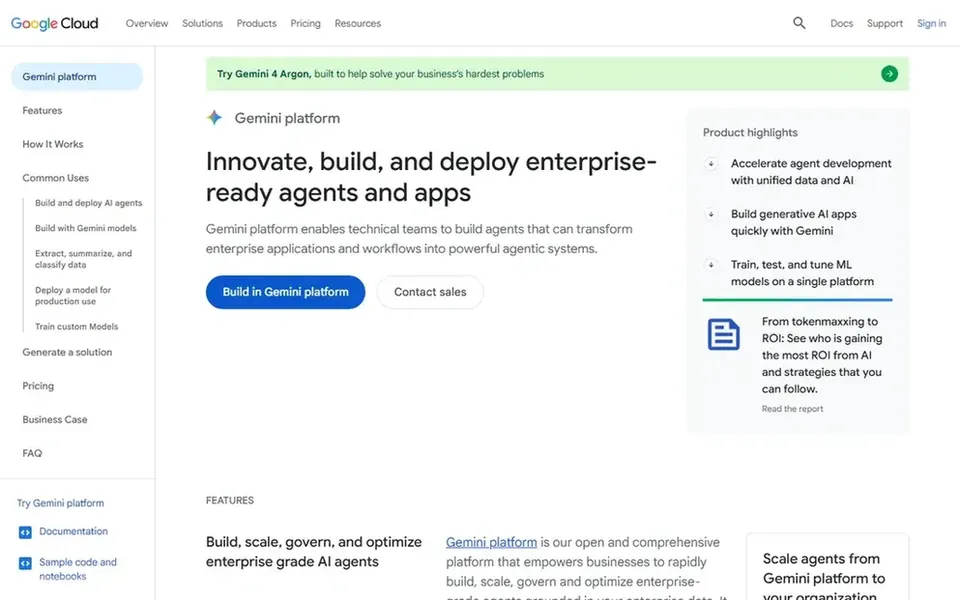
In short, Google Cloud Vertex AI is for developers building and governing agents. Google Cloud Vertex AI is presented as a Gemini system for developers to build, scale, govern and optimize agents.
From a buyer's view, if your priority is a straightforward managed endpoint for one model family, a lighter choice such as Azure OpenAI Service may be simpler to adopt. As for the details, the breadth of the product means a real ramp-up time, and organizations on other clouds may find integration less smooth. No starting price is listed for Google Cloud Vertex AI here; confirm pricing on the vendor site. As for free access: Not stated.
Trade-offs to know: Most natural for Google Cloud users.
Cohere was built for private, configurable enterprise models. Cohere builds models and AI options that help enterprises automate processes, enable employees and turn fragmented data into actionable insights, with a stated focus on private, secure and configurable deployment.
More specifically, Cohere's scope is more focused than the large cloud systems, so organizations needing wide infrastructure, agent governance suites or creative tooling may need extra vendors. It is a solid complement instead of a complete replacement for a cloud-native AI stack. Pricing for Cohere is not stated here, so ask the vendor for current figures. Free plan details: Not stated.
Watch-outs: Narrower system scope than hyperscalers.
Pick Adobe Firefly if this describes you: creative teams producing visual content. Adobe Firefly is generative AI for creatives, handling images, audio and video creation and editing, with access to top models from other providers as well.
Watch-outs: Not a general application-building system.
It fits marketing and design teams that require to produce and iterate on visual assets rapidly and want generation tools close to their existing creative workflows. No starting price is listed for Adobe Firefly here; confirm pricing on the vendor site. As for free access: Not stated.
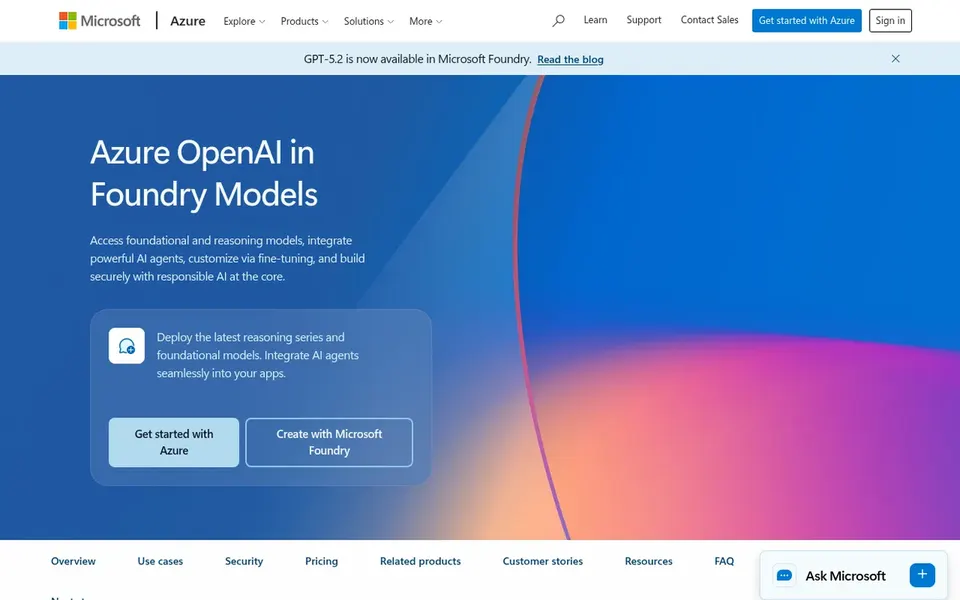
Microsoft Azure OpenAI Service is built with enterprises already invested in Azure in mind. Azure OpenAI Service provides organizations managed access to OpenAI models, including reasoning and multimodal choices, with the capacity to fine-tune and integrate AI agents.
In practice, if you need wide multi-vendor model choice or run primarily on another cloud, a competing product may be the better fit. Microsoft Azure OpenAI Service shows no starting price here, so confirm the cost on the vendor site. As for free access: Free trial.
Where it is weaker: Model catalog narrower than multi-vendor systems.
IBM watsonx is built with governed enterprise AI portfolios in mind. It suits bigger organizations that treat governance and data quality as first-order requirements and want those capabilities addressed alongside application development instead of bolted on later.
The portfolio structure means several products to evaluate and integrate, which can be heavy for small teams or single-use-case projects. IBM watsonx does not show a starting price in this comparison, so check the vendor site for current pricing. Free options: Not stated.
Highlights: Merges AI building. Honest limits: Portfolio structure can feel fragmented.
Confirm the entry price with every vendor: no tool from Databricks Mosaic AI to IBM watsonx shows a fixed starting price.
Use real work to test the free trial from Microsoft Azure OpenAI Service, rather than a demo project.
Read the limits listed for Databricks Mosaic AI first: best value for existing Databricks users.
Add up seats, add-ons and usage charges for Microsoft Azure OpenAI Service before comparing it with cheaper entries.
Check how data leaves IBM watsonx: formats, limits and whether exports are available on every plan.
How we picked
Selection started from tools commonly considered for generative AI platforms for organizations, then narrowed to 6 that have clear pricing information or a clear quote process. Where a price is missing, the vendor does not list one publicly or ties it to a quote. Always confirm before budgeting. The sequence is a judgement call: typical use case first, then pricing transparency, then free access. Use the profiles to check fit.
Every price and plan detail on this page comes from the vendors’ own websites. We did not run hands-on tests unless the text says so, and we do not publish star ratings or review scores. See how we score and our disclosure.
Keep your shortlist in one place
Paste prices, trial dates and notes from this guide into Ainotely, our AI note app. It files them into a topic and pulls out tasks like “cancel trial by Friday”. Free 7-day trial, no card needed.
How are the tools for generative AI platforms for organizations ordered?
Databricks Mosaic AI sits first and IBM watsonx last because the order follows typical fit for generative AI platforms for organizations, then price clarity and free access. It is a judgement call, so read each profile for fit and limits.
Can I try these tools before paying?
Often, yes. Microsoft Azure OpenAI Service offers a free trial. Use your own data and a real task during the test, and check what the free tier or trial limits before you rely on it.
Do these tools publish their prices?
No. None of the tools, from Databricks Mosaic AI to IBM watsonx, shows a fixed starting price here, so budget time for quotes.
Can a creative tool like Adobe Firefly serve as an organization's central AI system?
Firefly is designed for creating and editing images, audio and video, so it suits marketing and design workflows instead of application development. Organizations needing process automation or data-grounded agents should pair it with a developer-facing product.
Does any tool for generative AI platforms for organizations here have a free plan?
No tool in this list, Databricks Mosaic AI and IBM watsonx included, has a permanent free plan. Microsoft Azure OpenAI Service offer a trial. Trials and quotes are the usual route, so plan a short evaluation period.