For startups already invested in the Salesforce ecosystem, Salesforce Commerce Cloud is where this list starts. Listed starting prices: Medusa from $29 per month. Look at Medusa for developer-led startups wanting an open-source commerce core, and at commercetools for funded startups building enterprise-grade composable commerce. The full list of 6 tools follows, with prices and free plan facts.
Choosing headless ecommerce software for startups usually comes down to price, fit and limits. This Ainotely guide sets 6 tools side by side on those three points, with the facts kept short and checkable.
Key takeaways
The list opens with Salesforce Commerce Cloud, aimed at startups already invested in the Salesforce ecosystem.
Medusa stands alone as the one tool in this list with a free plan.
Shopify Hydrogen is the one to check for startups building on Shopify with a custom framework storefront.
The cheapest monthly starting price in the list is $29 per month, offered by Medusa.
One limit worth knowing about Fabric: narrower than full commerce suites.
Startups building on Shopify with a custom framework storefront
Not stated
Requires front-end development skills
The 6 picks in detail
SC
#1
Salesforce Commerce Cloud
Best for: Startups already invested in the Salesforce ecosystem
Salesforce Commerce Cloud serves startups already invested in the Salesforce ecosystem. Salesforce Commerce Cloud is Salesforce's commerce product, usually understood as an enterprise product that links storefronts with customer and sales data across the Salesforce suite.
In daily use, for a lean startup without existing Salesforce investment, the system can feel heavy relative to needs, and implementation generally involves specialist help. Check the vendor site for Salesforce Commerce Cloud pricing; none is listed in this comparison. Trial and free access: Not stated.
Where it is weaker: Limited public detail on the page.
Best for: Developer-led startups wanting an open-source commerce core
Choose Medusa for developer-led startups wanting an open-source commerce core. Adaptability shifts responsibility to your team: hosting, upgrades and integrations are largely yours to run.
In daily use, Medusa bills itself as an open-source agentic commerce product and the most flexible commerce system for agents and developers. Starting cost for Medusa: $29 per month. Free access exists with Medusa.
The main drawbacks: You own more of the operations.
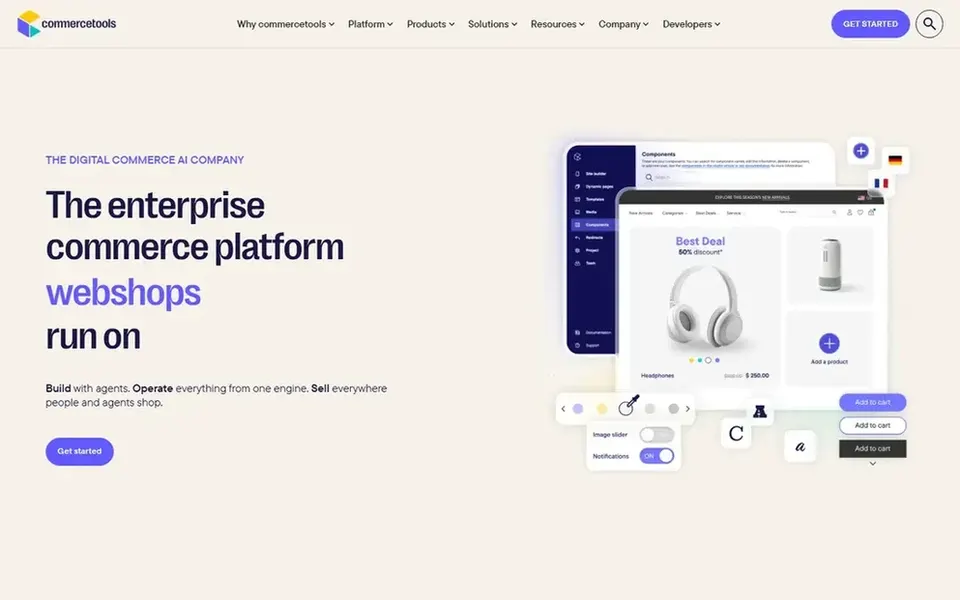
Best for: Funded startups building enterprise-grade composable commerce
Pick commercetools if this describes you: funded startups building enterprise-grade composable commerce. Its enterprise orientation means more integration and architecture work at the start, which can slow an early-stage team.
Limits to weigh: Targeted at enterprise scale.
This comparison lists no price for commercetools; ask the vendor. Trial and free access: Free trial.
Best for: Startups centred on AI-driven product discovery and merchandising
Fabric makes the most sense for startups centred on AI-driven product discovery and merchandising. Fabric centres on reimagining merchandising for AI shopping, enriching your product catalog so answer engines for example ChatGPT, Gemini and Perplexity recommend your brand, and tracking AI visibility.
Choose it when AI-driven discovery is central to your growth plan; otherwise prioritize a full headless product first. Fabric is oriented around catalog enrichment and AI visibility instead of being a complete storefront and checkout stack on its own, so it typically complements a commerce core. This comparison lists no price for Fabric; ask the vendor. Free options: Not stated.
Points against: Narrower than full commerce suites.
Best for: B2B and B2C startups planning global, personalized experiences
In short, Adobe Commerce is for B2B and B2C startups planning global, personalized experiences. Adobe Commerce, formerly Magento Commerce, is described as an AI-powered composable ecommerce product for B2B and B2C that provides personalized experiences at global scale. Early-stage teams with a single straightforward catalog may prefer a leaner headless core and move to Adobe Commerce only when personalization and B2B complexity justify it.
The main drawbacks: Needs specialist implementation.
Main advantages: AI-powered product.
As for the details, startups with complicated catalogs, B2B pricing needs or international ambitions commonly shortlist it for its breadth and composable architecture. That breadth includes operational weight: hosting, extensions and customization normally need dedicated expertise. Pricing for Adobe Commerce is not stated here, so ask the vendor for current figures. As for free access: Not stated.
Best for: Startups building on Shopify with a custom framework storefront
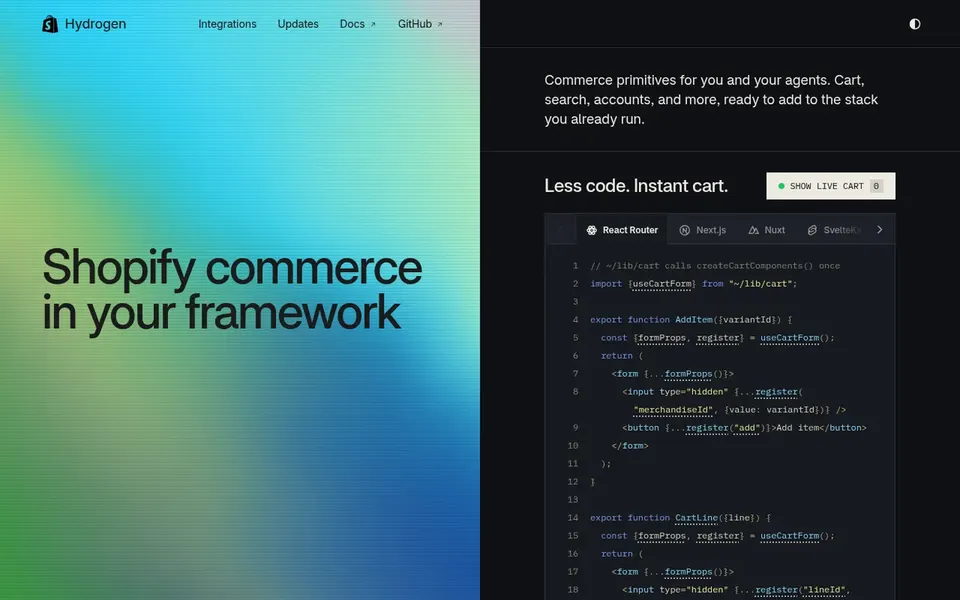
Pick Shopify Hydrogen if this describes you: startups building on Shopify with a custom framework storefront. Hydrogen is Shopify's headless offering, described as Shopify commerce in your framework with commerce primitives for you and your agents.
For everyday use, teams with some React-style experience will find the model familiar. Startups that want to swap backends freely or avoid product dependence should look at open-source choices like Medusa instead. Check the vendor site for Shopify Hydrogen pricing; none is listed in this comparison. Trial and free access: Not stated.
What to check first: Needs front-end development skills.
Ask Salesforce Commerce Cloud, commercetools, Fabric and others for a written quote, since no starting price is shown.
Test the free plan from Medusa against your real workload before relying on it.
Use real work to test the free trial from commercetools, rather than a demo project.
Before choosing Salesforce Commerce Cloud, weigh its main limit: enterprise-oriented setup.
Ask Fabric about contract length, onboarding fees and user minimums before you sign.
Find out what support Medusa includes on your plan, and whether onboarding help costs extra.
How we picked
Each tool was reviewed on what its vendor publishes: price, plan limits, core features and stated drawbacks. We did not run hands-on tests. Treat prices as a snapshot: vendors change plans often, so check the vendor site for the figure that applies today. The order reflects how well each tool fits the most common buying scenario for headless ecommerce software for startups, then price clarity, then free plan access. It is a starting point, not a verdict.
Every price and plan detail on this page comes from the vendors’ own websites. We did not run hands-on tests unless the text says so, and we do not publish star ratings or review scores. See how we score and our disclosure.
Keep your shortlist in one place
Paste prices, trial dates and notes from this guide into Ainotely, our AI note app. It files them into a topic and pulls out tasks like “cancel trial by Friday”. Free 7-day trial, no card needed.
How should a startup evaluate AI commerce features?
Fabric, for instance, centers on enriching catalogs for answer engines, whereas other systems treat AI as part of a broader commerce engine. Match the feature to where your customers actually search.
Can I try these tools before paying?
Often, yes. Medusa has a free plan and commercetools offers a free trial. Use your own data and a real task during the test, and check what the free tier or trial limits before you rely on it. All 6 picks in this headless ecommerce software for startups comparison show their pricing, free plan details and main limits on the cards above.
Is Salesforce Commerce Cloud the right pick for everyone comparing headless ecommerce software for startups?
No single tool suits every team. Salesforce Commerce Cloud comes first because it fits startups already invested in the Salesforce ecosystem, while Medusa suits developer-led startups wanting an open-source commerce core and commercetools suits funded startups building enterprise-grade composable commerce. Match the tool to your own size, budget and workflow before deciding.
What does headless ecommerce mean for a startup?
Headless ecommerce separates the customer-facing storefront from the commerce backend, which takes care of catalog, cart and checkout through APIs. For startups, this lets a custom front end and quicker iteration without rebuilding core commerce logic each time the design changes.
Which options for headless ecommerce software for startups have a free plan?
Medusa is the only tool in this list with a free plan. Free plans usually cap users, projects or features, so check the limits on the vendor page. One other tool offers a trial instead. For the full picture, the cards above cover all 6 entries of this headless ecommerce software for startups list, including price, free plan and limits.
What is the cheapest option for headless ecommerce software for startups in this list?
On published monthly entry prices, Medusa is the lowest here at $29 per month. Entry price is only part of the cost, because seats, add-ons and billing terms can change the total.