Health Catalyst comes first here, mainly for data-informed healthcare improvement programs. Listed starting prices: Tableau from $15 per user a month. Qlik Sense is better for data integration plus associative analytics, and Tableau is better for adaptable visualization on healthcare data. Details, prices and limits for the rest of the 6 tools are below.
Choosing healthcare analytics software for enterprise usually comes down to price, fit and limits. This Ainotely guide sets 6 tools side by side on those three points, with the facts kept short and checkable.
Key takeaways
Health Catalyst sits first on this list: data-informed healthcare improvement programs.
For the cheapest start, look at Tableau: $15 per user per month.
Domo fits governed data for AI-driven insights.
Tableau stands alone as the one tool in this list with a free plan.
A fair warning about Tableau: healthcare logic must be built in.
Best for: Data-informed healthcare improvement programs
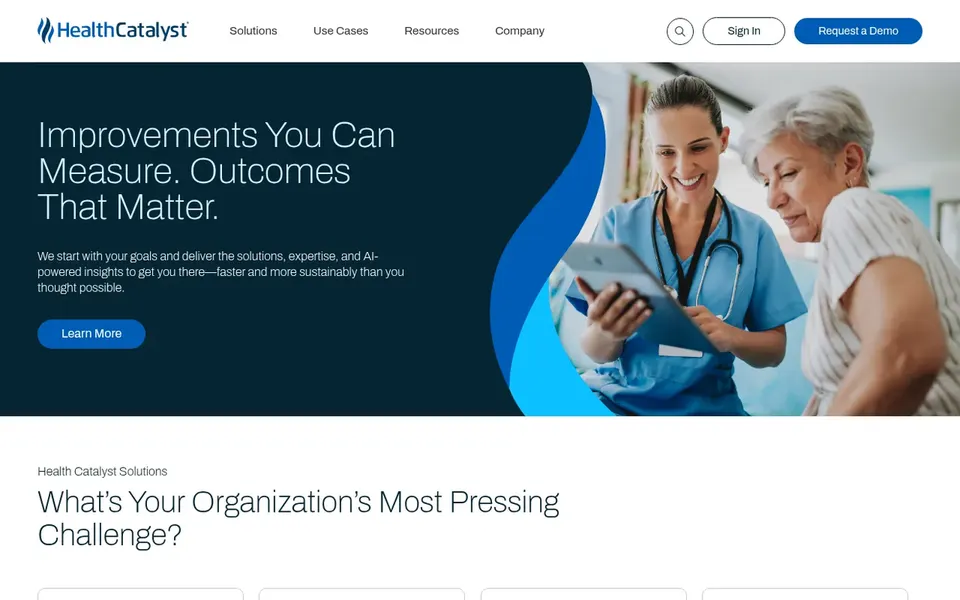
Where Health Catalyst fits: data-informed healthcare improvement programs. Health Catalyst presents itself as a provider of data and analytics technology and services to healthcare organizations, committed to being a catalyst for measurable, data-informed healthcare improvement.
The healthcare-specific focus means it is not a natural fit for organizations outside the sector, and heavier reliance on vendor services can cut self-sufficiency over time. Check the vendor site for Health Catalyst pricing; none is listed in this comparison. As for free access: Not stated.
The main drawbacks: Services engagement layers on dependency.
Best for: Data integration plus associative analytics
Qlik Sense was built for data integration plus associative analytics. Qlik, now with Talend, describes itself as delivering a data fabric and next-level insights through end-to-end data integration, data quality, and analytics options. That combination appeals to enterprise healthcare organizations that struggle to consolidate sources before analysis begins, since integration and quality work sit alongside the analytics layer.
The offering is oriented toward general enterprise data work, so healthcare-specific measures and regulatory context are your responsibility to define. Organizations that want a vendor steeped in clinical improvement methodology may prefer a healthcare-dedicated product, whereas those prioritizing integration breadth will find Qlik a reasonable fit. No starting price is listed for Qlik Sense here; confirm pricing on the vendor site. Free options: Not stated.
Limits to weigh: Healthcare content is not the focus.
Best for: Adaptable visualization on healthcare data
Tableau is aimed squarely at adaptable visualization on healthcare data. Tableau states that it helps anyone see and understand their data, connecting to almost any database, supporting drag-and-drop visualization creation, and sharing results with a click.
It suits organizations that already have a data system and want a capable visualization and sharing layer on top. Tableau pricing: $15 per user per month. You can start on Tableau without paying.
Trade-offs to know: Governance needs deliberate design.
Where Google Cloud BigQuery fits: large-scale data and AI processing. For enterprise healthcare analytics, it serves as a scalable foundation under clinical, claims, and operational datasets, especially for organizations already building on Google Cloud.
In practice, BigQuery supplies infrastructure and processing power, not healthcare-specific dashboards or improvement methodology, so visualization and domain logic must be added on top. More specifically, enterprises without cloud data engineering capacity, or those seeking an out-of-the-box clinical analytics product, should look at a healthcare-focused system first. Check the vendor site for Google Cloud BigQuery pricing; none is listed in this comparison. On free options: Not stated.
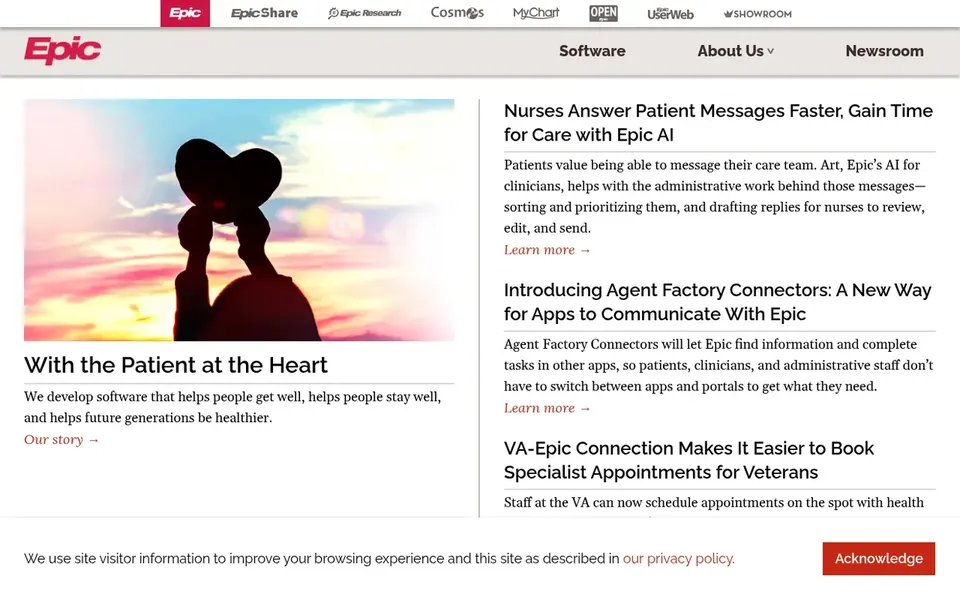
Choose Epic Systems for analytics inside a clinical record. Epic Systems develops software targeted at helping people get well, stay well. Support healthier future generations, with the patient positioned at the center of its approach.
Points against: Best value within its own ecosystem.
For enterprises already standardized on its health record system, the analytics layer benefits from sitting close to the clinical data and daily workflows that staff already use. The central limitation is scope: organizations not running the Epic platform will find less to gain. Teams that chiefly analyze non-clinical or cross-industry data may prefer a standalone analytics tool. Epic Systems does not show a starting price in this comparison, so check the vendor site for current pricing. Free access: Not stated.
Pick Domo if this describes you: governed data for AI-driven insights. If your priority is prebuilt healthcare analytics instead of a wide governed data product, a sector-focused vendor is likely a shorter path to value.
For enterprise healthcare organizations building toward AI-assisted reporting, that end-to-end framing can ease a fragmented tool landscape. In daily use, Domo is not healthcare-specific, so clinical definitions, quality measures, and compliance context must come from your own teams. Domo shows no starting price here, so confirm the cost on the vendor site. Free plan details: Free trial.
What to check first: Healthcare specificity is restricted.
Get a written quote from Health Catalyst, Qlik Sense, Google Cloud BigQuery and others; the list shows no starting price for them.
Look at the free plan from Tableau closely: its caps decide whether it is usable for real work.
Run a trial of Domo with real work before paying for a year; your own workflow is the best test.
Read the limits listed for Health Catalyst first: narrower outside healthcare.
Look at the help docs and support options for Tableau before you commit.
Add up seats, add-ons and usage charges for Domo before comparing it with cheaper entries.
How we picked
Ainotely looked at what each vendor publishes: pricing, plan limits, feature coverage for healthcare analytics software for enterprise and stated drawbacks. No hands-on testing is claimed. Where a vendor does not publish a price, the entry says quote. Where a price depends on seats or billing term, the entry says so. The sequence is a judgement call: typical use case first, then pricing transparency, then free access. Use the profiles to check fit.
Every price and plan detail on this page comes from the vendors’ own websites. We did not run hands-on tests unless the text says so, and we do not publish star ratings or review scores. See how we score and our disclosure.
Keep your shortlist in one place
Paste prices, trial dates and notes from this guide into Ainotely, our AI note app. It files them into a topic and pulls out tasks like “cancel trial by Friday”. Free 7-day trial, no card needed.
What is the cheapest option for healthcare analytics software for enterprise in this list?
On published monthly entry prices, Tableau is the lowest here at $15 per user per month. Entry price is only part of the cost, because seats, add-ons and billing terms can change the total. Pricing, free plan details and limits for all 6 tools in this healthcare analytics software for enterprise roundup sit on the individual cards above.
Should an enterprise pick a healthcare-specific product or a general analytics tool?
Healthcare-specific systems arrive with clinical context and improvement workflows, which shortens time to value for provider organizations. General tools such as Tableau or BigQuery offer adaptability and scale but need your team to define healthcare logic.
How long should an enterprise expect an analytics rollout to take?
Timelines rely on data source complexity, governance review, and how much content the vendor offers from day one. Worth adding: purpose-built healthcare systems frequently shorten early phases, whereas general systems trade upfront setup for long-term adaptability.
Can I try these tools before paying?
Often, yes. Tableau has a free plan and Domo offers a free trial. Use your own data and a real task during the test, and check what the free tier or trial limits before you rely on it. The 6 tool cards above repeat this per product for healthcare analytics software for enterprise, with the listed price or "pricing on request".
Is Health Catalyst the right pick for everyone comparing healthcare analytics software for enterprise?
No single tool suits every team. Health Catalyst comes first because it fits data-informed healthcare improvement programs, while Qlik Sense suits data integration plus associative analytics and Tableau suits flexible visualization on healthcare data. Match the tool to your own size, budget and workflow before deciding.
How are the tools for healthcare analytics software for enterprise ordered?
Health Catalyst sits first and Domo last because the order follows typical fit for healthcare analytics software for enterprise, then price clarity and free access. It is a judgement call, so read each profile for fit and limits.