IBM Watson Health comes first here, mainly for organizations exploring IBM analytics offerings. Look at Salesforce Health Cloud for engagement-focused analytics and coordination, and at Microsoft Cloud for Healthcare for integrated clinical and operational analytics. The full list of 5 tools follows, with prices and free plan facts.
This Ainotely guide covers 5 AI platforms for healthcare analytics. Each profile lists a starting price, free plan details, strengths and drawbacks, so you can drop poor fits quickly.
Key takeaways
The list opens with IBM Watson Health, aimed at organizations exploring IBM analytics offerings.
Before buying Microsoft Cloud for Healthcare, weigh this: wide suite can be complicated to scope.
Only AWS for Health offers a free plan among these 5 tools.
For analytics, computing and machine learning, AWS for Health is worth a look.
Best for: Organizations exploring IBM analytics offerings
Choose IBM Watson Health for organizations exploring IBM analytics offerings. IBM Watson Health sits within IBM's wider catalog of software, hardware and services.
The vendor page directs visitors to browse by technology, business need and service. This comparison lists no price for IBM Watson Health; ask the vendor. As for free access: Not stated.
Where it is weaker: Requires direct vendor discussion to scope.
Best for: Engagement-focused analytics and coordination
Salesforce Health Cloud is designed for engagement-focused analytics and coordination. Salesforce Health Cloud links systems and organizes data in a meaningful way to scale one-to-one engagement with every stakeholder.
It fits payer, provider and life sciences teams that want analytics in service of member outreach, care coordination and relationship management instead of pure clinical reporting. Check the vendor site for Salesforce Health Cloud pricing; none is listed in this comparison. As for free access: Free trial.
Where it falls short: Clinical data depth relies on integrations.
Best for: Integrated clinical and operational analytics
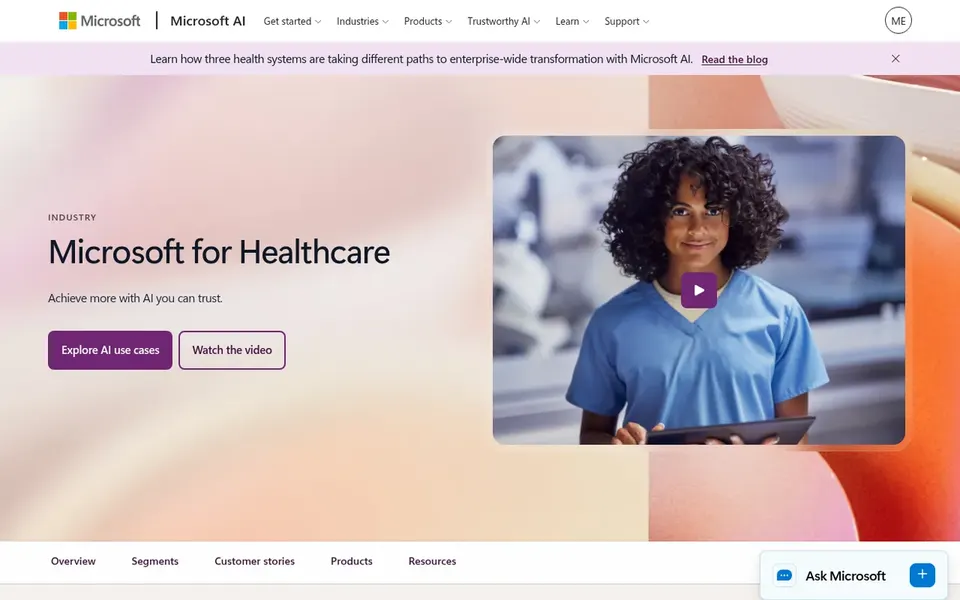
Choose Microsoft Cloud for Healthcare for integrated clinical and operational analytics. The breadth of the system means scoping analytics work can take time, and capabilities depend on which components you adopt.
Watch-outs: Analytics depth varies by configuration.
In daily use, Microsoft Cloud for Healthcare brings together patient engagement, health team collaboration and clinical and operational insights, with Nuance capabilities included. This comparison lists no price for Microsoft Cloud for Healthcare; ask the vendor. Free options: Not stated.
Best for: Managed healthcare data interoperability
Google Cloud Healthcare API is aimed squarely at managed healthcare data interoperability. Consider Microsoft Cloud for Healthcare when you want analytics bundled with clinical and collaboration features.
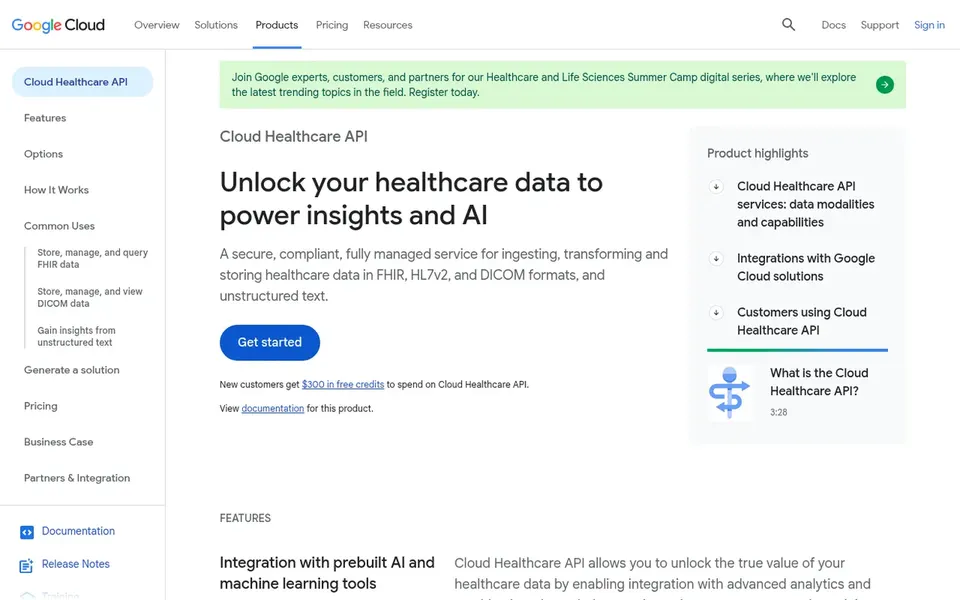
More specifically, Google Cloud Healthcare API is a secure, compliant, completely managed service for managing healthcare data in FHIR, HL7v2 and DICOM formats, plus unstructured text in natural language. It is a data service instead of a clinical application suite, so organizations expecting ready-made dashboards or engagement tools will have to build or add them. This comparison lists no price for Google Cloud Healthcare API; ask the vendor. Free access: Not stated.
Trade-offs to know: Needs cloud engineering skills.
Best for: Analytics, computing and machine learning
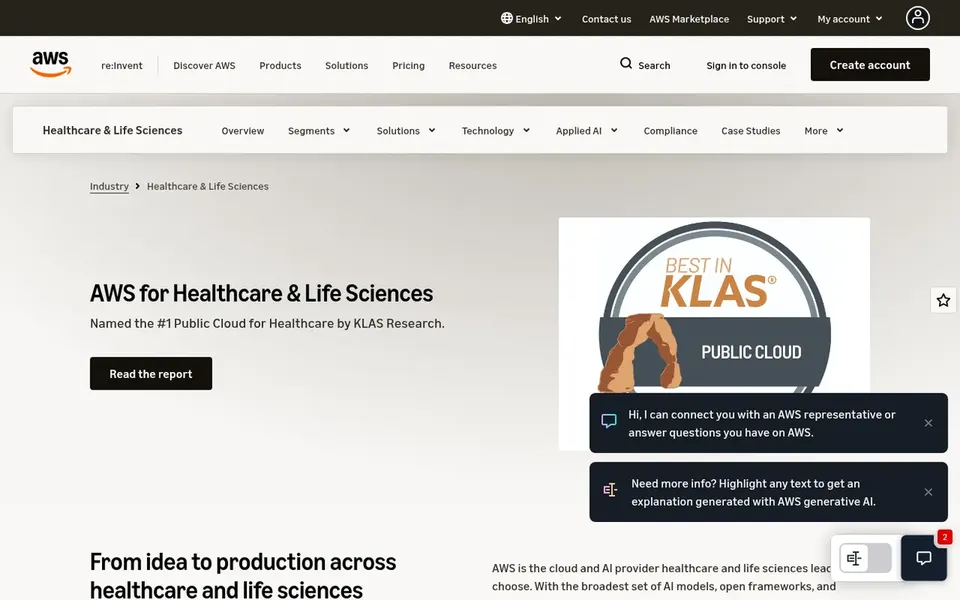
AWS for Health makes the most sense for analytics, computing and machine learning. It fits organizations with cloud expertise that want adaptable building blocks for genomics research, population analytics or machine learning models.
Since it is a wide set of services instead of a packaged healthcare analytics, teams must design and integrate components themselves. AWS for Health shows no starting price here, so confirm the cost on the vendor site. AWS for Health includes a free tier.
The main drawbacks: Needs assembling services yourself.
Request quotes from IBM Watson Health, AWS for Health and the others; the list shows no fixed prices.
Look at the free plan from AWS for Health closely: its caps decide whether it is usable for real work.
Take the trial from Salesforce Health Cloud and push a live task through it before you pay.
Read the limits listed for IBM Watson Health first: Healthcare-specific detail is restricted on the page.
Before rolling out Google Cloud Healthcare API, verify the integrations your workflow depends on.
Ask Salesforce Health Cloud about contract length, onboarding fees and user minimums before you sign.
How we picked
Ainotely looked at what each vendor publishes: pricing, plan limits, feature coverage for AI platforms for healthcare analytics and stated drawbacks. No hands-on testing is claimed. Prices and plan limits come from vendor pages and can change, so confirm them on the vendor site before you buy. The ranking is editorial: typical fit first, then clear pricing, then free access. If your needs are unusual, read the profiles rather than relying on position.
Every price and plan detail on this page comes from the vendors’ own websites. We did not run hands-on tests unless the text says so, and we do not publish star ratings or review scores. See how we score and our disclosure.
Keep your shortlist in one place
Paste prices, trial dates and notes from this guide into Ainotely, our AI note app. It files them into a topic and pulls out tasks like “cancel trial by Friday”. Free 7-day trial, no card needed.
How are the tools for AI platforms for healthcare analytics ordered?
The order follows typical fit for AI platforms for healthcare analytics, with IBM Watson Health first and AWS for Health last, then price clarity and free access. It is editorial judgement, not a score, so another team could rank the tools differently.
Can I try these tools before paying?
Often, yes. AWS for Health has a free plan and Salesforce Health Cloud offers a free trial. Use your own data and a real task during the test, and check what the free tier or trial limits before you rely on it.
Do these tools publish their prices?
No. None of the tools, from IBM Watson Health to AWS for Health, shows a fixed starting price here, so budget time for quotes.
Which options for AI platforms for healthcare analytics have a free plan?
AWS for Health is the only tool in this list with a free plan. Free plans usually cap users, projects or features, so check the limits on the vendor page. One other tool offers a trial instead.