This list puts Hunter first for email finding and verification. Listed starting prices: Hunter from $34 a month. Cognism is better for premium sales intelligence and compliance, and Apollo.io is better for connected AI go-to-market system. The other 3 tools in the list cover narrower or pricier cases.
Ainotely compared 6 lead enrichment tools for outbound teams. The goal is a practical shortlist: published prices, free plan facts, best-fit use cases and honest limits for every entry.
Key takeaways
This list starts with Hunter, which is built for email finding and verification.
Only Hunter offers a free plan among these 6 tools.
The main caution on Apollo.io: wide scope may overlap with existing tools.
For the cheapest start, look at Hunter: $34 per month.
Where Hunter fits: email finding and verification. Hunter describes itself as an option for finding and verifying professional email addresses, with cold email sending as part of the workflow. It does well as a focused addition to an existing CRM or sales engagement setup instead of a replacement for a full data system.
Drawbacks to consider: Not a complete go-to-market system.
Since Hunter centers on email finding and verification, teams needing firmographic enrichment, intent data, or account intelligence should pair it with another source. Pick it when email accuracy is the bottleneck and your broader data needs are already covered, and confirm coverage for your target regions and domains before rolling it out. Entry price for Hunter: $34 per month. Free access exists with Hunter.
Best for: Premium sales intelligence and compliance
For premium sales intelligence and compliance, Cognism is a natural candidate. Cognism positions itself as a premium sales intelligence provider setting a standard for data quality and compliance. Its homepage stresses quality and compliance as core differentiators for sales teams.
Smaller teams with straightforward email-finding needs may find a focused tool more proportionate. Worth adding: if compliance documentation is central to your buying process, request the details you need from the vendor before deciding. Also, the premium and compliance emphasis means teams should confirm coverage for their target markets and how the data fits their outreach rules. Cognism does not show a starting price in this comparison, so check the vendor site for current pricing. As for free access: Not stated.
Watch-outs: Compliance focus matters most in regulated regions.
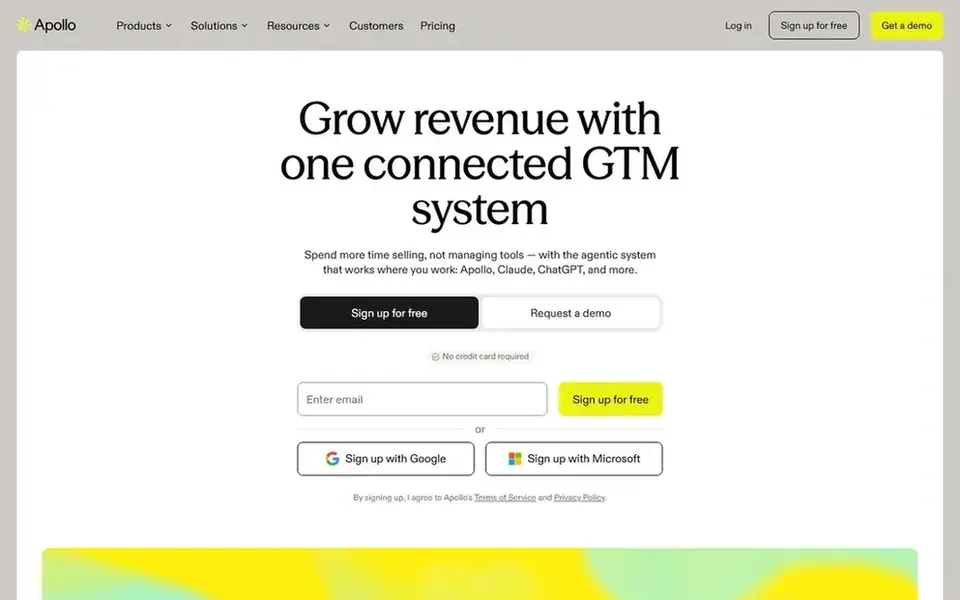
Apollo.io is designed for connected AI go-to-market system. Apollo.io describes itself as an AI sales system rebuilt as one connected go-to-market system including data, intelligence, and execution. Teams with an established stack may prefer a narrower enrichment tool that plugs into what they already use.
On top of that, evaluate how much of the system you will actually adopt, and consider point options like Hunter when email finding is the primary requirement. A connected system performs best when a team is willing to consolidate workflows around it. Apollo.io does not show a starting price in this comparison, so check the vendor site for current pricing. Free access: Free trial.
Drawbacks to consider: Wide scope may overlap with existing tools.
Lusha is built with buyer ranking and decision mapping in mind. Lusha presents itself as B2B data and intelligence for go-to-market teams and AI agents.
Limits to weigh: Signal-driven workflows need process discipline.
Check how the workspace and API access align with your existing tooling before committing, and compare more straightforward finders if outreach volume is the main driver. This comparison lists no price for Lusha; ask the vendor. Free plan details: Not stated.
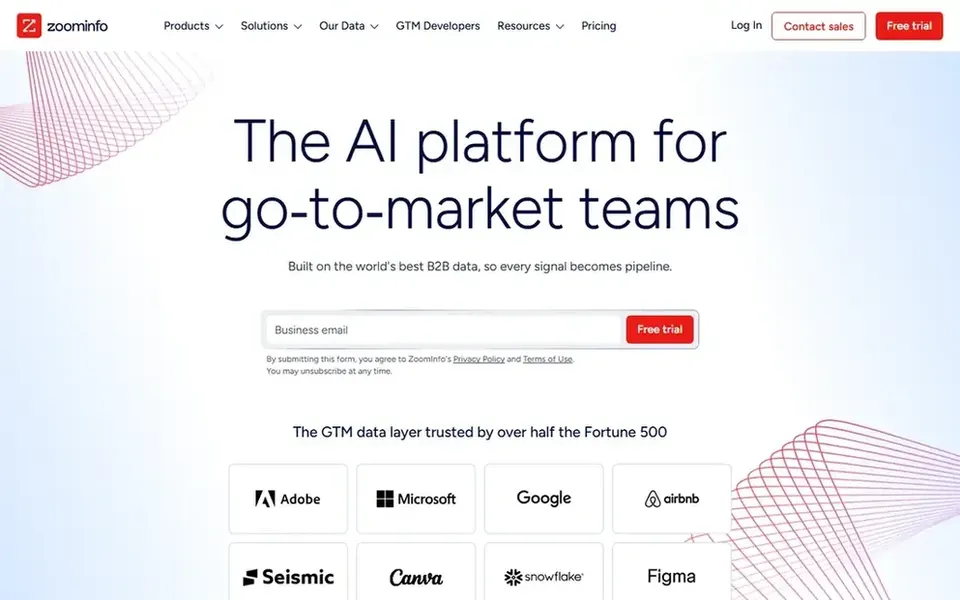
Choose ZoomInfo for full go-to-market data product. If your outbound motion is largely email finding and verification, a focused tool may be simpler to adopt, whereas ZoomInfo fits organizations planning broader data and go-to-market work.
Drawbacks to consider: Large system may be more than small teams need.
Because the platform spans plenty of functions, teams with narrow needs may find it heavier than required. In practice, ZoomInfo presents itself as a go-to-market product that pairs B2B data with marketing and sales AI. This comparison lists no price for ZoomInfo; ask the vendor. Trial and free access: Free trial.
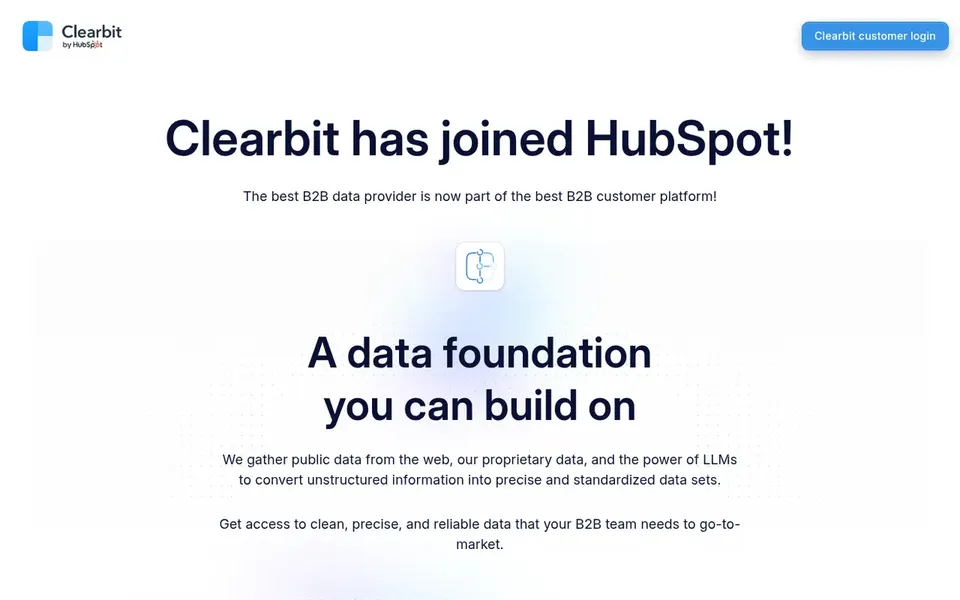
Clearbit was built for HubSpot-native enrichment and intent. Clearbit has joined HubSpot and describes itself as the first HubSpot native data provider.
Downsides: Value is tied closely to the HubSpot ecosystem.
Its homepage emphasizes enriching records, scoring and routing leads, and revealing buying intent from website visitors, now with artificial intelligence. Pricing for Clearbit is not stated here, so ask the vendor for current figures. As for free access: Not stated.
Get a written quote from Cognism, Apollo.io, Lusha and others; the list shows no starting price for them.
Look at the free plan from Hunter closely: its caps decide whether it is usable for real work.
Use real work to test the free trial from Apollo.io and ZoomInfo, rather than a demo project.
Before choosing Hunter, weigh its main limit: narrower scope than full data products.
Ask Apollo.io which support channels and response times come with the plan you would buy.
Confirm you can export your data from Clearbit, so leaving later does not mean losing records.
How we picked
We compared the tools on published pricing, free plan or trial availability, feature coverage for lead enrichment tools for outbound teams, and the limits each vendor documents. Prices and plan limits come from vendor pages and can change, so confirm them on the vendor site before you buy. Order on the page follows fit for the typical buyer first, then price transparency and free access. Your own requirements should decide the final pick.
Every price and plan detail on this page comes from the vendors’ own websites. We did not run hands-on tests unless the text says so, and we do not publish star ratings or review scores. See how we score and our disclosure.
Keep your shortlist in one place
Paste prices, trial dates and notes from this guide into Ainotely, our AI note app. It files them into a topic and pulls out tasks like “cancel trial by Friday”. Free 7-day trial, no card needed.
Often, yes. Hunter has a free plan and Apollo.io and ZoomInfo offer a free trial. Use your own data and a real task during the test, and check what the free tier or trial limits before you rely on it. Each of the 6 options in this lead enrichment tools for outbound teams guide has its own card above with the price, free plan and limits.
How are the tools for lead enrichment tools for outbound teams ordered?
Hunter sits first and Clearbit last because the order follows typical fit for lead enrichment tools for outbound teams, then price clarity and free access. It is a judgement call, so read each profile for fit and limits.
What is the cheapest option for lead enrichment tools for outbound teams in this list?
On published monthly entry prices, Hunter is the lowest here at $34 per month. Entry price is only part of the cost, because seats, add-ons and billing terms can change the total. All 6 picks in this lead enrichment tools for outbound teams comparison show their pricing, free plan details and main limits on the cards above.
What should outbound teams look for in a lead enrichment tool?
Start with data coverage for your target markets, then check how enrichment flows into your CRM and outreach tools. Match the tool's scope to your needs instead of buying the broadest product available.
Which options for lead enrichment tools for outbound teams have a free plan?
Hunter is the only tool in this list with a free plan. Free plans usually cap users, projects or features, so check the limits on the vendor page. Several others offer a trial instead. For the full picture, the cards above cover all 6 entries of this lead enrichment tools for outbound teams list, including price, free plan and limits.