Our first pick is iManage, best for knowledge and document work system. Listed starting prices: DocuSign from $45 per user a month. DocuSign is better for electronic signature and agreement management, and NetDocuments is better for document and email management. All 6 tools are compared below on price, free plan and limits.
Ainotely compared 6 tools for legal tech platforms for In-House counsel. The goal is a practical shortlist: published prices, free plan facts, best-fit use cases and honest limits for every entry.
Key takeaways
iManage takes the first slot, best suited to knowledge and document work system.
The lowest published monthly entry price here is $45 per user per month, from DocuSign.
SimpleLegal is the one to check for legal operations and spend management.
One limit worth knowing about iManage: broader product than pure legal ops.
Neither iManage nor SimpleLegal, nor any of the other 4 tools, has a permanent free plan; trials and quotes are the norm.
iManage is designed for knowledge and document work product. It suits in-house teams that require a governed home for documents, emails and know-how, especially where legal works closely with outside counsel and other professional services groups on shared matters.
The main drawbacks: Broader system than pure legal ops.
Also, iManage is a knowledge and document system instead of a spend or e-billing tool, so pair it with legal operations software if cost control is a priority. Check the vendor site for iManage pricing; none is listed in this comparison. On free options: Not stated.
Best for: Electronic signature and agreement management
DocuSign is aimed squarely at electronic signature and agreement management. It suits in-house teams that require a steady, widely recognized way to execute contracts and keep signature records consistent across the business.
DocuSign is not a substitute for contract lifecycle, spend or document management systems on its own. The starting price for DocuSign: $45 per user per month. Trial and free access: Not stated.
Drawbacks to consider: Not a full legal operations suite.
NetDocuments is aimed squarely at document and email management. It suits in-house departments that want a dependable system of record for matters, emails and files, with controls that support confidentiality and retention expectations across a distributed team.
Where it falls short: Not a spend management tool.
Pricing for NetDocuments is not stated here, so ask the vendor for current figures. Free options: Not stated.
Where Ironclad fits: contract lifecycle management with AI. Since Ironclad is built around contracts, teams needing deep e-billing, matter management or document management may need extra tools alongside it.
The main drawbacks: Contract-centric instead of full legal ops.
Evaluate integrations with your existing signature and document systems before committing, and confirm the workflow depth your team actually needs on the vendor site. This comparison lists no price for Ironclad; ask the vendor. Free plan details: Not stated.
Choose Relativity for legal data intelligence and e-discovery. Confirm how it suits your matter workflow and who on your team will own it before adopting.
No starting price is listed for Relativity here; confirm pricing on the vendor site. As for free access: Not stated.
Trade-offs to know: Most useful for data-heavy matters.
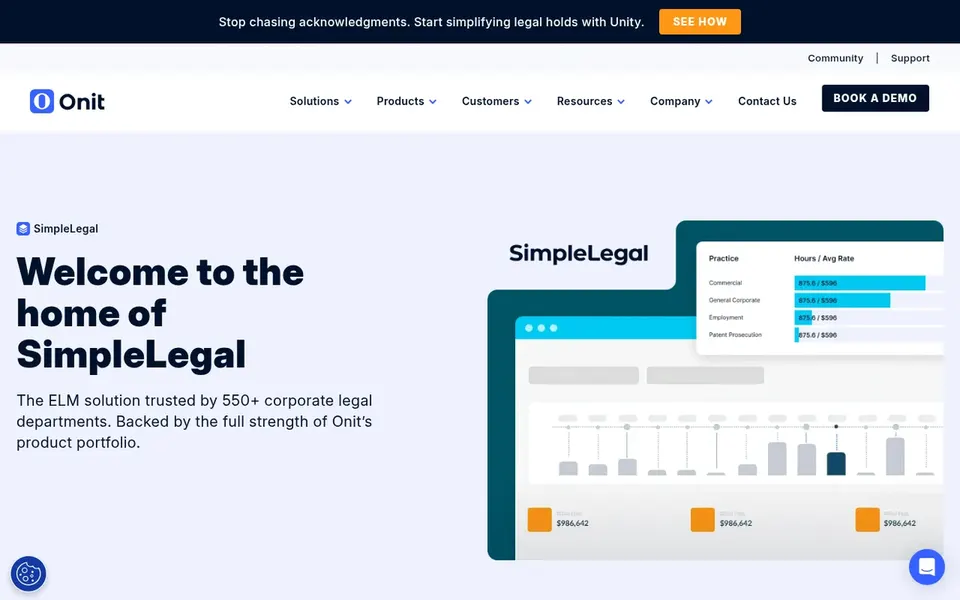
In short, SimpleLegal is for legal operations and spend management. SimpleLegal by Onit is positioned around simplifying legal operations, with spend, matter and vendor management as core themes.
In practice, teams building a legal ops function commonly start here when cost control and matter oversight are the priority. Pricing for SimpleLegal is not stated here, so ask the vendor for current figures. Free plan details: Not stated.
Get a written quote from iManage, NetDocuments, Ironclad and others; the list shows no starting price for them.
Read the limits listed for iManage first: broader product than pure legal ops.
See whether SimpleLegal offers onboarding or training, and whether it is included in the price.
Look at the renewal terms for NetDocuments: auto-renewal, notice periods and price changes can matter more than the first-year price.
Check the integration list for Relativity against the tools you run today, and note which ones need a higher plan.
How we picked
Pricing pages, product documentation and feature lists were the main sources, and every entry carries at least one honest drawback. Where a price is missing, the vendor does not list one publicly or ties it to a quote. Always confirm before budgeting. We ordered the tools by general fit, then by how clearly pricing is shown, then by free access. A buyer with unusual needs may reorder them. That approach shaped the order of the 6 legal tech platforms for In-House Counsel tools listed here.
Every price and plan detail on this page comes from the vendors’ own websites. We did not run hands-on tests unless the text says so, and we do not publish star ratings or review scores. See how we score and our disclosure.
Keep your shortlist in one place
Paste prices, trial dates and notes from this guide into Ainotely, our AI note app. It files them into a topic and pulls out tasks like “cancel trial by Friday”. Free 7-day trial, no card needed.
Which platform is a good match for contract-heavy in-house teams?
Start with iManage if you need knowledge and document work system. DocuSign is the better match for electronic signature and agreement management, and NetDocuments for document and email management. The best choice depends on budget, team size and workflow.
Does any tool for legal tech platforms for In-House counsel here have a free plan?
No tool in this list, iManage and SimpleLegal included, has a permanent free plan. Trials and quotes are the usual route, so plan a short evaluation period.
Can I try these tools before paying?
Not by default. None of the tools, from iManage to SimpleLegal, lists a free plan or a free trial here, so ask each vendor for a demo before committing.
Where does Relativity fit for in-house counsel?
Relativity is targeted at legal data intelligence, which fits litigation, investigations and large document review instead of routine contract or spend work. It is generally a specialist addition to a broader legal tech stack.
How are the tools for legal tech platforms for In-House counsel ordered?
iManage sits first and SimpleLegal last because the order follows typical fit for legal tech platforms for In-House counsel, then price clarity and free access. It is a judgement call, so read each profile for fit and limits.
Is iManage the right pick for everyone comparing legal tech platforms for In-House counsel?
No single tool suits every team. iManage comes first because it fits knowledge and document work platform, while DocuSign suits electronic signature and agreement management and NetDocuments suits document and email management. Match the tool to your own size, budget and workflow before deciding.