Our first pick is Google Med-PaLM, best for Medical question answering research. Epic In Basket fits managing patient messages within Epic; IBM Watson Health fits legacy health AI exploration. The other 3 tools in the list cover narrower or pricier cases.
If you are comparing medical AI tools for physicians, this page covers 6 tools in one place: what each is best for, what it costs to start, whether it has a free plan, and the main limit to know about.
Key takeaways
The list opens with Google Med-PaLM, aimed at Medical question answering research.
Pricing across the list, from Google Med-PaLM to Nuance Dragon Medical One, is by quote only.
A permanent free plan is missing from all 6 tools, Google Med-PaLM and Nuance Dragon Medical One included; plan for a trial or a premium start.
Nuance Dragon Medical One suits voice-driven clinical documentation.
One limit worth knowing about IBM Watson Health: not a focused clinical documentation tool.
Where Google Med-PaLM fits: Medical question answering research. Google Med-PaLM is a research-focused large language model built to answer medical questions and support clinical knowledge tasks. It is part of Google's health AI efforts and is not a commercial documentation product.
It may interest physicians involved in research or those exploring AI for medical question answering, but it is not intended for direct patient care documentation. Physicians should consider it only for research or educational purposes, not as a primary clinical AI tool. Med-PaLM is not a turnkey option for clinical workflows and is not widely available for direct clinical use. Google Med-PaLM shows no starting price here, so confirm the cost on the vendor site. On free options: Not stated.
Points against: Not a clinical documentation tool.
Epic In Basket makes the most sense for managing patient messages within Epic. Epic In Basket is a communication tool within the Epic EHR that helps physicians handle patient messages, results, and other inbox items. Its utility is restricted to organizations using Epic, and its AI capabilities are narrower than those of dedicated ambient AI scribes.
Watch-outs: Restricted AI features compared with dedicated tools.
More specifically, for full clinical documentation automation, consider Nuance Dragon Medical One or Suki. From a buyer's view, Epic In Basket is a good match for Epic-based practices needing better inbox triage. Epic In Basket does not show a starting price in this comparison, so check the vendor site for current pricing. Free options: Not stated.
IBM Watson Health targets legacy health AI exploration. IBM Watson Health encompasses several AI and data analytics offerings for healthcare, though its product lineup has evolved over time.
Limits to weigh: Restricted current relevance for physicians.
It is not a dedicated clinical documentation tool but may be relevant for organizations exploring AI for population health or data analysis. On top of that, for documentation, tools like Nuance Dragon Medical One or Suki are more straight applicable. IBM Watson Health shows no starting price here, so confirm the cost on the vendor site. Free options: Not stated.
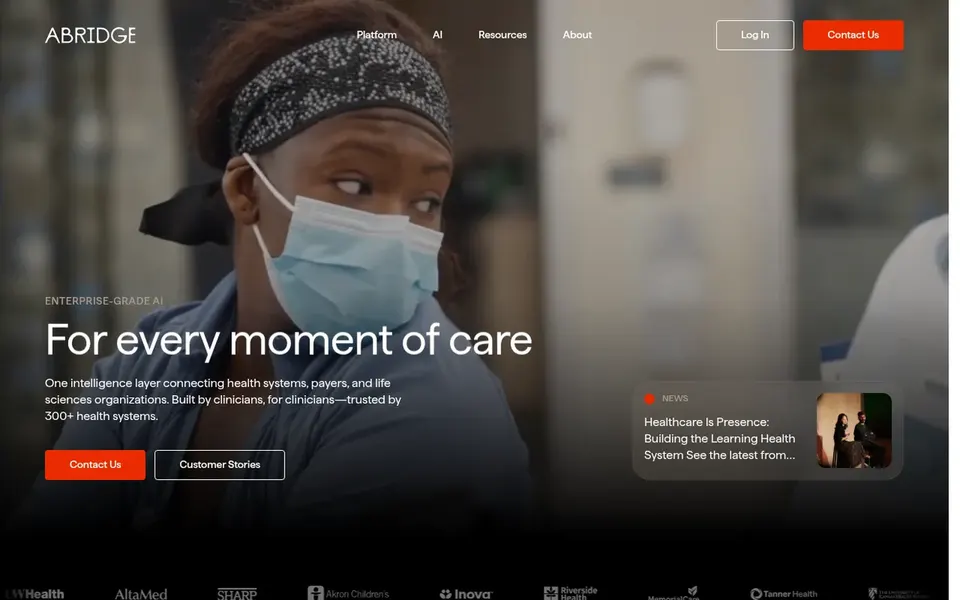
Abridge targets ambient clinical note generation. Abridge provides enterprise-grade clinical AI that links health systems, payers, and life sciences around clinicians and patients. It is meant to capture and structure clinical conversations into notes, reducing documentation time.
This tool is a solid fit for large healthcare organizations looking to deploy AI across several specialties and plug into existing workflows. Also, consider Abridge if you need a solid, scalable product for a health system. Also, smaller practices might prefer a more straightforward option like Suki. This comparison lists no price for Abridge; ask the vendor. On free options: Not stated.
What to check first: Concentrated on enterprise settings.
Choose Suki for AI assistant for clinical documentation. Suki gives you ambient clinical intelligence that automates clinical documentation, helping reduce burnout and giving clinicians more time with patients.
Suki may need customization to align with specific specialty templates, and its effectiveness relies on consistent use. Consider Suki for an approachable AI scribe that prioritizes clinician well-being. No starting price is listed for Suki here; confirm pricing on the vendor site. Trial and free access: Not stated.
Limits to weigh: Needs consistent use for best results.
Nuance Dragon Medical One serves voice-driven clinical documentation. It uses AI to boost accuracy and simplify documentation, fitting well for clinicians who prefer voice input over typing and need a steady, integrated dictation tool. Even so, Dragon Medical One is primarily a dictation tool and may lack advanced ambient documentation features found in newer AI scribes.
It also needs a stable internet connection and user training. Worth adding: if you need a full ambient AI option that listens to conversations, consider Abridge or Suki instead. Nuance Dragon Medical One shows no starting price here, so confirm the cost on the vendor site. Free plan details: Not stated.
The main drawbacks: Needs training for optimal use.
Confirm the entry price with every vendor: no tool from Google Med-PaLM to Nuance Dragon Medical One shows a fixed starting price.
Before choosing Google Med-PaLM, weigh its main limit: not a clinical documentation tool.
Make sure Nuance Dragon Medical One lets you export your data in a format another tool can read.
Work out what Google Med-PaLM costs with your real seat count, add-ons and usage, not just the entry price.
Run a one or two week pilot of Suki with the people who will use it every day.
How we picked
Ainotely used vendor pricing pages and product documentation as the base, then compared plans, free access and documented limits for 6 tools. Prices and plan limits come from vendor pages and can change, so confirm them on the vendor site before you buy. The ranking is editorial: typical fit first, then clear pricing, then free access. If your needs are unusual, read the profiles rather than relying on position. Keep it in mind while reading the 6 medical AI tools for Physicians profiles on this page.
Every price and plan detail on this page comes from the vendors’ own websites. We did not run hands-on tests unless the text says so, and we do not publish star ratings or review scores. See how we score and our disclosure.
Keep your shortlist in one place
Paste prices, trial dates and notes from this guide into Ainotely, our AI note app. It files them into a topic and pulls out tasks like “cancel trial by Friday”. Free 7-day trial, no card needed.
No. None of the tools, from Google Med-PaLM to Nuance Dragon Medical One, shows a fixed starting price here, so budget time for quotes.
How are the tools for medical AI tools for physicians ordered?
Google Med-PaLM sits first and Nuance Dragon Medical One last because the order follows typical fit for medical AI tools for physicians, then price clarity and free access. It is a judgement call, so read each profile for fit and limits.
Can I try these tools before paying?
Not by default. None of the tools, from Google Med-PaLM to Nuance Dragon Medical One, lists a free plan or a free trial here, so ask each vendor for a demo before committing.
How do I ensure patient data privacy with these tools?
Look for vendors that comply with healthcare privacy regulations and supply clear data handling policies. Confirm that the tool uses encryption and secure storage.
Does any tool for medical AI tools for physicians here have a free plan?
A permanent free plan is not offered by Google Med-PaLM, Nuance Dragon Medical One or the other tools here. Plan a short evaluation period instead.
Are these AI tools a good match for small practices?
Some tools, for example Suki, are built to be accessible for individual physicians and small practices. Others, like Abridge, may be more enterprise-focused.