RLDatix is the first pick on this list for governance, risk and compliance. Alternatives: Press Ganey for patient experience and performance insight, and Verge Health for governance, risk and compliance workflows. The other 3 tools in the list cover narrower or pricier cases.
Short on time? The summary and table above give the quick view of 6 medical quality management systems, and the profiles that follow give the detail behind each entry.
Key takeaways
Top of the list is RLDatix, which targets governance, risk and compliance.
Pricing across the list, from RLDatix to PolicyMedical, is by quote only.
RLDatix comes with a trade-off: wide scope may need configuration effort.
PolicyMedical is the one to check for policy and document governance.
None of the 6 tools, from RLDatix to PolicyMedical, has a free plan, so budget for a subscription or use a trial.
In short, RLDatix is for governance, risk and compliance. Consider RLDatix when you need an integrated risk and compliance backbone, and weigh lighter analytics tools if your central goal is clinical performance measurement alone.
Beyond that, since the system spans plenty of governance functions, implementation and configuration can take real effort. Also, RLDatix supplies healthcare governance, risk and compliance software built around its RLD360 product, pitched at improving patient outcomes and reducing harm. RLDatix does not show a starting price in this comparison, so check the vendor site for current pricing. On free options: Not stated.
Downsides: Wide scope may need configuration effort.
Best for: Patient experience and performance insight
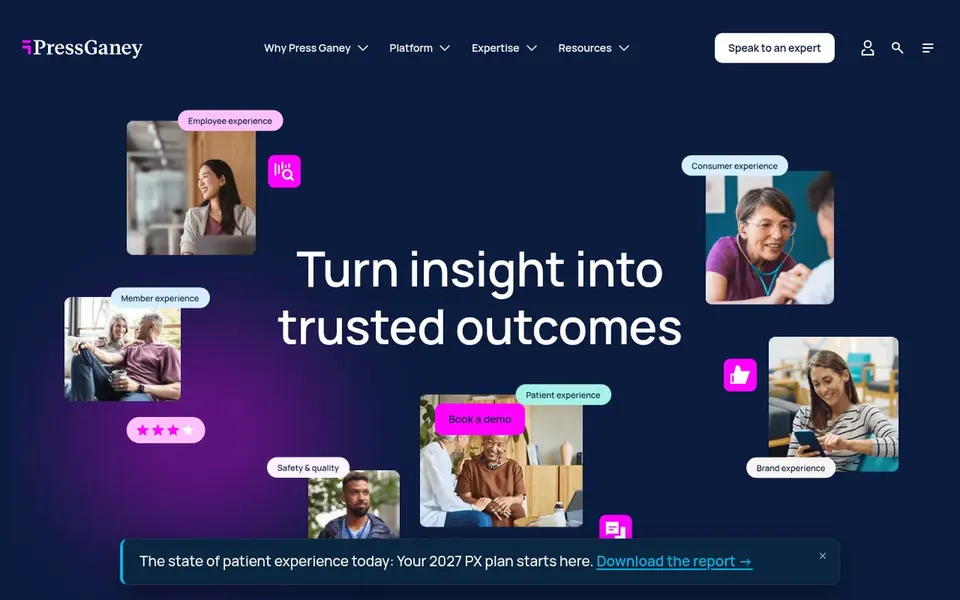
Press Ganey is a good fit for patient experience and performance insight. Press Ganey merges healthcare data, technology and guidance to help organizations understand what is happening now and what could come next.
Its emphasis on experience and advisory insight means some clinical quality or compliance workflows may need other systems. Choose Press Ganey when patient experience and guided performance improvement are central, and look at analytics- or governance-focused tools if those needs dominate. Check the vendor site for Press Ganey pricing; none is listed in this comparison. Free access: Not stated.
What to check first: Experience focus may not handle all clinical metrics.
Best for: Governance, risk and compliance workflows
Verge Health is designed for governance, risk and compliance workflows. It fits organizations that want to organize governance activities and keep quality, risk and compliance work coordinated instead of spread across disconnected tools and spreadsheets.
In daily use, confirm the current product scope straight with the vendor, and choose Verge Health when coordinated governance and compliance workflows are the priority. This comparison lists no price for Verge Health; ask the vendor. Free plan details: Not stated.
Where it is weaker: Less emphasis on workforce learning.
Quantros is a good fit for clinical performance analytics. Pick Quantros when measurement and outcomes reporting are the priority, and pair it with a broader governance system if you need policy and risk management too.
This comparison lists no price for Quantros; ask the vendor. Trial and free access: Not stated.
Trade-offs to know: Analytics setup may need data expertise.
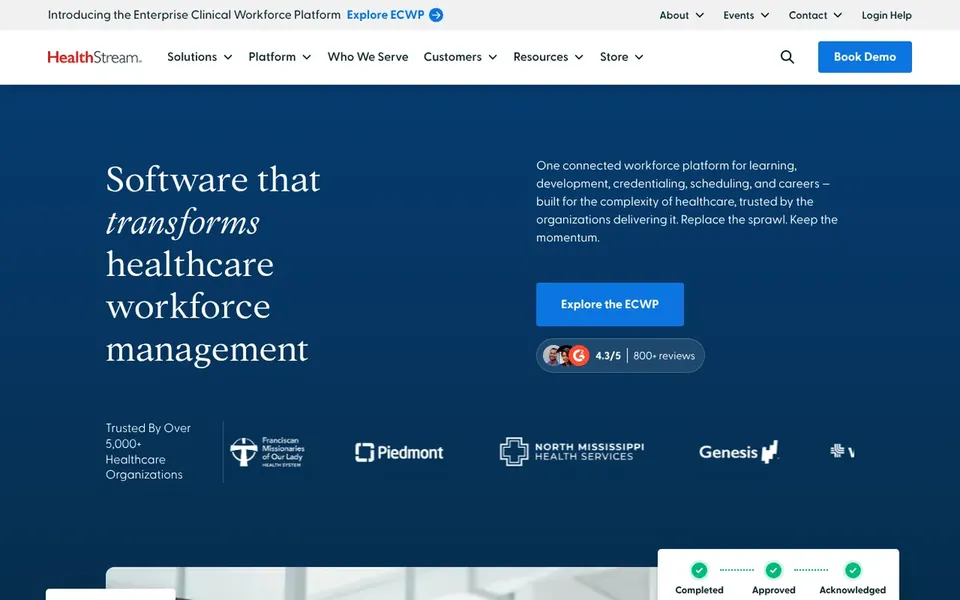
HealthStream is built with workforce education and competency in mind. HealthStream is a healthcare workforce management product with a solid emphasis on education, competency and staff development.
No starting price is listed for HealthStream here; confirm pricing on the vendor site. As for free access: Not stated.
Honest limits: May duplicate existing learning systems.
In short, PolicyMedical is for policy and document governance. PolicyMedical is oriented toward healthcare governance, risk and compliance, with an emphasis on policy and document management for quality programs. Organizations that struggle to keep policies current and accessible commonly find this focus handy, since controlled documents underpin accreditation readiness and consistent clinical practice across departments.
Downsides: Overlap with related governance products.
Its scope is narrower than full quality analytics products, so it fits best alongside measurement tools instead of replacing them. Worth adding: pick PolicyMedical when policy control and compliance documentation are the pressing gap, and look to analytics-led systems for performance insight. PolicyMedical shows no starting price here, so confirm the cost on the vendor site. Free access: Not stated.
Confirm the entry price with every vendor: no tool from RLDatix to PolicyMedical shows a fixed starting price.
Before choosing RLDatix, weigh its main limit: wide scope may need configuration effort.
Ask RLDatix how an export works before you move any records in; an easy exit lowers the risk.
Get the contract term, renewal terms and any onboarding fees from Quantros in writing.
A short pilot of Press Ganey with your real workflow tells you more than a feature table.
How we picked
For each of the 6 tools we noted price, free plan or trial, fit for medical quality management systems and the main limit, using vendor pages and documentation. Where a price is missing, the vendor does not list one publicly or ties it to a quote. Always confirm before budgeting. Order on the page follows fit for the typical buyer first, then price transparency and free access. Your own requirements should decide the final pick.
Every price and plan detail on this page comes from the vendors’ own websites. We did not run hands-on tests unless the text says so, and we do not publish star ratings or review scores. See how we score and our disclosure.
Keep your shortlist in one place
Paste prices, trial dates and notes from this guide into Ainotely, our AI note app. It files them into a topic and pulls out tasks like “cancel trial by Friday”. Free 7-day trial, no card needed.
How are the tools for medical quality management systems ordered?
RLDatix sits first and PolicyMedical last because the order follows typical fit for medical quality management systems, then price clarity and free access. It is a judgement call, so read each profile for fit and limits.
How should a small quality team choose?
Start with the single biggest gap, like policy control or performance reporting, and choose the tool that addresses it straight. Then check integration and implementation effort so the system suits your available staffing.
Does any tool for medical quality management systems here have a free plan?
No tool in this list, RLDatix and PolicyMedical included, has a permanent free plan. Trials and quotes are the usual route, so plan a short evaluation period.
Can these systems support patient experience improvement?
Press Ganey is the clearest fit for experience and performance insight, pairing data with guidance. Other tools may feed experience data into broader quality reporting, so confirm the specific integrations you need.
Can I try these options before paying?
Not by default. None of the tools, from RLDatix to PolicyMedical, lists a free plan or a free trial here, so ask each vendor for a demo before committing.
Is RLDatix the right pick for everyone comparing medical quality management systems?
No single tool suits every team. RLDatix comes first because it fits governance, risk and compliance, while Press Ganey suits patient experience and performance insight and Verge Health suits governance, risk and compliance workflows. Match the tool to your own size, budget and workflow before deciding.