For agile planning, CI/CD and review in one suite, Azure DevOps is where this list starts. Listed starting prices: GitLab from $29 per user per month. For a different need, Collaborator covers integrating peer review with existing systems and GitHub Enterprise covers governed AI-assisted development at scale. The other 3 tools in the list cover narrower or pricier cases.
This Ainotely guide covers 6 options for peer code review software for enterprise. Each profile lists a starting price, free plan details, strengths and drawbacks, so you can drop poor fits quickly.
Key takeaways
Azure DevOps takes the first slot, best suited to agile planning, CI/CD and review in one suite.
GitLab has the lowest monthly starting price in this list: $29 per user per month.
For Review across mixed version control systems, Atlassian Crucible is worth a look.
Just one of the 6 tools, GitLab, has a free plan.
Before buying GitHub Enterprise, weigh this: wide system may require configuration effort.
Best for: Agile planning, CI/CD and review in one suite
Azure DevOps is designed for agile planning, CI/CD and review in one suite. Azure DevOps is a suite for optimizing the development process with agile tools, CI/CD, agentic AI and collaboration features. In practice, pull request review is part of a broader product that helps teams plan smarter and ship quicker.
Drawbacks to consider: Review is one part of a bigger product.
Where it shines: CI/CD and review.
Adoption benefits grow with consistent use across planning and delivery. Choose Azure DevOps when you want review integrated with agile planning and CI/CD in a single enterprise product. Check the vendor site for Azure DevOps pricing; none is listed in this comparison. On free options: Not stated.
Best for: Integrating peer review with existing systems
For integrating peer review with existing systems, Collaborator is a natural candidate. Organizations with established version control, issue tracking and build systems frequently use Collaborator to add a dedicated review layer that links to what they already run. Collaborator concentrates on review instead of the full software lifecycle, so planning and delivery features come from other products.
It is geared toward teams that want structured peer review without replacing their current development stack. More specifically, the value relies on how well it plugs into your specific environment. Collaborator does not show a starting price in this comparison, so check the vendor site for current pricing. Free access: Not stated.
Limits to weigh: Review-centric scope may need companion tools.
Best for: Governed AI-assisted development at scale
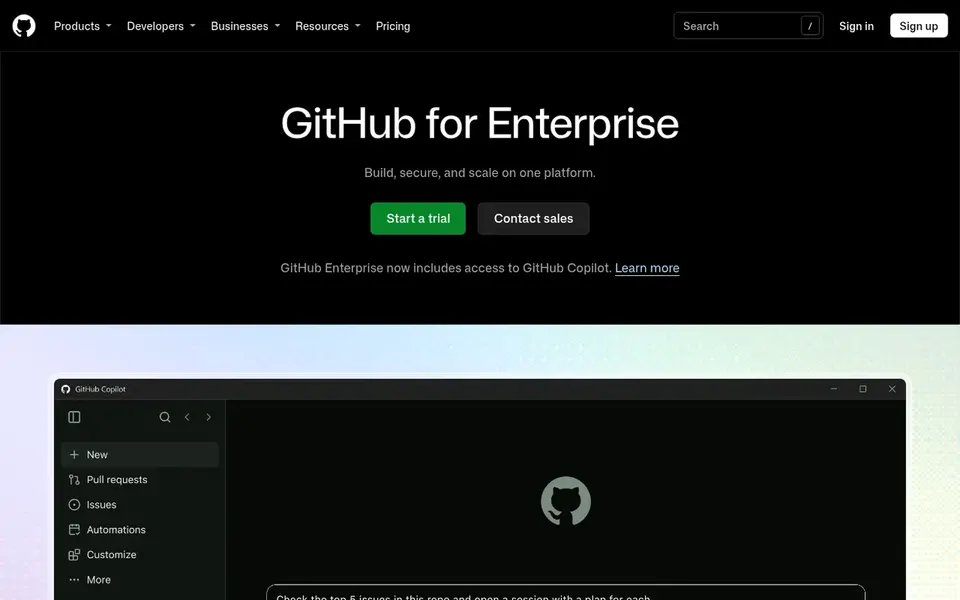
GitHub Enterprise works best for governed AI-assisted development at scale. GitHub Enterprise is a product for shipping software at scale with governance, security and deployment choice.
Honest limits: Best value when completely adopted across teams.
Beyond that, if you need a light, review-only tool, a focused product may be more straightforward. From a buyer's view, choose GitHub Enterprise when you want review tightly integrated with governance, security and AI support across the organization. No starting price is listed for GitHub Enterprise here; confirm pricing on the vendor site. Free plan details: Not stated.
Best for: Unified DevOps lifecycle with built-in review
For unified DevOps lifecycle with built-in review, GitLab is a natural candidate. GitLab is an intelligent orchestration product with context and governance for the whole software lifecycle.
Downsides: Full product adoption required for best results.
For everyday use, teams and agents ship trusted software quicker using merge request review that is built into planning, CI/CD and security workflows. Also, since GitLab spans the entire lifecycle, organizations looking only for peer code review may find it broader than necessary. GitLab cost at the entry level: $29 per user per month. Free access exists with GitLab.
Best for: Git-centric review with change-based workflow
Gerrit Code Review serves Git-centric review with change-based workflow. It centres on code review and does not aim to include the whole DevOps lifecycle.
Limits to weigh: Interface and workflow feel developer-centric.
Beyond that, pick Gerrit when rigorous Git-based change control is the priority and the team is comfortable with its workflow. This comparison lists no price for Gerrit Code Review; ask the vendor. As for free access: Not stated.
Best for: Review across mixed version control systems
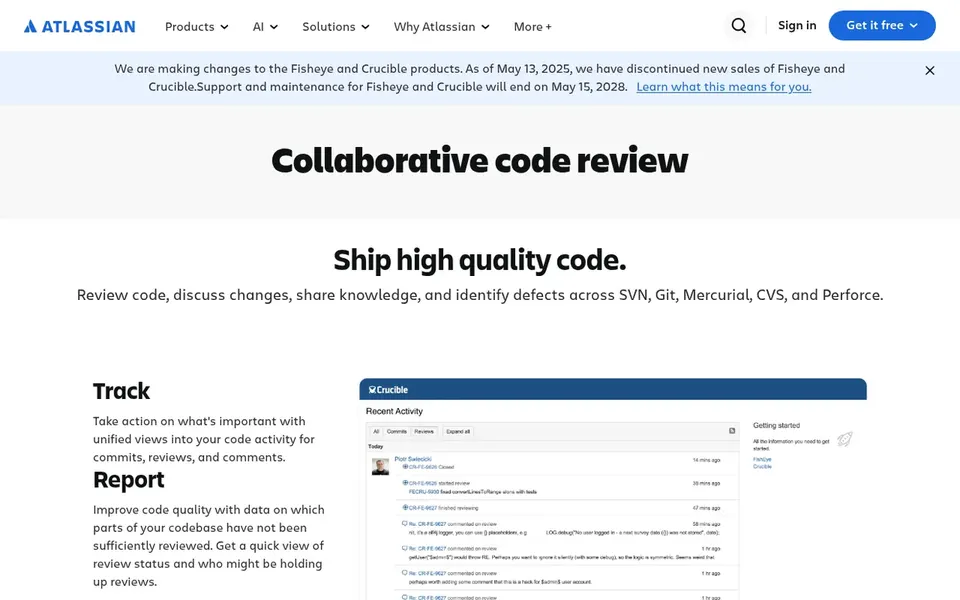
Atlassian Crucible is a good fit for Review across mixed version control systems. Atlassian Crucible is a collaborative code review tool for reviewing code, discussing changes and finding defects.
What to check first: May need extras for broader workflow coverage.
Organizations without other Atlassian tools should weigh integration benefits carefully. Choose Crucible when multi-repository review and discussion are the central requirement. Pricing for Atlassian Crucible is not stated here, so ask the vendor for current figures. Trial and free access: Not stated.
Ask Azure DevOps, Collaborator, GitHub Enterprise and others for a written quote, since no starting price is shown.
Look at the free plan from GitLab closely: its caps decide whether it is usable for real work.
Before choosing Azure DevOps, weigh its main limit: wide suite may need process alignment.
Verify that exporting from Gerrit Code Review is possible on your plan and covers all your records.
Confirm minimum seats and billing terms with Collaborator before you commit to an annual plan.
How we picked
Selection started from tools commonly considered for peer code review software for enterprise, then narrowed to 6 that have clear pricing information or a clear quote process. Treat prices as a snapshot: vendors change plans often, so check the vendor site for the figure that applies today. The ranking is editorial: typical fit first, then clear pricing, then free access. If your needs are unusual, read the profiles rather than relying on position.
Every price and plan detail on this page comes from the vendors’ own websites. We did not run hands-on tests unless the text says so, and we do not publish star ratings or review scores. See how we score and our disclosure.
Keep your shortlist in one place
Paste prices, trial dates and notes from this guide into Ainotely, our AI note app. It files them into a topic and pulls out tasks like “cancel trial by Friday”. Free 7-day trial, no card needed.
How are the tools for peer code review software for enterprise ordered?
The order follows typical fit for peer code review software for enterprise, with Azure DevOps first and Atlassian Crucible last, then price clarity and free access. It is editorial judgement, not a score, so another team could rank the tools differently.
Do these tools publish their prices?
Not all of them. Azure DevOps, Collaborator, GitHub Enterprise and others publish no starting price, so expect a quote request for those. The rest, GitLab included, show a starting price, though seats and billing terms still change the final cost.
Is Azure DevOps the right pick for everyone comparing peer code review software for enterprise?
No single tool suits every team. Azure DevOps comes first because it fits agile planning, CI/CD and review in one suite, while Collaborator suits integrating peer review with existing systems and GitHub Enterprise suits governed AI-assisted development at scale. Match the tool to your own size, budget and workflow before deciding.
Can I try these tools before paying?
Often, yes. GitLab has a free plan. Use your own data and a real task during the test, and check what the free tier or trial limits before you rely on it. All 6 picks in this peer code review software for enterprise comparison show their pricing, free plan details and main limits on the cards above.