For open-source self-hosted search, Typesense is where this list starts. Coveo is the stronger choice for enterprise AI relevance across channels, while Searchspring suits ecommerce search within Athos Commerce. The other 3 tools in the list cover narrower or pricier cases.
Ainotely put together this guide to platforms for AI-Powered product search for readers who want a clear shortlist without reading every vendor page. It compares 6 tools on starting price, free plans, who each one suits and where each one falls short.
Key takeaways
The list opens with Typesense, aimed at open-source self-hosted search.
Constructor fits ecommerce product discovery and KPIs.
Pricing across the list, from Typesense to Constructor, is by quote only.
What to know about Typesense first: self-hosting needs operational effort.
Algolia is the only tool of the 6 with a free plan.
Typesense works best for open-source self-hosted search. Typesense describes itself as an open-source search engine for quick, typo-tolerant site and app search, with straightforward APIs, vector search, and self-hosting.
Downsides: Self-hosting needs operational effort.
It also provides fewer packaged merchandising workflows than dedicated ecommerce discovery tools. Choose Typesense when openness and control matter more than turnkey retail features. No starting price is listed for Typesense here; confirm pricing on the vendor site. Free options: Not stated.
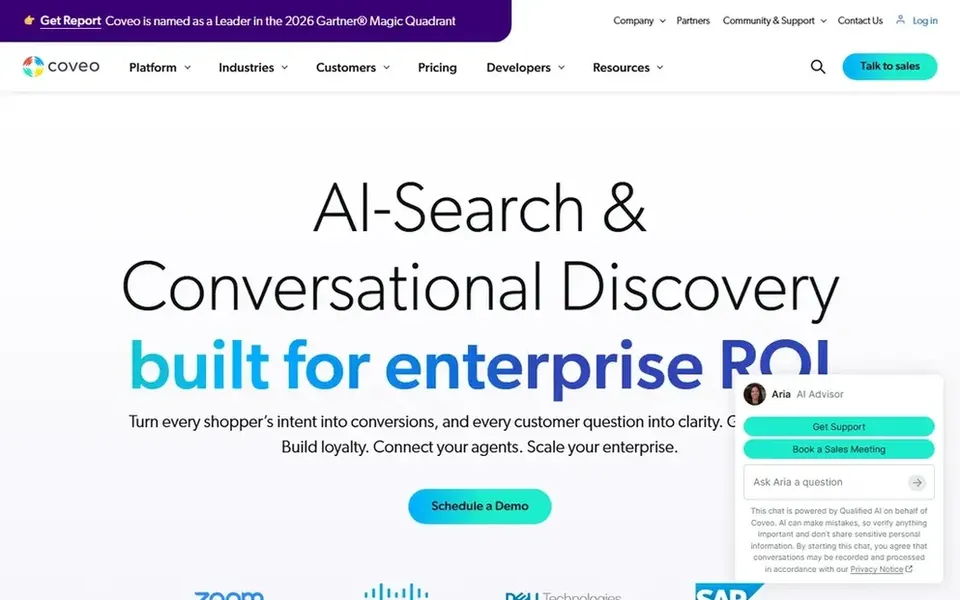
Coveo makes the most sense for enterprise AI relevance across channels. Its scope spans commerce, customer service, workplace, and website experiences, so it suits organizations that want consistent relevance across plenty of touchpoints.
Where it is weaker: Enterprise orientation can suit bigger organizations best.
Since Coveo is built around enterprise relevance, the setup and governance can be heavier than a light storefront search tool. Check the vendor site for Coveo pricing; none is listed in this comparison. Free plan details: Free trial.
Choose Searchspring for ecommerce search within Athos Commerce. Teams should treat the rebrand as part of due diligence when shortlisting.
Limits to weigh: Concentrated on ecommerce instead of general search.
Beyond that, pick Searchspring when retail merchandising is the priority and the Athos direction aligns with your plans. Also, the ecommerce orientation also means it is not a general-purpose search database. This comparison lists no price for Searchspring; ask the vendor. On free options: Not stated.
For search database for AI applications, Elastic is a natural candidate. Elastic hands building blocks, not a finished merchandising experience, so it demands development and operations work.
Retailers wanting out-of-the-box discovery features may prefer a dedicated ecommerce product. Engineering-led organizations often choose it for control over indexing and relevance. Elastic shows no starting price here, so confirm the cost on the vendor site. As for free access: Free trial.
Where it falls short: System breadth needs engineering effort. What works well: Powered by Elasticsearch.
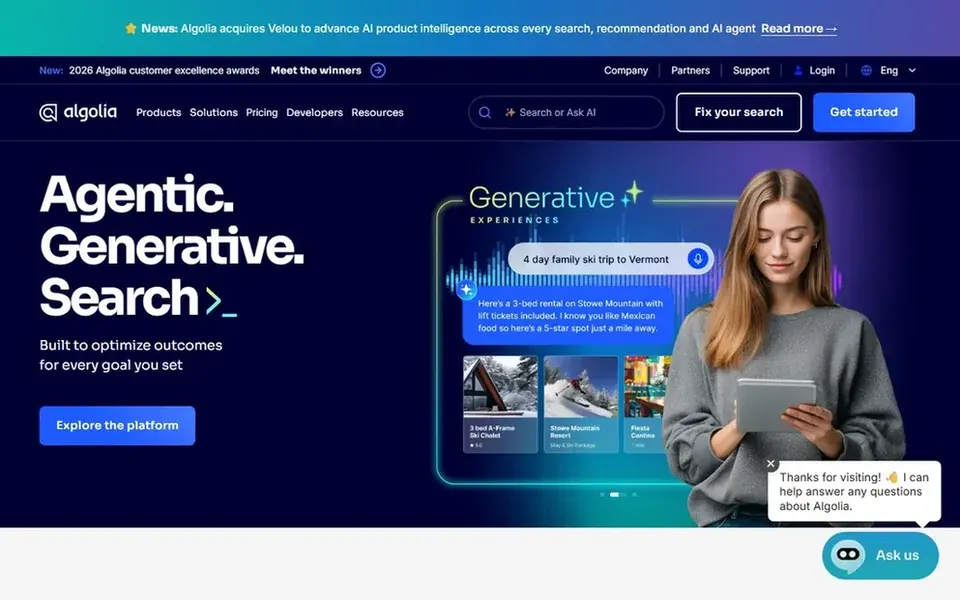
Algolia is designed for unified AI search and retrieval. Algolia positions itself as an AI search and retrieval product that spans agentic, generative, and traditional search. On top of that, smaller teams may prefer a more straightforward, purpose-built discovery product.
What Algolia does well: Adaptive.
Organizations building product search alongside other search use cases commonly shortlist it for its unified approach and developer-friendly APIs. The breadth that makes Algolia adaptable can also mean more configuration than a narrow ecommerce-only tool. Choose Algolia when you want a single retrieval system across several experiences and have the engineering capacity to tune relevance. Algolia does not show a starting price in this comparison, so check the vendor site for current pricing. Algolia has a free plan. Downsides: Needs setup and tuning to get best relevance.
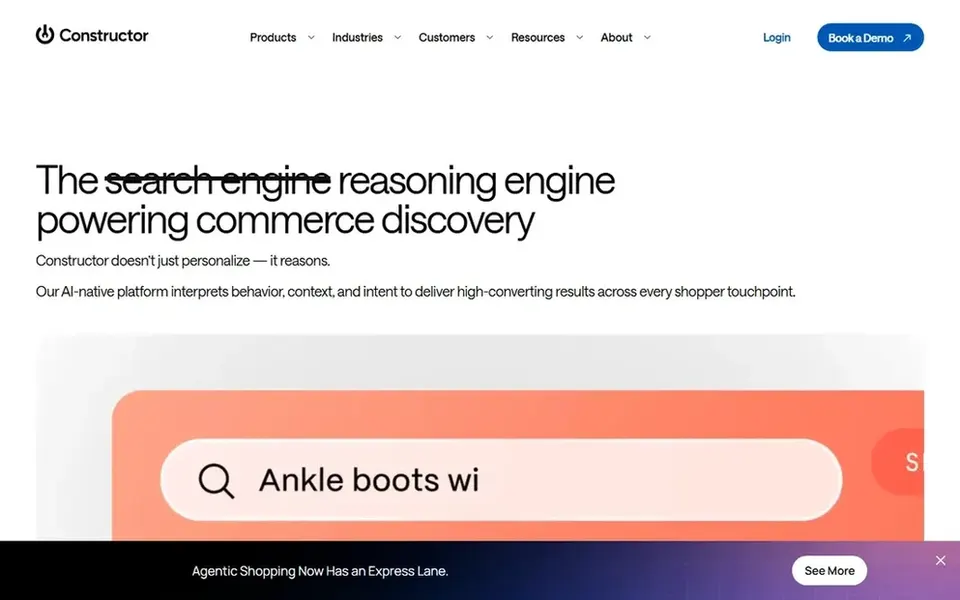
Constructor serves ecommerce product discovery and KPIs. Beyond that, results also depend on clean catalog and behavioral data.
For everyday use, teams wanting discovery tuned to shopping behavior commonly put it on the shortlist. On top of that, the ecommerce focus is a strength for retailers but a mismatch for organizations needing general document or app search. This comparison lists no price for Constructor; ask the vendor. Free options: Not stated.
Limits to weigh: Needs product data quality to perform well.
Request quotes from Typesense, Constructor and the others; the list shows no fixed prices.
Look at the free plan from Algolia closely: its caps decide whether it is usable for real work.
Use real work to test the free trial from Coveo and Elastic, rather than a demo project.
Before choosing Typesense, weigh its main limit: self-hosting needs operational effort.
Check the integration list for Constructor against the tools you run today, and note which ones need a higher plan.
Check how data leaves Typesense: formats, limits and whether exports are available on every plan.
How we picked
Pricing pages, product documentation and feature lists were the main sources, and every entry carries at least one honest drawback. Seat minimums, billing terms and add-ons can move the real cost, so the starting prices here are a guide and not a quote. We ordered the tools by general fit, then by how clearly pricing is shown, then by free access. A buyer with unusual needs may reorder them. Keep it in mind while reading the 6 platforms for AI-Powered product search profiles on this page.
Every price and plan detail on this page comes from the vendors’ own websites. We did not run hands-on tests unless the text says so, and we do not publish star ratings or review scores. See how we score and our disclosure.
Keep your shortlist in one place
Paste prices, trial dates and notes from this guide into Ainotely, our AI note app. It files them into a topic and pulls out tasks like “cancel trial by Friday”. Free 7-day trial, no card needed.
AI-powered search usually merges semantic or vector retrieval, natural language processing, and personalization to interpret shopper intent beyond exact keyword matches. Plenty of products also add generative features and recommendations. Confirm which of these capabilities a vendor actually contains.
How do I evaluate relevance quality before committing?
Test with your own catalog and real shopper queries, including misspellings and long phrases. Confirm the evaluation process and current feature set straight with each vendor.
How are the tools for platforms for AI-Powered product search ordered?
The order follows typical fit for platforms for AI-Powered product search, with Typesense first and Constructor last, then price clarity and free access. It is editorial judgement, not a score, so another team could rank the tools differently.
Which options for platforms for AI-Powered product search have a free plan?
Algolia is the only tool in this list with a free plan. Free plans usually cap users, projects or features, so check the limits on the vendor page. Several others offer a trial instead. All 6 picks in this platforms for AI-Powered product search comparison show their pricing, free plan details and main limits on the cards above.
Can I try these tools before paying?
Often, yes. Algolia has a free plan and Coveo and Elastic offer a free trial. Use your own data and a real task during the test, and check what the free tier or trial limits before you rely on it. For the full picture, the cards above cover all 6 entries of this platforms for AI-Powered product search list, including price, free plan and limits.
Do these tools publish their prices?
No. None of the tools, from Typesense to Constructor, shows a fixed starting price here, so budget time for quotes.