This list puts Optimize Health first for Nurse-led CCM and RPM support. Boston Scientific LATITUDE is better for remote monitoring of Boston Scientific devices, and Philips eCareCoordinator is better for Hospital-connected monitoring and enterprise informatics. The other 2 tools in the list cover narrower or pricier cases.
If you are comparing remote patient monitoring software for cardiology, this page covers 5 tools in one place: what each is best for, what it costs to start, whether it has a free plan, and the main limit to know about.
Key takeaways
Optimize Health sits first on this list: Nurse-led CCM and RPM support.
A fair warning about Boston Scientific LATITUDE: tied to Boston Scientific devices.
A permanent free plan is missing from all 5 tools, Optimize Health and iRhythm Zio included; plan for a trial or a premium start.
Optimize Health, iRhythm Zio and the 3 others all sell by quote; expect sales conversations before you see a price.
Optimize Health makes the most sense for Nurse-led CCM and RPM support. The system emphasizes chronic care operations instead of ECG diagnostics or implant device follow-up, so it complements instead of replaces cardiac monitoring tools.
Downsides: Depends on partner-led clinical workflows.
It suits cardiology and primary care groups that want to launch or scale longitudinal remote care without building every workflow internally. Optimize Health does not show a starting price in this comparison, so check the vendor site for current pricing. On free options: Not stated.
Best for: Remote monitoring of Boston Scientific devices
Pick Boston Scientific LATITUDE if this describes you: remote monitoring of Boston Scientific devices. Cardiology programs serving patients across several device brands should plan for a multi-platform or vendor-neutral approach.
Boston Scientific LATITUDE shows no starting price here, so confirm the cost on the vendor site. Free access: Not stated.
Points against: Tied to Boston Scientific devices.
Best for: Hospital-connected monitoring and enterprise informatics
Think of Philips eCareCoordinator for Hospital-connected monitoring and enterprise informatics. It suits hospitals and health systems that want remote monitoring coordinated within an existing Philips clinical ecosystem, particularly where inpatient and post-discharge monitoring have to link to the same informatics backbone.
This is an enterprise-oriented offering, so smaller cardiology practices may find it heavier than needed. This comparison lists no price for Philips eCareCoordinator; ask the vendor. Free access: Not stated.
Best for: Remote follow-up for Abbott cardiac devices
Abbott Merlin.net is a good fit for remote follow-up for Abbott cardiac devices. Abbott Merlin.net is the remote monitoring service for Abbott cardiovascular devices, including implanted cardiac rhythm devices.
Where it is weaker: Not a full RPM or CCM suite.
It fits electrophysiology and device clinics that follow Abbott patients and want transmitted device data available for review without waiting for the next office visit. No starting price is listed for Abbott Merlin.net here; confirm pricing on the vendor site. Free options: Not stated.
Best for: Ambulatory arrhythmia detection via ECG patch
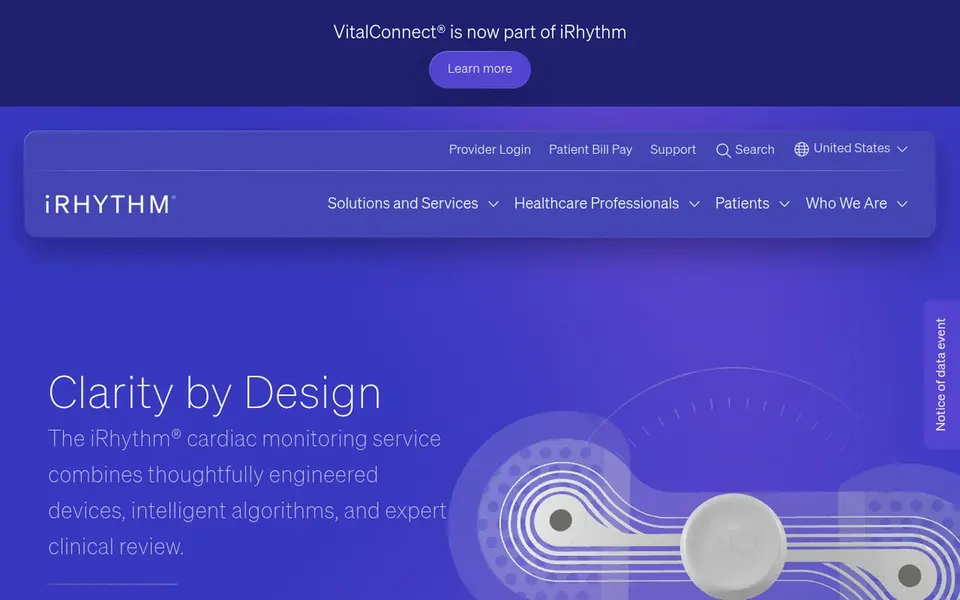
iRhythm Zio was built for ambulatory arrhythmia detection via ECG patch. iRhythm Zio is a monitoring service built around Zio ECG patch monitors that capture heartbeat data to help doctors detect cardiac arrhythmias. It works as a focused diagnostic tool instead of a full chronic care system.
Points against: Centred on cardiac rhythm, not wide RPM.
Since Zio centers on ECG monitoring and arrhythmia detection, it is not a general-purpose RPM or chronic care management system. In practice, teams that require longitudinal vitals tracking, patient outreach and billing workflows should pair it with a broader product or choose a RPM vendor instead. iRhythm Zio shows no starting price here, so confirm the cost on the vendor site. Free options: Not stated.
Confirm the entry price with every vendor: no tool from Optimize Health to iRhythm Zio shows a fixed starting price.
Before choosing Optimize Health, weigh its main limit: depends on partner-led clinical workflows.
Find out whether the entry plan of Boston Scientific LATITUDE covers your must-haves or only a trimmed-down version.
Confirm you can export your data from iRhythm Zio, so leaving later does not mean losing records.
Check whether Philips eCareCoordinator bills monthly or annually, and what cancelling early costs.
How we picked
Ainotely looked at what each vendor publishes: pricing, plan limits, feature coverage for remote patient monitoring software for cardiology and stated drawbacks. No hands-on testing is claimed. Figures are shown as the vendors publish them. Billing terms, seat minimums and add-ons can change the real cost. The sequence is a judgement call: typical use case first, then pricing transparency, then free access. Use the profiles to check fit.
Every price and plan detail on this page comes from the vendors’ own websites. We did not run hands-on tests unless the text says so, and we do not publish star ratings or review scores. See how we score and our disclosure.
Keep your shortlist in one place
Paste prices, trial dates and notes from this guide into Ainotely, our AI note app. It files them into a topic and pulls out tasks like “cancel trial by Friday”. Free 7-day trial, no card needed.
Then confirm workflow fit, staffing requirements and EHR integration with each vendor. Smaller practices frequently prefer systems that contain clinical support services.
Can I try these tools before paying?
Not by default. None of the tools, from Optimize Health to iRhythm Zio, lists a free plan or a free trial here, so ask each vendor for a demo before committing.
How are the tools for remote patient monitoring software for cardiology ordered?
Optimize Health sits first and iRhythm Zio last because the order follows typical fit for remote patient monitoring software for cardiology, then price clarity and free access. It is a judgement call, so read each profile for fit and limits.
Do these platforms replace in-person visits?
No. Remote monitoring supplements scheduled visits by supplying data between appointments. Clinical decisions still need review by qualified staff, and vendors should explain how alerts and reports reach your care team.
Do these tools publish their prices?
No. None of the tools, from Optimize Health to iRhythm Zio, shows a fixed starting price here, so budget time for quotes.
Is Optimize Health the right pick for everyone comparing remote patient monitoring software for cardiology?
No single tool suits every team. Optimize Health comes first because it fits Nurse-led CCM and RPM support, while Boston Scientific LATITUDE suits remote monitoring of Boston Scientific devices and Philips eCareCoordinator suits Hospital-connected monitoring and enterprise informatics. Match the tool to your own size, budget and workflow before deciding.