Our first pick is Domo, best for end-to-end data journey with AI. Listed starting prices: Tableau from $15 per user a month. Look at Qlik Sense for associative exploration of retail data, and at SAP Analytics Cloud for integrated BI, planning, and predictive analysis. Prices, free plans and limits for all 6 tools follow.
Ainotely put together this guide to Self-Service BI tools for retailers for readers who want a clear shortlist without reading every vendor page. It compares 6 tools on starting price, free plans, who each one suits and where each one falls short.
Key takeaways
Top of the list is Domo, which targets end-to-end data journey with AI.
For the cheapest start, look at Tableau: $15 per user per month.
The main caution on Qlik Sense: may need training for full benefit.
Tableau is the only tool of the 6 with a free plan.
Domo targets end-to-end data journey with AI. Domo supplies AI and data products that strengthen the whole data journey. It lets connecting and moving data from any source, preparing and expanding data access for exploration, and accelerating business-critical insights.
Honest limits: May need setup for data pipelines.
This makes it a good match for retailers that want a unified system to handle data integration, preparation, and analytics in one place. In daily use, for embedded analytics, consider Sisense. If you need a more focused visualization tool, Tableau or Qlik Sense might be more straightforward. No starting price is listed for Domo here; confirm pricing on the vendor site. Free options: Free trial.
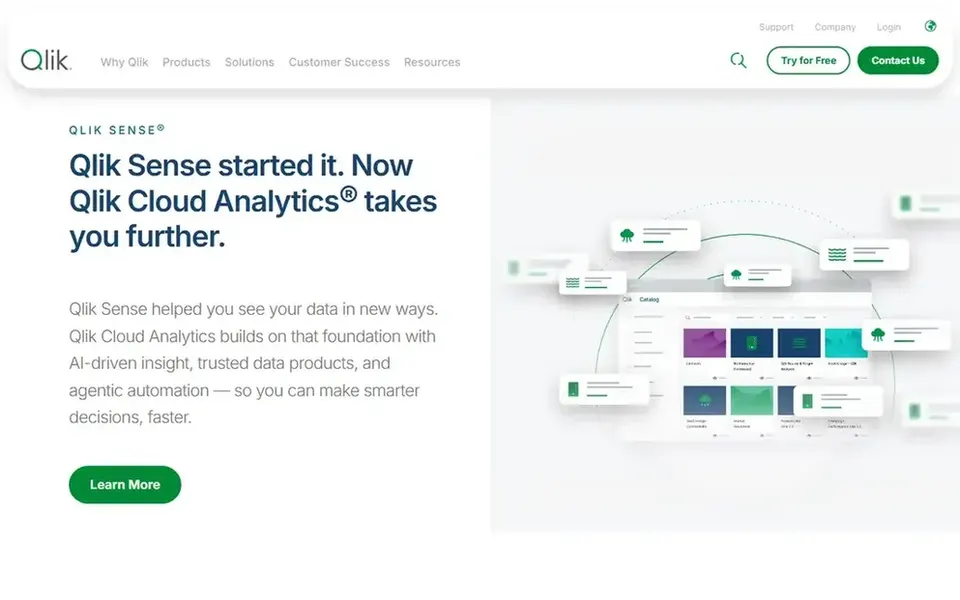
Where Qlik Sense fits: associative exploration of retail data. Qlik Sense is part of Qlik's system, which now comes with Talend and gives a data fabric with end-to-end data integration, data quality, and analytics options. This makes it right for retailers who require to combine data from several sources and explore relationships in their data without being restricted by predefined queries.
What to check first: May need training for full benefit.
The associative model can be less easy-to-learn for users accustomed to traditional BI tools, and administration may need dedicated resources. Also, if you prefer a more straightforward drag-and-drop experience, Tableau might be a better fit, whereas Looker supplies a more governed semantic layer. Qlik Sense shows no starting price here, so confirm the cost on the vendor site. Free access: Not stated.
Best for: Integrated BI, planning, and predictive analysis
Pick SAP Analytics Cloud if this describes you: integrated BI, planning, and predictive analysis. It also contains planning and predictive analysis tools, making it a fit for retailers that require to combine historical reporting with forward-looking plans and forecasts, especially those already using SAP systems.
Points against: Can need training for full use.
SAP Analytics Cloud does not show a starting price in this comparison, so check the vendor site for current pricing. Free options: Not stated.
Best for: Visual analytics and wide data connectivity
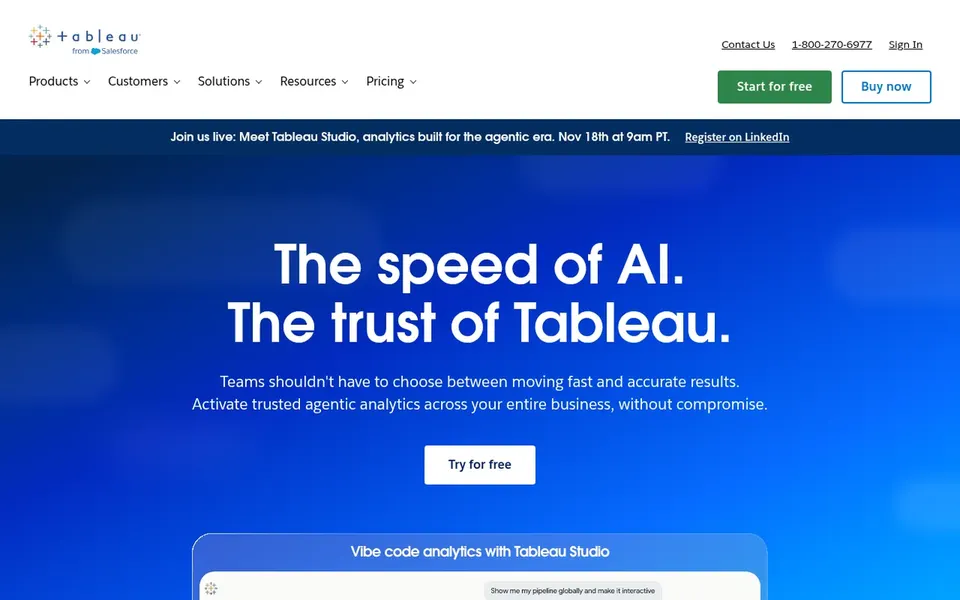
Think of Tableau for visual analytics and broad data connectivity. Tableau is a business intelligence and analytics system that helps users see and understand their data.
Where it is weaker: May need separate data prep tools.
Where Looker fits: governed metrics and embedded analytics. For a more self-service visual approach, Tableau or Qlik Sense may be preferable. Worth adding: teams without dedicated data engineering support may find it slower to start.
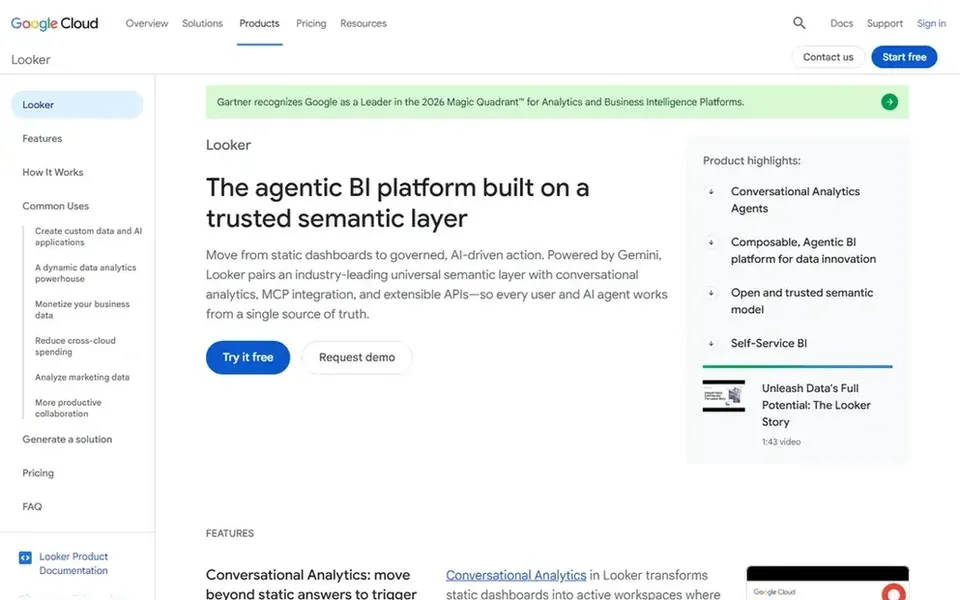
In practice, Looker usually needs a well-defined semantic model, which can demand upfront technical effort. For everyday use, Looker is Google Cloud's agentic business intelligence and embedded analytics product. It brings together metrics with a trusted semantic layer and Gemini agents, which helps retailers ensure consistent definitions across reports and embed analytics into their own applications. No starting price is listed for Looker here; confirm pricing on the vendor site. Free options: Not stated.
Watch-outs: May need technical resources for customization.
Best for: Embedded analytics with adaptable coding
Sisense makes the most sense for embedded analytics with flexible coding. Sisense gives AI-powered embedded analytics to unlock insights and convert data into revenue, with pro-code, low-code, and no-code adaptability.
It may also need developer resources for full customization. Sisense shows no starting price here, so confirm the cost on the vendor site. As for free access: Free trial.
Get a written quote from Domo, Qlik Sense, SAP Analytics Cloud and others; the list shows no starting price for them.
Test the free plan from Tableau against your real workload before relying on it.
Use real work to test the free trial from Domo and Sisense, rather than a demo project.
Read the limits listed for Domo first: may need setup for data pipelines.
Test how quickly Domo answers a pre-sales question; it hints at how support will feel later.
Pick one real project and run it in Looker first; a small pilot shows fit faster than a checklist.
How we picked
Pricing pages, product documentation and feature lists were the main sources, and every entry carries at least one honest drawback. Figures are shown as the vendors publish them. Billing terms, seat minimums and add-ons can change the real cost. The order reflects how well each tool fits the most common buying scenario for Self-Service BI tools for retailers, then price clarity, then free plan access. It is a starting point, not a verdict.
Every price and plan detail on this page comes from the vendors’ own websites. We did not run hands-on tests unless the text says so, and we do not publish star ratings or review scores. See how we score and our disclosure.
Keep your shortlist in one place
Paste prices, trial dates and notes from this guide into Ainotely, our AI note app. It files them into a topic and pulls out tasks like “cancel trial by Friday”. Free 7-day trial, no card needed.
What should retailers look for in a self-service BI tool?
Retailers should prioritize simplicity for business users, connectivity to retail data sources like POS and inventory systems, and capable visualization capabilities. Governance features and the capacity to embed analytics may also be important based on the use case.
Do these tools publish their prices?
Not all of them. Domo, Qlik Sense, SAP Analytics Cloud and others publish no starting price, so expect a quote request for those. The rest, Tableau included, show a starting price, though seats and billing terms still change the final cost.
Is Domo the right pick for everyone comparing Self-Service BI tools for retailers?
No single tool suits every team. Domo comes first because it fits end-to-end data journey with AI, while Qlik Sense suits associative exploration of retail data and SAP Analytics Cloud suits integrated BI, planning, and predictive analysis. Match the tool to your own size, budget and workflow before deciding.
How are the tools for Self-Service BI tools for retailers ordered?
The order follows typical fit for Self-Service BI tools for retailers, with Domo first and Sisense last, then price clarity and free access. It is editorial judgement, not a score, so another team could rank the tools differently.
How does Tableau compare to Qlik Sense for retail analytics?
Tableau emphasizes drag-and-drop visual exploration and wide data connectivity, whereas Qlik Sense gives you an associative engine for free-form data exploration and bundles data integration from Talend. The choice relies on whether your team prefers visual discovery or associative modeling.
Can I try these tools before paying?
Often, yes. Tableau has a free plan and Domo and Sisense offer a free trial. Use your own data and a real task during the test, and check what the free tier or trial limits before you rely on it. The 6 tool cards above repeat this per product for Self-Service BI tools for retailers, with the listed price or "pricing on request".