If you need adaptable B2B and B2C at scale, Adobe Commerce is the first tool to look at here. For a different need, Salesforce Commerce Cloud covers CRM-integrated enterprise commerce and Shopify Plus covers scalable SaaS with solid ecosystem. All 6 tools are compared below on price, free plan and limits.
Choosing shopping cart software for enterprise usually comes down to price, fit and limits. This Ainotely guide sets 6 tools side by side on those three points, with the facts kept short and checkable.
Key takeaways
Number one here is Adobe Commerce, a fit for adaptable B2B and B2C at scale.
One limit worth knowing about Shopify Plus: less adaptable for deep customizations.
Adobe Commerce, Kibo Commerce and the 4 others all sell by quote; expect sales conversations before you see a price.
For unified commerce and order management, Kibo Commerce is worth a look.
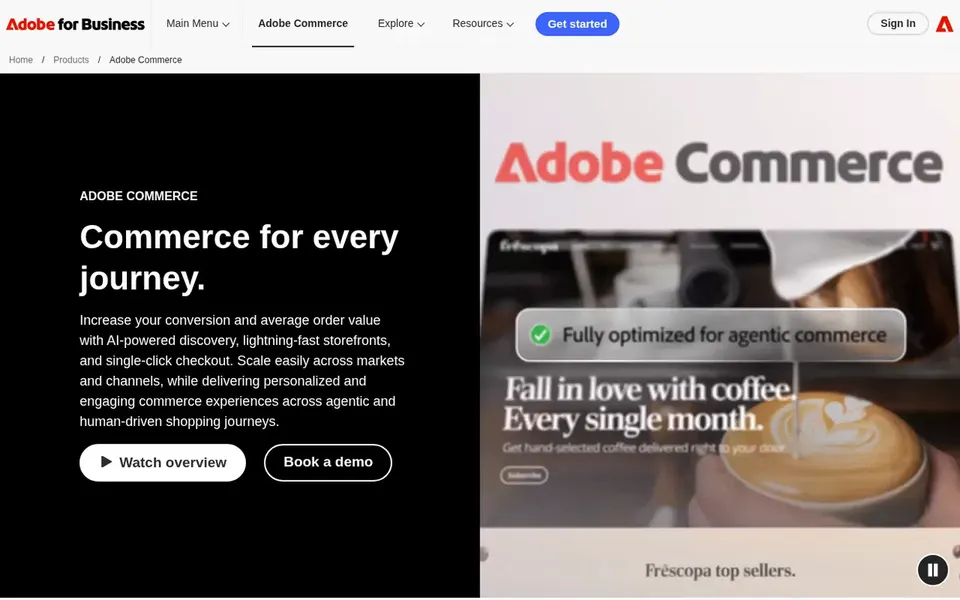
Adobe Commerce is aimed squarely at adaptable B2B and B2C at scale. Adobe Commerce, formerly Magento Commerce, is an AI-powered composable ecommerce product for B2B and B2C firms. It gives you extensive customization choices, allowing enterprises to tailor the shopping cart and catalog to complicated requirements.
Beyond that, consider Shopify Plus if you prefer a managed system with less operational burden. Also, Adobe Commerce demands technical resources for setup, hosting, and ongoing maintenance, which can increase total cost. It may be overkill for firms seeking a turnkey SaaS option. Adobe Commerce does not show a starting price in this comparison, so check the vendor site for current pricing. Trial and free access: Not stated.
Trade-offs to know: Hosting and maintenance overhead.
Salesforce Commerce Cloud is a good fit for CRM-integrated enterprise commerce. Costs may be higher than SaaS alternatives, notably for smaller enterprises. The product is well-suited for enterprises already using Salesforce or those prioritizing a unified customer view.
Watch-outs: Complicated implementation.
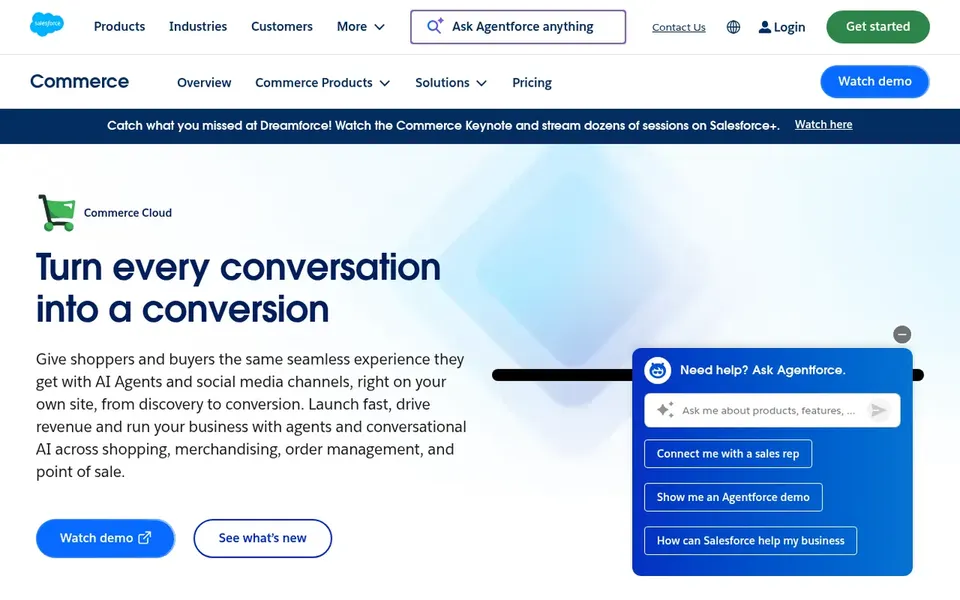
It supports B2C and B2B scenarios with AI-driven recommendations and order management capabilities. Salesforce Commerce Cloud is a thorough commerce system that links with Salesforce's CRM and marketing tools. Salesforce Commerce Cloud does not show a starting price in this comparison, so check the vendor site for current pricing. On free options: Not stated.
Shopify Plus is built with scalable SaaS with solid ecosystem in mind. Shopify Plus is the enterprise level of Shopify's commerce system, aimed at high-growth and large-scale brands.
Even so, Shopify Plus may be less right for companies requiring deep backend customization or complicated B2B workflows. If you need a completely composable stack or deep ERP integration, consider commercetools or SAP Commerce Cloud instead. This comparison lists no price for Shopify Plus; ask the vendor. Free plan details: Not stated.
For unified B2B and B2C experiences, SAP Commerce Cloud is a natural candidate. SAP Commerce Cloud is an AI-assisted ecommerce software meant to drive digital growth and demand. It offers unified buying experiences to convert visitors into customers, with solid B2B and B2C features.
Beyond that, SAP Commerce Cloud can be complicated to implement and run, commonly requiring specialized SAP expertise. The total cost may be high for mid-size enterprises. Also, the system integrates well with SAP's ERP and CRM systems, making it a natural choice for organizations already using SAP. It supports complicated product catalogs and personalized pricing. SAP Commerce Cloud does not show a starting price in this comparison, so check the vendor site for current pricing. Trial and free access: Not stated.
commercetools makes the most sense for Composable commerce for custom builds. It is a composable, API-first product that lets firms build and operate commerce experiences across online, in-store, in-chat, and agent-to-agent channels from a unified engine. This makes it ideal for enterprises with unique requirements and in-house development teams.
It provides high adaptability and scalability for custom storefronts. It may not be the best fit for companies seeking a turnkey option. No starting price is listed for commercetools here; confirm pricing on the vendor site. Free options: Free trial.
Pick Kibo Commerce if this describes you: unified commerce and order management. The product is made for enterprises that require to run complex order workflows and inventory across channels.
Honest limits: May need integration work.
As for the details, as a less widely known product, Kibo may have fewer out-of-the-box integrations and a smaller partner network. Also, implementation can need integration effort to link with existing systems. This comparison lists no price for Kibo Commerce; ask the vendor. Free plan details: Not stated.
Ask each vendor, from Adobe Commerce to Kibo Commerce, for a written quote; none of them publishes a starting price.
Take the trial from commercetools and push a live task through it before you pay.
Read the limits listed for Adobe Commerce first: needs technical expertise.
Work out what Adobe Commerce costs with your real seat count, add-ons and usage, not just the entry price.
Ask whether Shopify Plus integrates with your current software, and whether that comes standard or as an add-on.
How we picked
Pricing pages, product documentation and feature lists were the main sources, and every entry carries at least one honest drawback. Seat minimums, billing terms and add-ons can move the real cost, so the starting prices here are a guide and not a quote. The sequence is a judgement call: typical use case first, then pricing transparency, then free access. Use the profiles to check fit. The same method was used for each of the 6 shopping cart software for enterprise picks on this page.
Every price and plan detail on this page comes from the vendors’ own websites. We did not run hands-on tests unless the text says so, and we do not publish star ratings or review scores. See how we score and our disclosure.
Keep your shortlist in one place
Paste prices, trial dates and notes from this guide into Ainotely, our AI note app. It files them into a topic and pulls out tasks like “cancel trial by Friday”. Free 7-day trial, no card needed.
Is Adobe Commerce the right pick for everyone comparing shopping cart software for enterprise?
No single tool suits every team. Adobe Commerce comes first because it fits flexible B2B and B2C at scale, while Salesforce Commerce Cloud suits CRM-integrated enterprise commerce and Shopify Plus suits scalable SaaS with strong ecosystem. Match the tool to your own size, budget and workflow before deciding.
How are the tools for shopping cart software for enterprise ordered?
Adobe Commerce sits first and Kibo Commerce last because the order follows typical fit for shopping cart software for enterprise, then price clarity and free access. It is a judgement call, so read each profile for fit and limits.
Can I try these tools before paying?
Often, yes. commercetools offers a free trial. Use your own data and a real task during the test, and check what the free tier or trial limits before you rely on it. The 6 tool cards above repeat this per product for shopping cart software for enterprise, with the listed price or "pricing on request".
What is the best shopping cart software for enterprise in 2026?
Start with Adobe Commerce if you need adaptable B2B and B2C at scale. Salesforce Commerce Cloud is the better match for CRM-integrated enterprise commerce, and Shopify Plus for scalable SaaS with solid ecosystem. The best choice depends on budget, team size and workflow.
How does composable commerce differ from traditional SaaS?
Composable commerce like commercetools lets you assemble best-of-breed services via APIs, offering adaptability but requiring development effort. Traditional SaaS like Shopify Plus gives you an integrated, managed option with less customization.
Does any tool for shopping cart software for enterprise here have a free plan?
No tool in this list, Adobe Commerce and Kibo Commerce included, has a permanent free plan. commercetools offer a trial. Trials and quotes are the usual route, so plan a short evaluation period.