Start with Microsoft Sentinel if you need cloud-native SIEM with automatic response. Tines is better for low-code automation and AI agents, and Torq is better for AI-driven SOC triage and response. Prices, free plans and limits for all 6 tools follow.
This Ainotely guide covers 6 tools to automate SOC workflows. Each profile lists a starting price, free plan details, strengths and drawbacks, so you can drop poor fits quickly.
Key takeaways
Microsoft Sentinel is the opening pick, best for cloud-native SIEM with automatic response.
Pricing across the list, from Microsoft Sentinel to Palo Alto Networks Cortex XSOAR, is by quote only.
For unified incident response and orchestration, Palo Alto Networks Cortex XSOAR is worth a look.
Microsoft Sentinel, Palo Alto Networks Cortex XSOAR and the 4 others all need a premium plan or a trial, since no free plan is listed.
The main caution on Microsoft Sentinel: deepest value within Microsoft security stack.
Best for: Cloud-native SIEM with automatic response
Pick Microsoft Sentinel if this describes you: cloud-native SIEM with automatic response. Microsoft Sentinel is a cloud-native SIEM for security operations centers that spots threats, automates response and uses a data lake to help lower SIEM costs.
It suits organizations standardized on Microsoft security and cloud services that want detection and response automation in a familiar ecosystem, with automation rules and playbooks tied to alerts. Check the vendor site for Microsoft Sentinel pricing; none is listed in this comparison. Free access: Not stated.
What to check first: Needs cloud and data planning.
Tines is built with low-code automation and AI agents in mind. Tines presents itself as a secure environment for AI agents, apps and automation, positioned as a complete environment for enterprise AI. In practice, organizations wanting prebuilt, vendor-packaged playbooks may prefer a traditional SOAR product.
The main drawbacks: Very wide use cases need scoping.
The product is commonly considered by teams that value adaptability and quick iteration. In daily use, adaptability means teams must scope and document workflows carefully to avoid sprawl. This comparison lists no price for Tines; ask the vendor. As for free access: Not stated.
In short, Torq is for AI-driven SOC triage and response. Torq describes itself as an AI SOC system built around AI agents and agentic SecOps, geared toward scaling SOC capacity while teams triage, investigate and respond to threats.
Watch-outs: Fit relies on existing tool integrations.
Groups seeking purely rule-based orchestration may prefer a conventional SOAR tool. Pricing for Torq is not stated here, so ask the vendor for current figures. Free options: Not stated.
IBM Security QRadar SOAR is a good fit for dynamic playbooks for incident response. Also, pick QRadar SOAR when disciplined, playbook-driven incident response is the priority.
More specifically, teams using IBM security products may find alignment with their broader stack convenient. No starting price is listed for IBM Security QRadar SOAR here; confirm pricing on the vendor site. As for free access: Not stated.
Where it is weaker: Playbook customization needs effort.
Best for: Automating repetitive tasks in Splunk environments
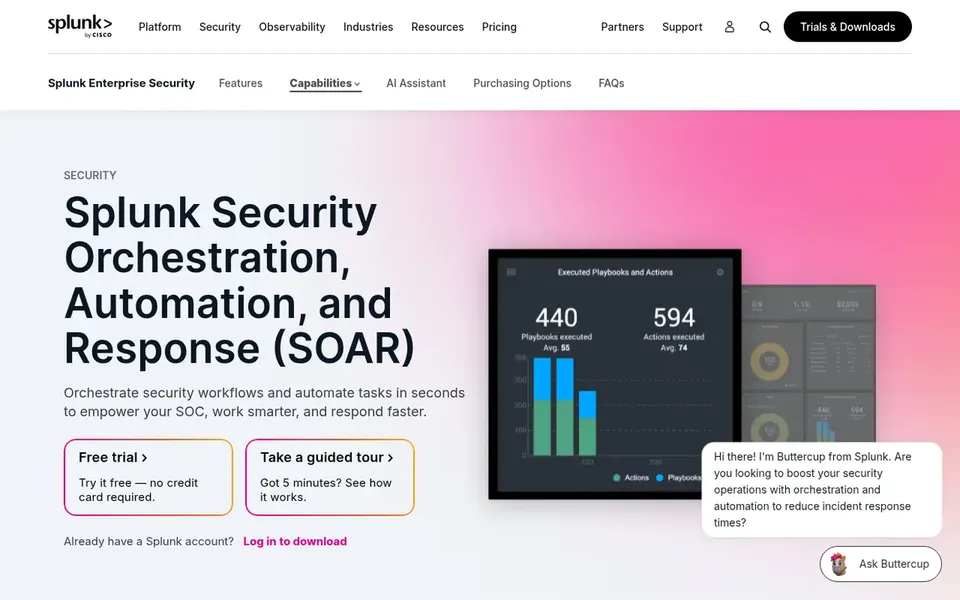
Choose Splunk SOAR for automating repetitive tasks in Splunk environments. Splunk SOAR is a security orchestration, automation and response product built to automate repetitive tasks and help analysts investigate and respond to incidents rapidly. As for the details, expect an investment in playbook design and maintenance as processes change.
Beyond that, the emphasis is on productivity gains through playbook-driven response. On top of that, teams outside the Splunk ecosystem may get less benefit and could prefer a vendor-neutral automation system. Splunk SOAR shows no starting price here, so confirm the cost on the vendor site. Free options: Not stated.
Honest limits: Playbook building takes onboarding time.
Best for: Unified incident response and orchestration
Palo Alto Networks Cortex XSOAR is built with unified incident response and orchestration in mind. Cortex XSOAR from Palo Alto Networks is a security orchestration, automation and response system that brings incident response, threat intelligence management and workflow automation together.
As for the details, organizations already using Palo Alto Networks products may find integration and operational alignment simpler. On top of that, smaller teams without dedicated automation staff may find lighter, low-code choices simpler to start with. Palo Alto Networks Cortex XSOAR shows no starting price here, so confirm the cost on the vendor site. As for free access: Not stated.
Honest limits: Wide system can need planning to adopt.
Confirm the entry price with every vendor: no tool from Microsoft Sentinel to Palo Alto Networks Cortex XSOAR shows a fixed starting price.
Read the limits listed for Microsoft Sentinel first: deepest value within Microsoft security stack.
Confirm the exact Microsoft Sentinel plan that includes your must-have features.
Run a one or two week pilot of Tines with the people who will use it every day.
Find out what support Splunk SOAR includes on your plan, and whether onboarding help costs extra.
How we picked
We compared the tools on published pricing, free plan or trial availability, feature coverage for tools to automate SOC workflows, and the limits each vendor documents. Plan names, prices and limits change often. Treat the figures here as a starting point and verify them with the vendor. Position on the page reflects fit for a typical buyer first, with price clarity and free access breaking ties. Treat it as a guide, not a ruling.
Every price and plan detail on this page comes from the vendors’ own websites. We did not run hands-on tests unless the text says so, and we do not publish star ratings or review scores. See how we score and our disclosure.
Keep your shortlist in one place
Paste prices, trial dates and notes from this guide into Ainotely, our AI note app. It files them into a topic and pulls out tasks like “cancel trial by Friday”. Free 7-day trial, no card needed.
Does any tool for tools to automate SOC workflows here have a free plan?
No tool in this list, Microsoft Sentinel and Palo Alto Networks Cortex XSOAR included, has a permanent free plan. Trials and quotes are the usual route, so plan a short evaluation period.
Do these tools publish their prices?
No. None of the tools, from Microsoft Sentinel to Palo Alto Networks Cortex XSOAR, shows a fixed starting price here, so budget time for quotes.
Can I try these tools before paying?
Not by default. None of the tools, from Microsoft Sentinel to Palo Alto Networks Cortex XSOAR, lists a free plan or a free trial here, so ask each vendor for a demo before committing.
How should AI agents be governed in SOC automation?
Define which actions agents may take automatically and which need analyst approval, and keep logging and escalation paths clear. Review agent behavior on a regular basis and confirm vendor documentation on oversight controls before relying on AI-driven response.
How are the tools for tools to automate SOC workflows ordered?
The order follows typical fit for tools to automate SOC workflows, with Microsoft Sentinel first and Palo Alto Networks Cortex XSOAR last, then price clarity and free access. It is editorial judgement, not a score, so another team could rank the tools differently.