ezyVet leads the list, best for cloud practice management. Listed starting prices: ezyVet from $260.50 a month. Alternatives: Televet for all-in-one workflow and communication, and GuardianVets for after-hours triage and answering. The remaining 3 options are covered below with prices and limits.
Choosing veterinary telemedicine software for rural clinics usually comes down to price, fit and limits. This Ainotely guide sets 6 tools side by side on those three points, with the facts kept short and checkable.
Key takeaways
The list opens with ezyVet, aimed at cloud practice management.
The lowest published monthly entry price here is $260.50 per month, from ezyVet.
What to know about Televet first: wide product may need setup time.
For online booking and payments, Vetstoria is worth a look.
ezyVet works best for cloud practice management. Consider lighter booking or communication tools if management software is not the priority.
Where it is weaker: Implementation needs planning.
For everyday use, cloud access can suit rural clinics where staff or records have to be reached from more than one location. As for the details, a full practice management product can be more than a very small clinic needs, and moving records takes planning. ezyVet is not a consumer video consult marketplace, so clinics wanting client-facing televisits may need an extra service. The starting price for ezyVet: $260.50 per month. As for free access: Not stated.
Televet is designed for all-in-one workflow and communication. Rural clinics juggling calls, bookings and payments across disconnected systems may find the consolidated approach handy, notably when staff time is tight and remote coordination matters. Also, if your clinic primarily needs to list vets for on-demand video appointments, a dedicated telemedicine marketplace may fit better than a workflow product.
Watch-outs: Not positioned as a standalone marketplace.
As for the details, an all-in-one workflow system can need configuration and staff adjustment before it feels natural. It is also not the same as a consumer-facing video consult marketplace. No starting price is listed for Televet here; confirm pricing on the vendor site. As for free access: Not stated.
GuardianVets works best for after-hours triage and answering. GuardianVets is a veterinary after-hours answering service staffed by credentialed veterinary technicians who offer triage, with practice management system integration and around-the-clock coverage.
More specifically, rural clinics with thin overnight staffing can use it to keep clients supported when the doors are closed. More specifically, if daytime booking and client messaging are the central gaps, a booking or communication product is the better starting point. Pricing for GuardianVets is not stated here, so ask the vendor for current figures. Free options: Not stated.
Honest limits: Not a full practice management suite.
Where Vetster fits: on-demand video consults. Clinics seeking to handle their own televisits inside existing workflows should look at workflow or practice management products instead. More specifically, for rural clients who face long drives, it supplies a remote choice for advice and triage conversations.
In daily use, clinics may point clients toward such services when travel is difficult or when a fast video check is more practical than an in-person visit. Worth adding: Vetster operates as a marketplace connecting pet owners with veterinarians instead of as a clinic's internal practice management system. It does not replace records, scheduling or billing tools a clinic runs itself. No starting price is listed for Vetster here; confirm pricing on the vendor site. Free plan details: Not stated.
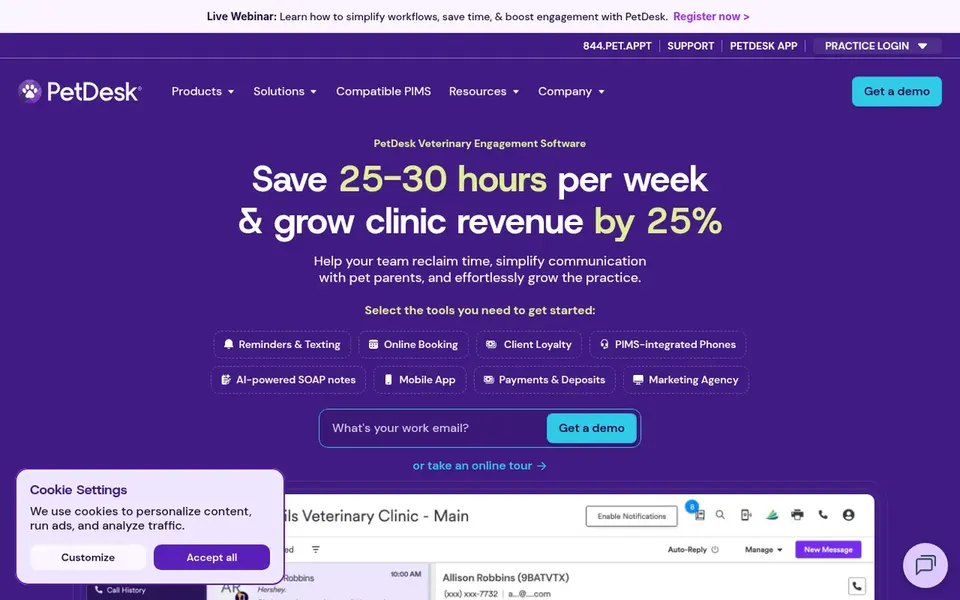
Pick PetDesk if this describes you: client communication and direct booking. PetDesk is veterinary software built around client communication, integrated phones, direct booking and marketing, with AI-powered notes also described. PetDesk is not positioned as a video consultation marketplace, so clinics whose priority is remote appointments should consider a dedicated telemedicine provider alongside it.
Drawbacks to consider: Feature breadth may overwhelm small teams.
Worth adding: the range of features means a small clinic may not use everything at once. Setup attention is needed to get value. No starting price is listed for PetDesk here; confirm pricing on the vendor site. Free plan details: Not stated.
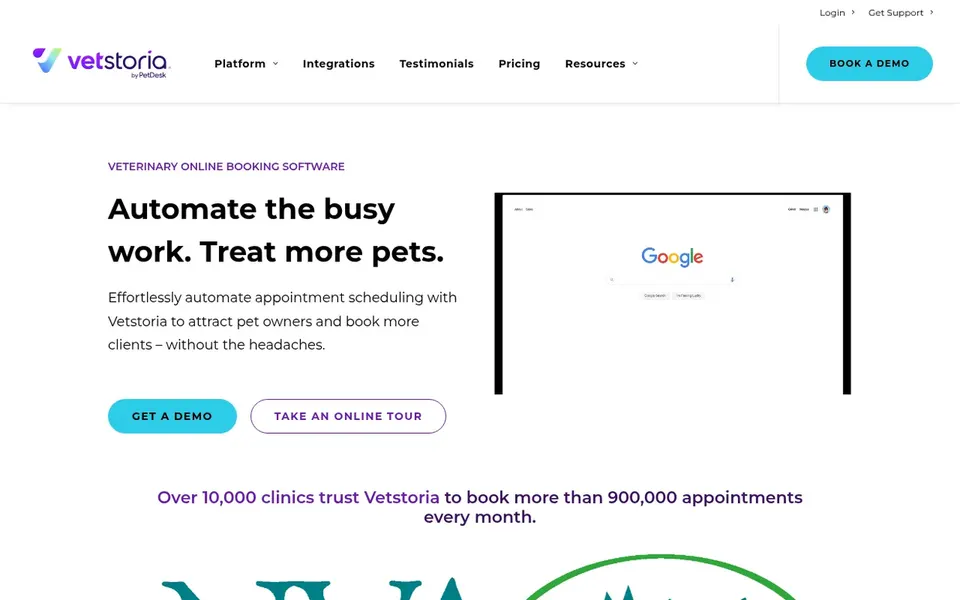
Choose Vetstoria for online booking and payments. Since Vetstoria centers on booking, websites and payments, it is not a substitute for a full clinical or video consult product. Vetstoria is a veterinary online booking, website and payments product.
Drawbacks to consider: Video consults are not the core focus.
It is meant to help practices cut administrative work and phone traffic by letting clients book online. Choose something else if your central gap is after-hours triage or cloud practice management instead of scheduling. Worth adding: for rural clinics with restricted front-desk staff, that can free time for care. Pricing for Vetstoria is not stated here, so ask the vendor for current figures. On free options: Not stated.
Get a written quote from Televet, GuardianVets, Vetster and others; the list shows no starting price for them.
Before choosing ezyVet, weigh its main limit: full suite may be more than small clinics need.
Test the integrations you rely on with Vetster before committing; some connectors sit on upper tiers.
Test how quickly GuardianVets answers a pre-sales question; it hints at how support will feel later.
Run a one or two week pilot of PetDesk with the people who will use it every day.
How we picked
The comparison looks at four things: starting price, free access, how well the feature set matches veterinary telemedicine software for rural clinics, and the main limit of each tool. Where a price is missing, the vendor does not list one publicly or ties it to a quote. Always confirm before budgeting. The ranking is editorial: typical fit first, then clear pricing, then free access. If your needs are unusual, read the profiles rather than relying on position.
Every price and plan detail on this page comes from the vendors’ own websites. We did not run hands-on tests unless the text says so, and we do not publish star ratings or review scores. See how we score and our disclosure.
Keep your shortlist in one place
Paste prices, trial dates and notes from this guide into Ainotely, our AI note app. It files them into a topic and pulls out tasks like “cancel trial by Friday”. Free 7-day trial, no card needed.
Which tool is a good match for after-hours calls in a rural clinic?
For most readers this guide would start with ezyVet, built for cloud practice management. Televet is the alternative for all-in-one workflow and communication, and GuardianVets for after-hours triage and answering. The right answer depends on budget and workflow.
Do these tools publish their prices?
Not all of them. Televet, GuardianVets, Vetster and others publish no starting price, so expect a quote request for those. The rest, ezyVet included, show a starting price, though seats and billing terms still change the final cost.
How are the tools for veterinary telemedicine software for rural clinics ordered?
The order follows typical fit for veterinary telemedicine software for rural clinics, with ezyVet first and Vetstoria last, then price clarity and free access. It is editorial judgement, not a score, so another team could rank the tools differently.
Do these products work with existing practice software?
Multiple choices describe integration with practice management systems, and GuardianVets specifically notes PIMS integration. Compatibility relies on your current system, so confirm supported connections with each vendor.
Can I try these tools before paying?
Not by default. None of the tools, from ezyVet to Vetstoria, lists a free plan or a free trial here, so ask each vendor for a demo before committing.
Does any tool for veterinary telemedicine software for rural clinics here have a free plan?
A permanent free plan is not offered by ezyVet, Vetstoria or the other tools here. Plan a short evaluation period instead.