This list puts Robin AI first for quick contract review and clause search. For a different need, Lexis+ AI covers research-led drafting and analysis and Luminance covers enterprise contract intelligence and risk insight. The remaining 2 options are covered below with prices and limits.
Choosing Harvey AI usually comes down to price, fit and limits. This Ainotely guide sets 5 tools side by side on those three points, with the facts kept short and checkable.
Key takeaways
Top of the list is Robin AI, which targets quick contract review and clause search.
Robin AI is aimed squarely at quick contract review and clause search. It is geared toward in-house and firm lawyers who handle recurring contract work and want to accelerate review and lookup.
If your needs are broader legal assistance, consider a general professional AI system instead. Robin AI shows no starting price here, so confirm the cost on the vendor site. On free options: Not stated.
In short, Lexis+ AI is for research-led drafting and analysis. Verify which workflows are supported before standardizing on it.
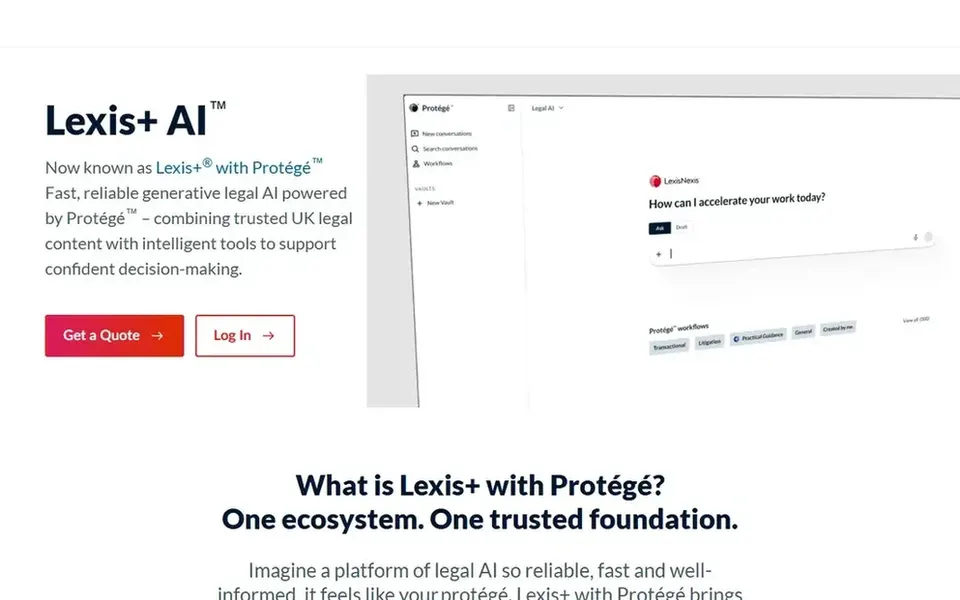
In practice, Lexis+ AI, delivered through Lexis+ with Protégé, is a legal AI option for drafting, research and analysis that draws on authoritative LexisNexis resources. Beyond that, access and content coverage rely on your existing LexisNexis arrangement. Lexis+ AI does not show a starting price in this comparison, so check the vendor site for current pricing. As for free access: Not stated.
Downsides: Tied to the LexisNexis content ecosystem.
Best for: Enterprise contract intelligence and risk insight
Luminance serves enterprise contract intelligence and risk insight. Luminance offers a Contract Intelligence Platform that converts business language into actionable insights intended to mitigate risk and unlock value across an enterprise. More specifically, the enterprise emphasis means smaller teams may find it more than they need.
Its positioning centers on intelligence and risk insight, so teams wanting practical drafting assistance in Word may pair it with a drafting tool. In practice, confirm how it suits your existing contract systems before committing. Also, legal operations and enterprise legal teams seeking portfolio insight are the natural audience. Check the vendor site for Luminance pricing; none is listed in this comparison. As for free access: Not stated.
Watch-outs: Insight focus instead of daily drafting.
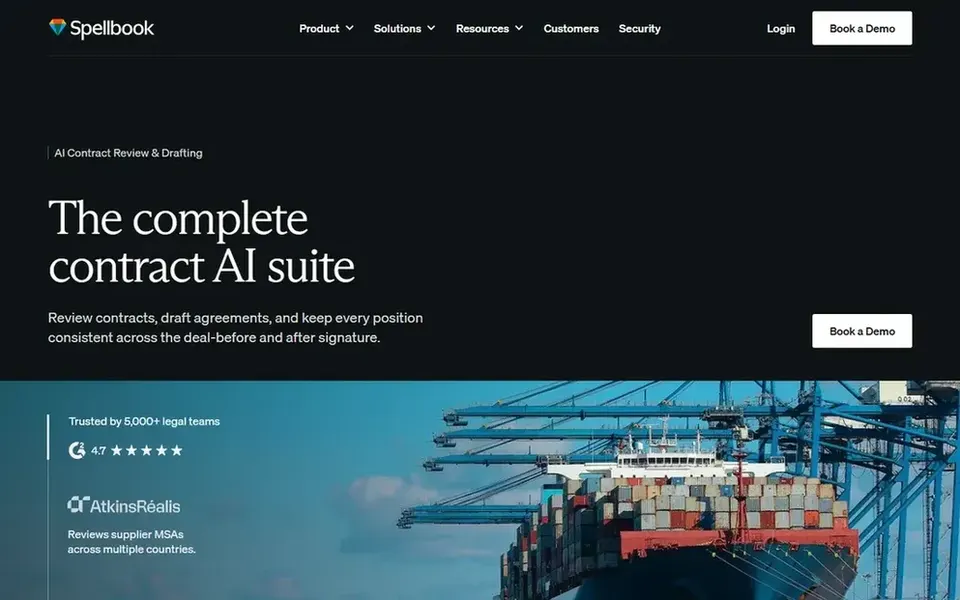
Spellbook was built for contract drafting and review in Word. Spellbook is an AI contract review and drafting product pitched at transactional lawyers, operating inside Microsoft Word.
Beyond that, the Word-centric design also assumes that is your primary drafting environment. No starting price is listed for Spellbook here; confirm pricing on the vendor site. As for free access: Free trial.
Best for: Professionals needing authoritative, secure AI
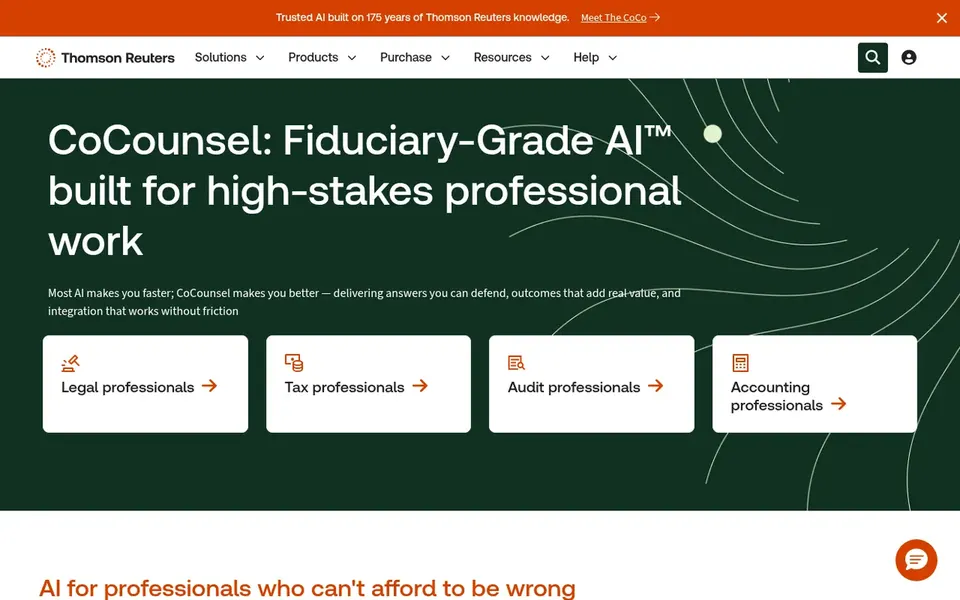
Choose CoCounsel for professionals needing authoritative, secure AI. CoCounsel is Thomson Reuters AI technology positioned for professionals, built by industry experts and backed by authoritative content.
Drawbacks to consider: General legal focus instead of contract-only.
It emphasizes best-in-class security, which matters for businesses handling confidential matter files. Confirm which content sources and integrations your subscription contains, since value depends heavily on what you already license. This comparison lists no price for CoCounsel; ask the vendor. Trial and free access: Free trial.
Ask each vendor, from Robin AI to CoCounsel, for a written quote; none of them publishes a starting price.
Use real work to test the free trial from Spellbook and CoCounsel, rather than a demo project.
Before choosing Robin AI, weigh its main limit: contract-centric scope.
Ask Robin AI which support channels and response times come with the plan you would buy.
Run a one or two week pilot of Spellbook with the people who will use it every day.
How we picked
For each of the 5 tools we noted price, free plan or trial, fit for Harvey AI and the main limit, using vendor pages and documentation. Where a price is missing, the vendor does not list one publicly or ties it to a quote. Always confirm before budgeting. The sequence is a judgement call: typical use case first, then pricing transparency, then free access. Use the profiles to check fit.
Every price and plan detail on this page comes from the vendors’ own websites. We did not run hands-on tests unless the text says so, and we do not publish star ratings or review scores. See how we score and our disclosure.
Keep your shortlist in one place
Paste prices, trial dates and notes from this guide into Ainotely, our AI note app. It files them into a topic and pulls out tasks like “cancel trial by Friday”. Free 7-day trial, no card needed.
Lexis+ AI draws on LexisNexis resources, whereas CoCounsel is built by Thomson Reuters with expert input. Contract-focused tools usually are not aimed at research.
Can I try these tools before paying?
Often, yes. Spellbook and CoCounsel offer a free trial. Use your own data and a real task during the test, and check what the free tier or trial limits before you rely on it. Pricing, free plan details and limits for all 5 tools in this Harvey AI alternatives roundup sit on the individual cards above.
How are the tools for Harvey AI ordered?
Robin AI sits first and CoCounsel last because the order follows typical fit for Harvey AI, then price clarity and free access. It is a judgement call, so read each profile for fit and limits.
Is Robin AI the right pick for everyone comparing Harvey AI?
No single tool suits every team. Robin AI comes first because it fits fast contract review and clause search, while Lexis+ AI suits research-led drafting and analysis and Luminance suits enterprise contract intelligence and risk insight. Match the tool to your own size, budget and workflow before deciding.
Do these tools publish their prices?
No. None of the tools, from Robin AI to CoCounsel, shows a fixed starting price here, so budget time for quotes.