Logseq vs Obsidian: An Honest 2026 Comparison
The one difference that actually decides it
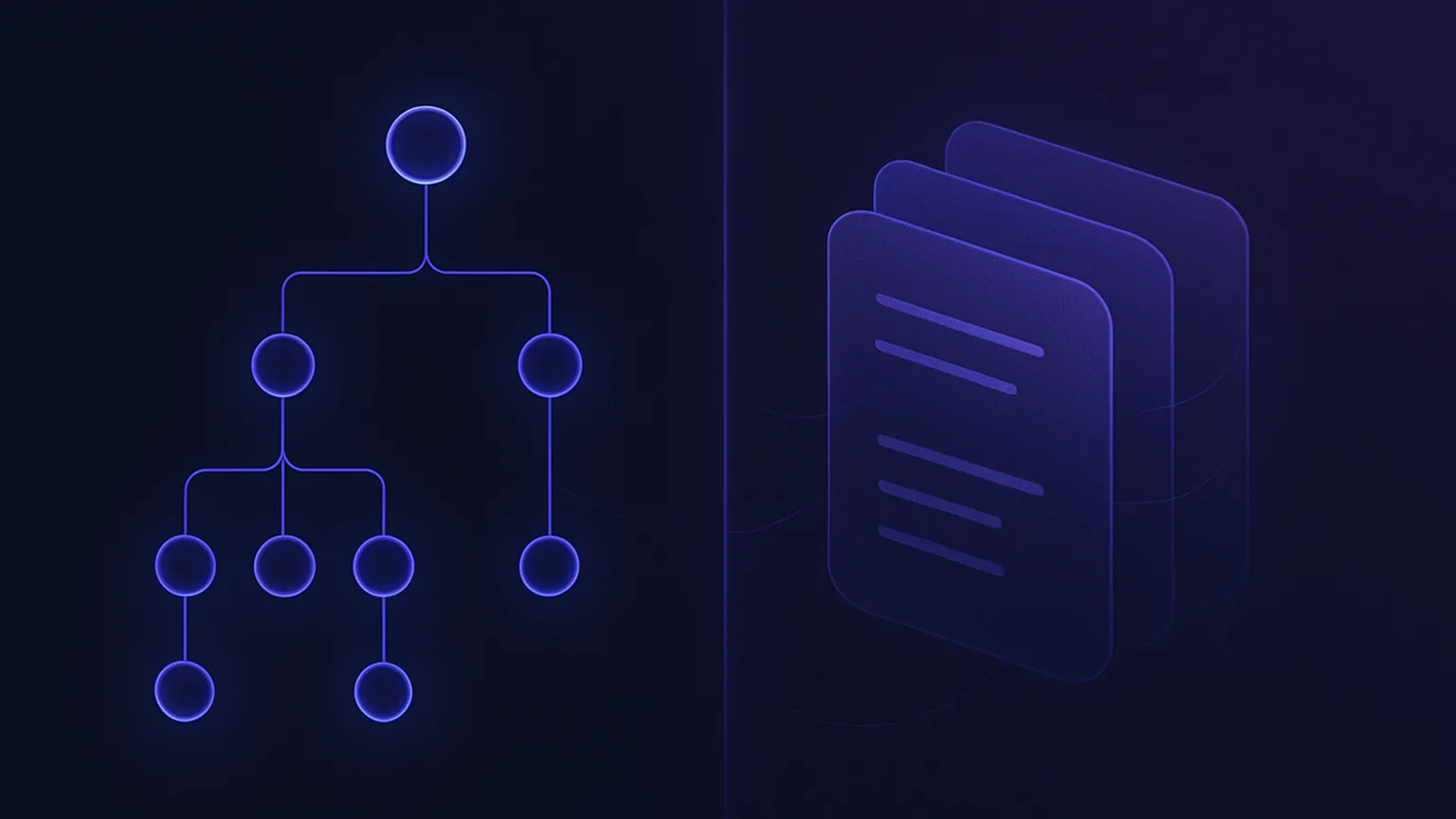
The main difference between Logseq and Obsidian is structure. Logseq is a block-based outliner: every line is a bullet you can nest, reference, and fold. Obsidian is a page-based editor: you write free-form Markdown documents and add whatever structure you like. That single fork predicts almost everything else.
Most "obsidian vs logseq" articles bury this under feature lists. Do not let them. If you love bullet points and nesting, Logseq will feel like home. If you write in paragraphs and want freedom, Logseq's forced outliner will feel like a cage.
The second thing that matters in 2026: maturity. Obsidian is a finished, stable product. Logseq is mid-rewrite. Its classic file version works, but its new Database (DB) version is officially in beta with a warning that data loss is possible, with the new mobile app and real-time collaboration still in alpha. That is a real risk factor, not a footnote.
Block-based vs page-based note taking
Block-based (Logseq) means each bullet is an addressable unit you can link and embed anywhere. Page-based (Obsidian) means the note is the unit and you shape it however you want. Block-based is powerful for atomic, interlinked thinking; page-based is more natural for long-form writing and messy capture.
In Logseq, a daily journal opens by default and you dump thoughts as bullets. You can then reference any single block elsewhere, which is excellent for people who practice the Zettelkasten method for linking notes. The tradeoff: everything must be a bullet, so pasting a long article or writing prose feels forced.
In Obsidian, a note is a plain .md file. You can outline if you want, or write essays, or paste anything. Linking happens at the page or heading level, and the graph view shows how notes connect. It is more forgiving, which is why casual note-takers usually land here. If you are still deciding note-taking methods that fit your workflow, this flexibility matters more than any feature count.
Pricing and sync costs (2026)
Both apps are free to use. Logseq is fully open-source and free, including any self-hosted sync. Obsidian's core app is free for personal use; you only pay for optional Sync, Publish, or a commercial license. Obsidian Sync starts at $4/month billed annually.
Here is the honest, current breakdown. Note that Logseq's official cloud sync sits inside the beta rewrite, so many users sync free through Git, iCloud, or Syncthing instead.
| What you pay for | Logseq | Obsidian |
|---|---|---|
| Core app | Free, open-source (AGPL-3.0) | Free for personal use, no sign-up |
| Official sync | Free / donation-funded via Open Collective (sync in beta rewrite) | $4/mo billed annually ($48/yr) or $5/mo monthly |
| Publish to web | Not a paid product | $8/mo per site annually ($96/yr) or $10/mo monthly |
| Business / commercial use | Free (AGPL license) | $50 USD per user per year for orgs of two or more doing revenue work |
| Files & ownership | Local-first Markdown and Org-mode | Local-first Markdown |
Bottom line on cost: if "free forever" is your top priority, Logseq is technically freer because even commercial use costs nothing and sync can be self-hosted. Obsidian is free for individuals but charges businesses and charges for its convenient one-click Sync. Neither will bankrupt you.
Mobile, stability, and beta status
Obsidian has a mature, well-reviewed mobile app on iOS and Android today. Logseq runs on desktop, iOS, and web, but its rebuilt mobile app is in alpha alongside the beta DB version. For reliable phone note-taking in 2026, Obsidian is the safer choice.
This is where the "is logseq better than obsidian" question usually flips for everyday users. Obsidian's phone app is stable and syncs cleanly. Logseq's mobile experience is caught mid-transition: the classic app works but the future depends on the alpha rebuild.
If you have read the "logseq vs obsidian reddit" threads, this is the recurring complaint: people love Logseq's outliner but get burned by mobile friction and worry about the beta rewrite eating data. That caution is fair given the official data-loss warning. Obsidian rarely triggers that anxiety because it is just plain files you already own.
Which fits how your brain organizes notes
Skip the feature war. Answer one question: when you capture a thought, does it come out as a bullet or a paragraph? That tells you more than any spec sheet.
| If this is you... | Lean toward |
|---|---|
| You think in nested bullets and love daily journaling | Logseq |
| You write paragraphs, essays, or messy long notes | Obsidian |
| You want block-level references and query-driven notes | Logseq |
| You want the biggest plugin ecosystem and best mobile | Obsidian |
| You want a finished, stable product with no beta risk | Obsidian |
| You want maximum "free forever," including business use | Logseq |
For most general users typing "logseq vs obsidian for note taking," Obsidian is the lower-risk default. Logseq is the enthusiast's pick when your thinking is genuinely list-shaped. Neither reads your mind or files things for you, though, which brings up the point competitors dodge.
The third option most comparison guides ignore
Here is the neutral truth: Logseq and Obsidian are both manual, single-user, local tools. You do the linking. You do the tagging. You maintain the structure forever. That is the whole point for PKM hobbyists, and it is a real chore for everyone else.
If your actual goal is not to build a beautiful graph by hand but to just write things down and have them findable later, that is a different lane. Some people want a second-brain app that organizes notes for you: titles, tags, and links generated automatically, with cross-note recall on demand. That is honestly why I built the best AI note-taking app workflow at Ainotely, because I got tired of maintaining a vault by hand.
This is not a knock on Obsidian or Logseq. If you enjoy the craft of manual organizing, keep it. But if you have ever abandoned a note system because upkeep felt like a second job, an AI-assisted approach to how to organize your notes may fit you better than either of these. And if you like Obsidian's philosophy but want less manual work, it is worth seeing what an Obsidian alternative looks like.
Verdict: which should you pick in 2026?
Pick Obsidian if you want stability, flexible pages, excellent mobile, and a mature ecosystem. Pick Logseq if you think in outlines, want block references, and are comfortable with a beta-stage rewrite. If you want notes organized automatically instead of by hand, neither is the tool; a second-brain app is.
For obsidian vs logseq in 2026, Obsidian is the safer everyday winner and Logseq is the specialist's choice. Both are genuinely good at what they do. The mistake is picking based on screenshots instead of on whether your brain runs on bullets or paragraphs, and on whether you actually enjoy manual upkeep.
Ainotely is a free AI second brain that titles, tags, and links the notes you already write.
Try Ainotely freeFAQ
Is Logseq better than Obsidian?
Neither is universally better. Logseq wins if you think in bullet points and want an outliner that links blocks automatically. Obsidian wins if you want a stable, files-first Markdown editor with a huge plugin ecosystem and a polished mobile app. Your brain's natural structure decides the winner.
What is the main difference between Logseq and Obsidian?
The core fork is block-based versus page-based. Logseq forces an outliner where every line is a nestable block, while Obsidian gives you free-form Markdown pages you structure yourself. Logseq is block-first; Obsidian is document-first.
Is Logseq free?
Yes. Logseq is open-source under the AGPL-3.0 license and free to download and use, funded through Open Collective rather than subscriptions. Optional paid sync exists, but the app itself costs nothing.
Is Obsidian free to use?
Yes for personal use, with no sign-up and no limits. Paid add-ons (Sync, Publish) and a commercial license for business use are optional and separate from the free core app.
Can Logseq open an Obsidian vault?
Partly. Both store plain Markdown files, so Logseq can point at an Obsidian folder and read the notes. But Logseq imposes its outliner structure and uses its own conventions for tasks and properties, so formatting will not map one-to-one and pages built as prose will look awkward as bullets.
Is Logseq still in beta?
The classic file-based Logseq is stable, but its new Database (DB) version is officially in beta with a warning that data loss is possible, and its new mobile app and real-time collaboration are in alpha. If you want a finished product today, this matters.
Should I switch from Obsidian to Logseq?
Only if Obsidian's free-form pages feel too loose and you crave a strict outliner with daily journaling and block references. If Obsidian already works, the migration friction and Logseq's beta rewrite are not worth it for most people.
Which is better for note-taking, Logseq or Obsidian?
For general note-taking, Obsidian is the safer pick: stable, mature, great mobile, and forgiving of any structure. Logseq is better if your notes are naturally list-shaped and you want automatic daily-journal capture and block-level linking.
Related reading: Obsidian alternative, a second-brain app that organizes notes for you, and how to organize your notes.
Sources: Obsidian pricing, Logseq (GitHub, license and beta status).