For scaling D2C ecommerce brands, ShipMonk is where this list starts. Listed starting prices: ShipHero from $15,000 a year. If your case is different, Fulfillrite suits ecommerce and crowdfunding fulfillment and Deliverr suits freight and supply chain coordination. The remaining 2 options are covered below with prices and limits.
Choosing ShipBob usually comes down to price, fit and limits. This Ainotely guide sets 5 tools side by side on those three points, with the facts kept short and checkable.
Key takeaways
Number one here is ShipMonk, a fit for scaling D2C ecommerce brands.
Deliverr comes with a trade-off: not a parcel 3PL for small sellers.
ShipHero suits brands running their own warehouse.
ShipMonk, ShipHero and the 3 others all need a premium plan or a trial, since no free plan is listed.
ShipMonk is designed for scaling D2C ecommerce brands. The homepage flags accuracy and a quote-based onboarding path for interested merchants.
Watch-outs: Outsourced model limits control.
Compare its stated capabilities with your catalog and order patterns, and verify current terms on the vendor site. No starting price is listed for ShipMonk here; confirm pricing on the vendor site. As for free access: Not stated.
Fulfillrite is a good fit for ecommerce and crowdfunding fulfillment. Fulfillrite gives you order fulfillment for ecommerce and crowdfunding campaigns, with same-day shipping, software integrations, and dedicated support highlighted on its homepage.
In practice, Fulfillrite is an outsourced service, so warehouse operations sit with the provider instead of your team. Beyond that, check integration compatibility and shipping terms on the vendor site before deciding. Fulfillrite shows no starting price here, so confirm the cost on the vendor site. Free plan details: Not stated.
Points against: Crowdfunding focus may not suit all.
Where Deliverr fits: freight and supply chain coordination. Deliverr now sits within Flexport and is presented as a freight forwarding and supply chain system under the Flexport brand.
Where it is weaker: Oriented to bigger logistics needs.
Firms coordinating inbound freight and broader logistics can treat it as a supply chain layer alongside their fulfillment choice. In daily use, the homepage positions Deliverr around freight and supply chain instead of ecommerce order fulfillment for small sellers. Deliverr does not show a starting price in this comparison, so check the vendor site for current pricing. On free options: Not stated.
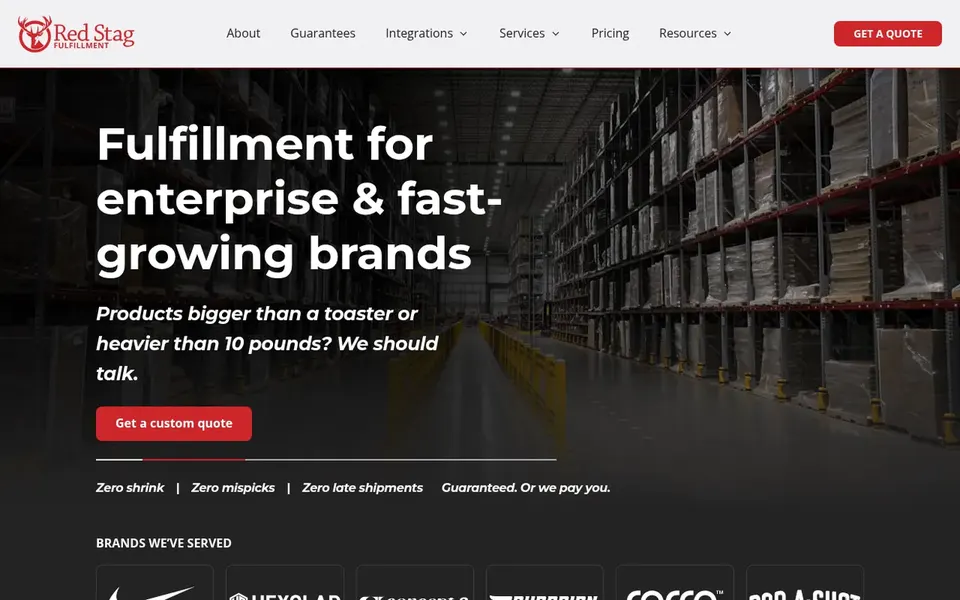
Think of Red Stag Fulfillment for dependable 3PL order fulfillment. Compare its stated service terms with your order profile and confirm details straight with the vendor. In practice, Red Stag Fulfillment is an external logistics company offering order fulfillment for ecommerce owners and online retailers.
Its homepage stresses reliability, security, and speed, which appeals to merchants who want a partner to manage storage and shipping whereas they focus on sales. As a 3PL, Red Stag takes over physical fulfillment, so you provide up direct control of the warehouse floor. This comparison lists no price for Red Stag Fulfillment; ask the vendor. On free options: Not stated.
Trade-offs to know: Outsourced model means less control.
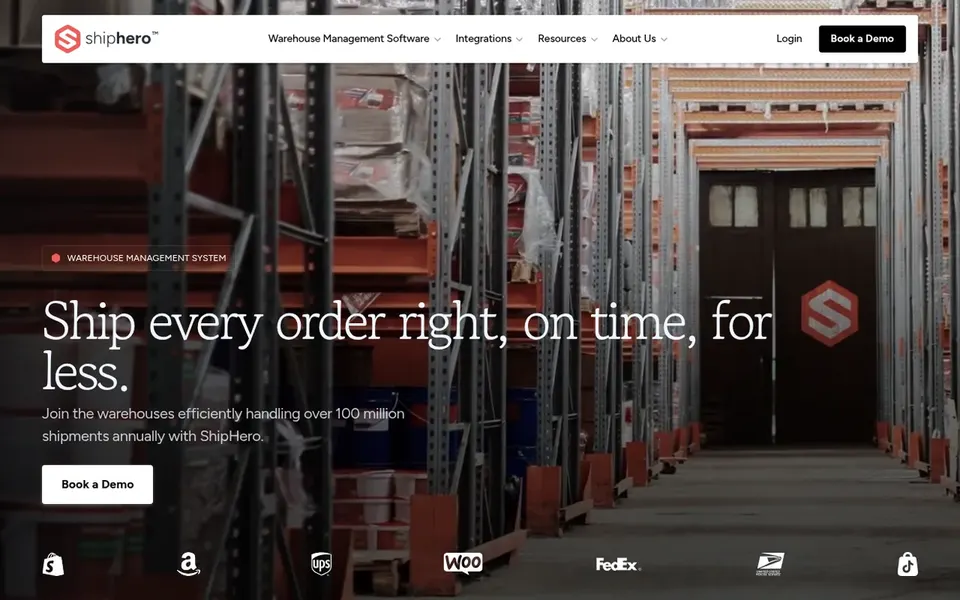
Choose ShipHero for brands running their own warehouse. It handles inventory, order flow, and shipping inside a single platform, which makes it a fit for merchants who want control over fulfillment instead of handing it to an outside partner. Teams already managing a facility can use it to organize picking, packing, and dispatch without switching systems.
Since ShipHero is software, it does not supply warehouse space, labor, or carrier accounts on its own. For everyday use, you need an existing operation or a partner to run the physical side. What you pay to start with ShipHero: $15,000 per year. Free plan details: Not stated.
Ask ShipMonk, Fulfillrite, Deliverr and Red Stag Fulfillment for a written quote, since no starting price is shown.
Before choosing ShipMonk, weigh its main limit: Outsourced model limits control.
Map your must-have features to a specific ShipMonk plan before you compare prices.
Involve the people who will use Red Stag Fulfillment daily; a short pilot beats a long feature checklist.
Find out what support Fulfillrite includes on your plan, and whether onboarding help costs extra.
How we picked
Ainotely used vendor pricing pages and product documentation as the base, then compared plans, free access and documented limits for 5 tools. Treat prices as a snapshot: vendors change plans often, so check the vendor site for the figure that applies today. The sequence is a judgement call: typical use case first, then pricing transparency, then free access. Use the profiles to check fit. This applies to all 5 ShipBob alternatives options compared here.
Every price and plan detail on this page comes from the vendors’ own websites. We did not run hands-on tests unless the text says so, and we do not publish star ratings or review scores. See how we score and our disclosure.
Keep your shortlist in one place
Paste prices, trial dates and notes from this guide into Ainotely, our AI note app. It files them into a topic and pulls out tasks like “cancel trial by Friday”. Free 7-day trial, no card needed.
A permanent free plan is not offered by ShipMonk, ShipHero or the other tools here. Plan a short evaluation period instead.
How are the tools for ShipBob ordered?
ShipMonk sits first and ShipHero last because the order follows typical fit for ShipBob, then price clarity and free access. It is a judgement call, so read each profile for fit and limits.
Do these tools publish their prices?
Not all of them. ShipMonk, Fulfillrite, Deliverr and Red Stag Fulfillment publish no starting price, so expect a quote request for those. The rest, ShipHero included, show a starting price, though seats and billing terms still change the final cost.
Can I try these tools before paying?
Not by default. None of the tools, from ShipMonk to ShipHero, lists a free plan or a free trial here, so ask each vendor for a demo before committing.