Why Is Note Taking Important? The Two Jobs It Actually Does
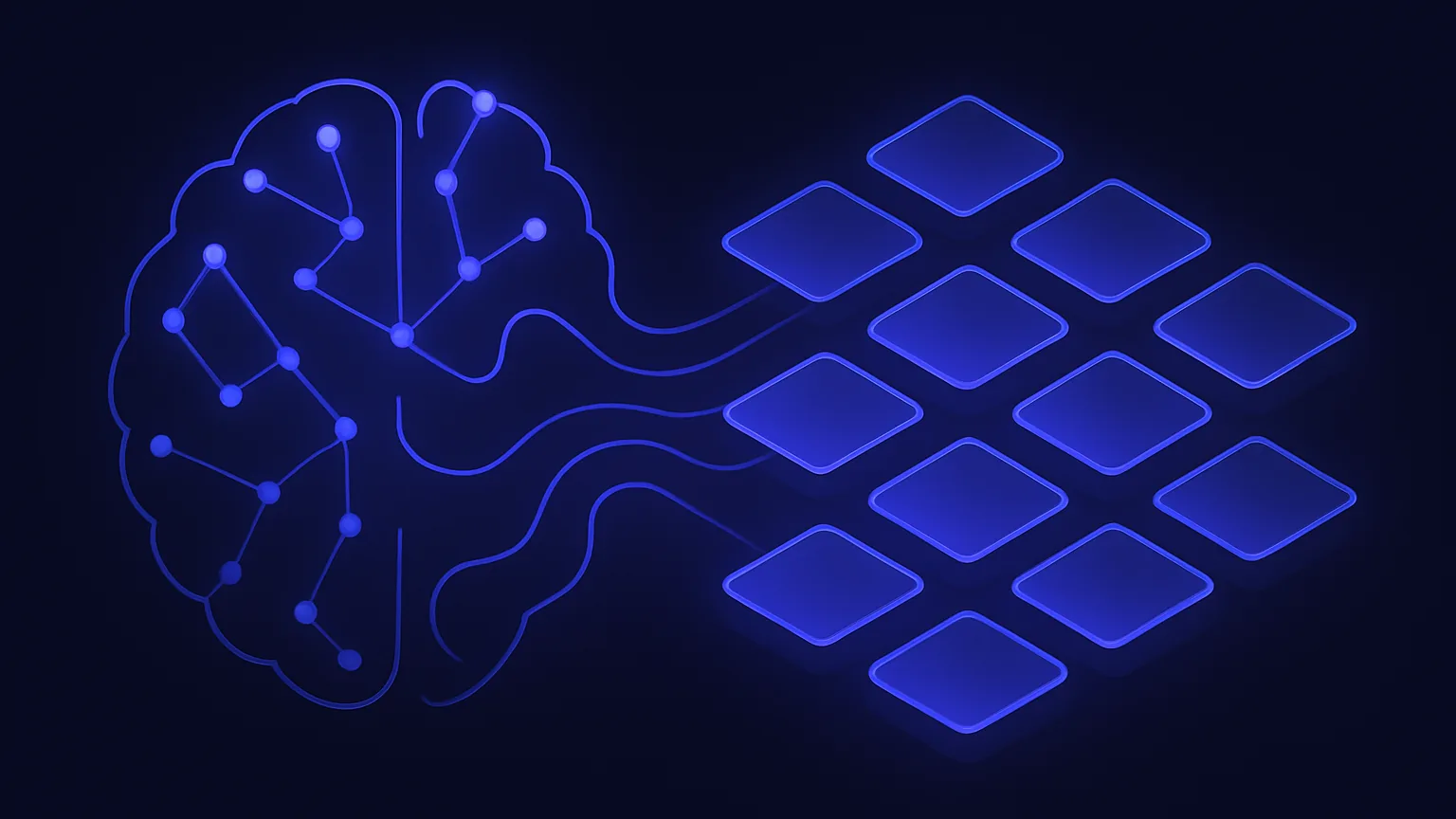
The two jobs note-taking does
Why is note taking important? Because it does two separate jobs. Writing something down encodes it into memory as you process and reword it, and it leaves a record you can return to later. Research shows note-taking helps even when you never reread the notes, which means both jobs carry real value.
Most advice treats note-taking as one activity. It is cleaner to see it as two, because they succeed and fail for different reasons.
Decades of research back this split. A widely cited teaching guide from the University of Illinois Chicago summarizes it plainly: note-taking produces a written record for later review and promotes encoding of information (Kobayashi, 2006). Converting an idea into words or a diagram helps lodge it in long-term memory.
Keep those two functions in mind for the rest of this guide, because the whole argument for why you take notes lives inside them.
Job one: encoding (why writing rewires memory)
Encoding is the memory benefit you get from the act of writing itself. When you rephrase an idea in your own words, your brain has to process it, and that processing strengthens the memory. This benefit shows up even if you never look at the notes again.
The strongest evidence here is almost counterintuitive. In a classic study, Fischer and Harris (1973) found students scored higher on tests when they took notes even if they never reviewed them. The writing did the work, not the rereading.
This is also why handwriting often beats typing. In "The Pen Is Mightier Than the Keyboard" (Mueller and Oppenheimer, 2014), laptop note-takers did worse on conceptual questions than longhand writers. The reason was not the device. It was that laptop users transcribed lectures word-for-word instead of reframing the material. Verbatim capture skips the encoding step. Slower handwriting forces you to summarize, and the summarizing is what sticks.
The practical takeaway: the benefit of note-taking comes from processing, not from stenography. If you type, you keep the encoding benefit only when you paraphrase rather than copy.
Job two: external storage (and why it usually fails)
External storage is the record your notes leave behind. In theory, it lets you retrieve any idea months later. In practice, this is where note-taking breaks down: people capture notes constantly but never organize or revisit them, so the record exists but never gets used.
Here is the honest part most articles skip. The encoding job largely takes care of itself. If you write, you encode. The storage job does not take care of itself at all.
Think about your own notes. How many folders, apps, and half-finished documents hold ideas you have not opened since the day you wrote them? The record is technically there. It just is not retrievable in any useful way, because it was never titled, tagged, linked, or reviewed.
So the storage function silently fails for a specific reason: capture is easy and organizing is boring. We do the fun part and skip the maintenance. That is the real gap in why note-taking so often feels like wasted effort. The benefit of a written record only lands if the record is findable when you need it.
Why note-taking is important for students
For students, note-taking matters because it improves both comprehension during class and recall at exam time. The encoding benefit boosts understanding as you write, and organized notes give you material to review. Both note-taking benefits for students are well documented in learning research.
Students live at the sharp end of both jobs. The encoding benefit means that taking notes in class, in your own words, improves how well you grasp the lecture in real time. The storage benefit means that when finals arrive, you have something to work from instead of a blank memory.
The catch is the same one everyone faces. A student who fills notebooks but never revisits them still gets the encoding gain but throws away the storage gain. That is why "note taking benefits for students" is really a question about follow-through, not just attendance.
If you are a student choosing tools, our guide to the best note-taking app for students walks through what to look for. But the tool matters less than the habit of returning to what you wrote.
Note-taking methods that support both jobs
The best note-taking methods force encoding as you write and leave structure for later review. Cornell, outlining, and concept maps are strong because they make you condense and organize, not just transcribe. The right method depends on the material and how you plan to reuse it.
The UNC Learning Center outlines five main note-taking methods: Cornell, Outline, Flowchart/concept map, Charting, and the Sentence method. They differ mostly in how much structure they build in.
| Method | Best for | Encoding strength | Storage strength |
|---|---|---|---|
| Cornell | Lectures, exam prep | High (cues force recall) | High (built-in review column) |
| Outline | Structured, hierarchical topics | Medium | High (clear structure) |
| Concept map | Interconnected ideas | High (visual linking) | Medium |
| Charting | Comparisons, data-heavy content | Medium | High (scannable) |
| Sentence | Fast-paced, unpredictable input | Low (near verbatim) | Low (unstructured) |
Notice the Sentence method scores low on both. It is closest to the verbatim typing that hurt laptop users in the Mueller and Oppenheimer study. If you want a deeper breakdown, see our guide to the most effective note-taking methods, and the dedicated walkthrough of the Cornell note-taking method.
Closing the storage gap: the second-brain follow-through
To fix the storage gap, notes need to be organized, linked, and resurfaced over time, not just captured. A "second brain" is a note system built for retrieval: everything is titled, tagged, connected, and brought back to your attention. That is what turns stored notes into actual long-term recall.
Here is where I will be direct, and honest, about what I build. I run Ainotely, so treat this as a founder's view rather than an unbiased verdict.
The reason most note systems fail the storage job is manual overhead. Titling, tagging, and linking every note is real work, and people abandon it within a week. The idea behind a building a second brain from your notes workflow is to make that follow-through low-effort enough that it actually happens.
That is the specific problem an AI note app can address: it can auto-title notes, suggest tags, and surface related notes you forgot you wrote, so retrieval stops depending on your discipline. I have not run a controlled study on this, and I am not claiming a percentage. What I can say plainly is that the storage function only pays off when resurfacing is automatic, because relying on willpower is exactly what fails.
Whatever tool you use, the principle holds: capture is not the finish line. Organizing and revisiting is. Our guides on how to organize your notes so you actually use them and how to take better notes go deeper on the mechanics.
Ainotely is a free AI second brain that titles, tags, and links the notes you already write.
Try Ainotely freeWhen note-taking backfires
Note-taking can backfire when it becomes verbatim transcription, when it splits your attention during fast input, or when capturing replaces thinking. In those cases you skip the encoding benefit and just accumulate an unread pile. Note-taking helps only when it makes you process, not when it substitutes for it.
An even-handed answer to "why is note taking important" has to admit when it is not. Three failure modes are worth naming.
- Verbatim capture. Transcribing word-for-word (the laptop trap) skips encoding entirely. You end up with a transcript you understand no better than the original.
- Attention split. In very fast or discussion-heavy sessions, heavy note-taking can pull focus away from listening. Sometimes it is better to listen fully and jot a few cues after.
- Capture as procrastination. Endlessly filing notes can feel productive while replacing the harder work of thinking, deciding, or reviewing.
None of these cancels the core case. They sharpen it: note-taking is important when it forces processing and leaves a record you actually reuse. When it does neither, it is just busywork.
FAQ
What are the five importances of note-taking?
Note-taking helps you encode information into memory as you write, gives you a record to review later, keeps your attention focused during input, forces you to reframe ideas in your own words, and builds a searchable personal knowledge base you can reuse across time. The first four happen during capture; the fifth depends on organizing and revisiting.
Why is it important to take notes by hand?
Mueller and Oppenheimer (2014) found longhand note-takers outperformed laptop users on conceptual questions because handwriting is slower, so you cannot transcribe verbatim and must summarize in your own words. That reframing is what strengthens encoding. Typing can match handwriting if you deliberately paraphrase instead of copying.
What are the 5 R's of note-taking?
The 5 R's come from the Cornell method: Record the main ideas during input, Reduce them to cues in the margin, Recite the material from those cues, Reflect on how it connects to what you know, and Review the notes regularly so they stay in memory. The last two are exactly the storage-side steps most people skip.
What are the benefits of using a note taker?
A note-taking tool or app captures ideas quickly, keeps everything in one searchable place, and (with an AI second-brain tool) can title, tag, and link notes automatically. That solves the part people usually fail at: organizing and resurfacing notes so they get reused instead of forgotten.
Is taking notes really necessary for learning?
It is not strictly required, but it reliably helps. Fischer and Harris (1973) found students scored higher when they took notes even without reviewing them, because the act of writing itself aids encoding. For anything you need to recall later, note-taking is one of the cheapest ways to improve retention.
What is the purpose of taking notes while studying?
Note-taking while studying serves two purposes: it encodes information into long-term memory as you convert it into your own words, and it creates an external record you can return to. The encoding happens automatically; the record only pays off if you organize and review it.
Related reading: most effective note-taking methods, how to organize your notes so you actually use them, and building a second brain from your notes.
Sources: Mueller and Oppenheimer, "The Pen Is Mightier Than the Keyboard," Psychological Science (2014); University of Illinois Chicago, CATE note-taking teaching guide (Kobayashi 2006; Fischer and Harris 1973); UNC Learning Center, Effective Note-Taking in Class.