Ainotely vs Obsidian: AI notes versus local-first, picked honestly
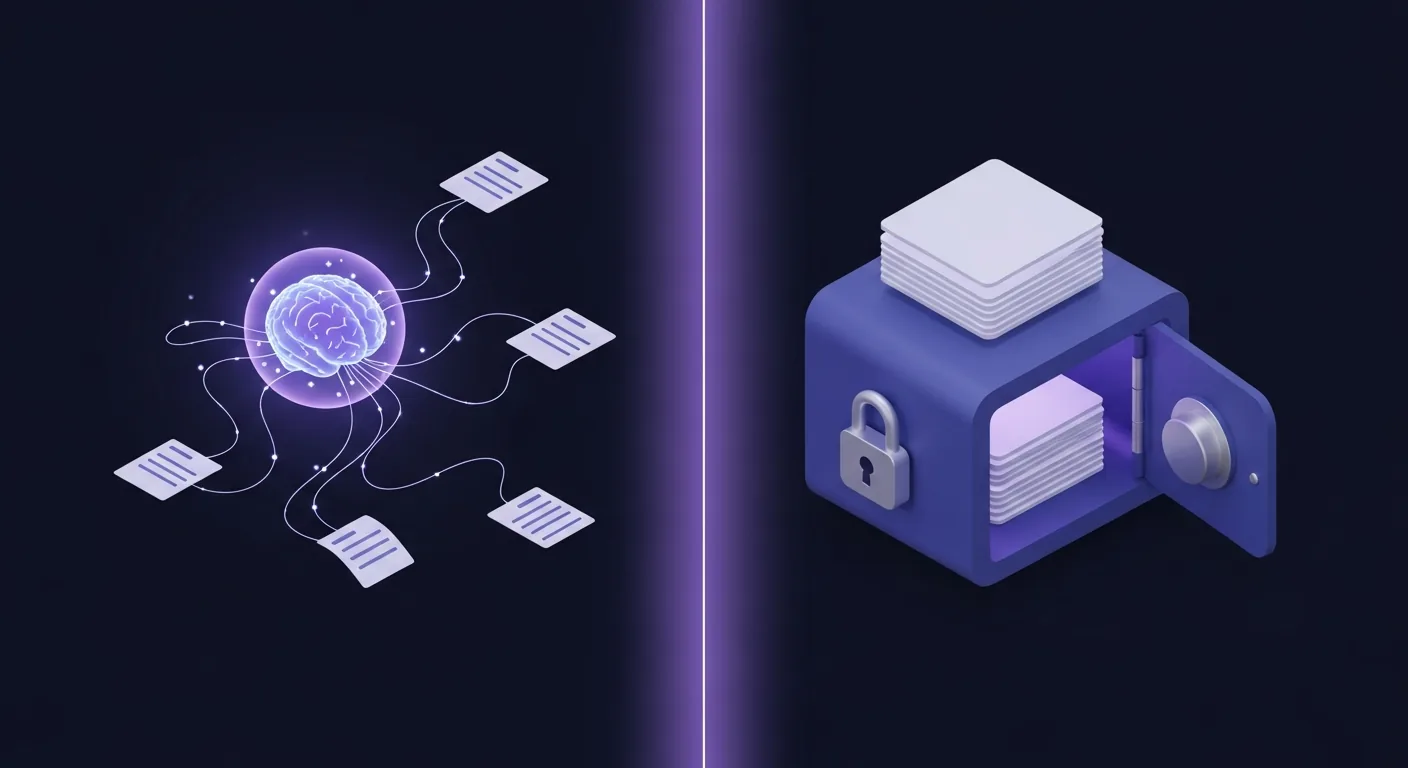
If you already use Obsidian and you are wondering whether an AI-native tool is worth the switch, here is the honest answer up front. Obsidian wins on privacy, offline control, and long-term file durability, and that is exactly why its community is so loyal. Ainotely wins on native AI, zero setup, voice capture, and chatting with your notes. Neither is "better" in the abstract. They are built for different people, and this guide shows you which person you are.
I build Ainotely for a living, so treat me as biased and watch me concede the places Obsidian beats my own tool. A comparison that only flatters the author's product is worthless to you, and frankly it would not survive thirty seconds in front of an Obsidian user.
How I evaluated these two
This is not a fabricated lab benchmark. I built this comparison from Obsidian's official pricing page and plugin directory, the public docs for the main AI plugins, Notion's official pricing for context, and real user reviews from 2026, cross-checked against my daily work building a personal note brain. Where I describe behavior, it reflects documented behavior and common user experience, not an invented score.
I judged both tools on the five axes that actually decide this choice for a knowledge worker.
- AI quality and reach. Can it understand your notes and act on them, and how much do you have to wire up first.
- Setup friction. Time from install to a working, organized system. Obsidian's plugin route is real configuration, not a toggle.
- Privacy and data ownership. Where your notes physically live and who can read them. This is Obsidian's home turf.
- Linking and structure. Manual wikilinks and backlinks versus AI auto-linking, and which one survives a thousand messy notes.
- Lock-in risk. Can you export and leave cleanly. I check this for my own app too, not just the competitor.
Ainotely vs Obsidian at a glance
The fast view before the detail. Prices are US, from each vendor's official page, linked in the sources at the foot of this article.
| Ainotely | Obsidian | |
|---|---|---|
| Core model | AI-native cloud note brain | Local-first Markdown editor |
| Built-in AI | Yes, native (titles, tags, links, chat, voice) | None native; via community plugins |
| Where notes live | Cloud (with Markdown/JSON export) | Plain-text files on your device |
| Linking | Automatic AI linking | Manual [[wikilinks]] and backlinks |
| Setup time | Sign in and go | 15 to 30 min for vault plus AI plugins |
| Offline use | Limited | Full, works fully offline |
| Starting price | Free | Free for personal use |
| Paid extras | Bundled AI | Sync $4/mo, Publish $8/mo, plus your own AI API spend |
| Best for | People who want AI to organize for them | People who want control and own their files |
What is Obsidian, and who it is for
Obsidian is a local-first knowledge base that stores every note as a plain-text Markdown file in a folder on your computer, called a vault. You connect ideas with [[wikilinks]], see a graph of those connections, and extend the app through a large community plugin ecosystem. It has no built-in AI, and it is free for personal use.
Obsidian's strength is ownership. Your notes are just files. If Obsidian vanished tomorrow, you would still open every note in any text editor, forever. That durability, plus full offline use and no account required, is why researchers, developers, and serious note-takers love it.
It is for the person who wants to build a system and control every piece of it. If you enjoy choosing plugins, designing your folder structure, and owning your data outright, Obsidian is hard to beat. If that sounds like work you would rather not do, keep reading. For a deeper look at that workflow, I wrote a separate piece on using Obsidian as a second brain.
What is Ainotely, and who it is for
Ainotely is an AI-native second brain. You capture a note by typing or speaking, and the AI titles it, tags it, links it to related notes, and makes the whole library searchable by meaning. You can chat with your notes and ask questions across everything you saved. It is free and works the moment you sign in.
Where Obsidian hands you a powerful empty room and a box of tools, Ainotely does the organizing for you. There are no folders to design and no plugins to install. The trade is that it runs in the cloud rather than as local files, and offline use is limited.
It is for the person drowning in half-finished notes who wants them sorted automatically, and who values voice capture and chat with your notes over hand-built structure. If you want the philosophy behind that, see my take on the best second brain app approach.
AI: native versus plugin plus API key
This is the decisive axis. Ainotely has AI built in: organizing, linking, and chat work natively with nothing to configure. Obsidian has no native AI at all. You add it with community plugins like Smart Connections, Copilot, or Text Generator, and most ask you to paste your own OpenAI or Anthropic API key and pick a model.
I did not stage a fake side-by-side test, but the documented workflow is clear. In Obsidian, "add AI" means: open settings, enable community plugins, install one, paste an API key, choose a model, and tune it. Budget 15 to 30 minutes the first time, plus ongoing API charges per request. Once done, you get semantic search and chat inside your vault, and it works well.
In Ainotely, the same capabilities are already on. You sign in, write or speak a note, and it is titled, tagged, and linked. You open chat and ask your notes a question. Zero setup, no key, no per-request bill. If your priority is "I want to search Obsidian for an AI alternative that just works," that gap is the whole story.
Privacy and data ownership
Obsidian wins here, and I will not pretend otherwise. Notes are local plain-text Markdown on your device, so nothing leaves your machine unless you turn on Sync or send text to an AI plugin's provider. Ainotely processes notes in the cloud. If offline, local-only privacy is non-negotiable for you, choose Obsidian.
This is Obsidian's single biggest loyalty driver, and it is a fair one. Local files mean no vendor sees your notes, no account can be locked, and no server outage takes your knowledge offline. For lawyers, journalists, and anyone handling sensitive material, that default matters.
The honest nuance: the moment an Obsidian user installs an AI plugin and connects a provider, their note text travels to that provider's servers per request, the same way any cloud AI tool works. So "Obsidian is private" holds fully for the no-AI vault, and partially once AI is bolted on. Ainotely is upfront that it is a cloud service, and it ships a full export so the data is portable even though it is hosted.
Linking, sync, and learning curve
Linking. Obsidian's [[wikilinks]] and backlink graph are manual and precise. You decide every connection, which is powerful and also a chore at scale. Ainotely links notes automatically by meaning, so a thousand messy notes still connect without you tagging each one. Manual linking is more deliberate; AI linking is more forgiving of volume.
Sync and mobile. Obsidian is cross-platform with mobile apps, but syncing across devices reliably is the paid Obsidian Sync add-on at $4 per month billed annually (or you self-host a sync method). Ainotely syncs through its cloud by default, so your notes are on every device without a separate plan.
Learning curve. Obsidian has genuine setup friction: vaults, folders, wikilink syntax, and plugin configuration. It rewards the effort, but beginners often bounce. Ainotely has effectively no learning curve because the AI handles the structure. If you want a broader market view, see my roundup of PKM apps.
The real cost of adding AI to Obsidian
Obsidian is free, but a fully AI-powered Obsidian is not. Add Sync at $4 per month for reliable cross-device use, your own OpenAI or Anthropic API spend for the plugins (variable, often a few dollars a month for light use and more for heavy chat), and 15 to 30 minutes of setup time. Ainotely bundles the AI into a free tier, so the comparable AI cost is zero.
Nobody does this math, so here it is plainly. Obsidian's headline price of free is real, but the AI experience that competes with Ainotely is assembled from parts you pay for separately:
| To get AI in Obsidian | Cost |
|---|---|
| Obsidian app, personal use | Free |
| Reliable cross-device sync (Obsidian Sync) | $4/mo billed annually |
| AI plugin (Smart Connections, Copilot, etc.) | Free to install |
| Your own LLM API key usage | Variable, pay per request |
| Setup and tuning time | 15 to 30 min, plus upkeep |
| Same job in Ainotely | Free, bundled, zero setup |
None of this means Obsidian is overpriced. It means the comparison is not "free versus paid." It is "free plus your own time and API bill" versus "bundled and instant." Which side is cheaper depends on how much you value an afternoon of setup and a metered API key.
The scored decision matrix
Here is the part most comparisons dodge. I scored both tools 1 to 5 on the axes from my method, from the perspective of someone deciding whether to switch from Obsidian to an AI-native tool. Higher is better. I scored my own app's weak spots honestly.
| Pillar | Ainotely | Obsidian |
|---|---|---|
| AI quality and reach | 5 | 3 |
| Setup friction (lower is better, scored) | 5 | 2 |
| Privacy and data ownership | 3 | 5 |
| Mobile and sync convenience | 5 | 3 |
| Linking at scale | 5 | 4 |
| Lock-in risk (lower is better, scored) | 4 | 5 |
| Total (out of 30) | 27 | 22 |
Read that total carefully. Ainotely scores higher overall because most people deciding this want AI convenience. But Obsidian wins clean on the two pillars its fans care about most, privacy and lock-in. If those two are your top priority, the total is the wrong number to read, and Obsidian is your tool. A score is a starting point, not a verdict.
Which one should you pick
Pick Obsidian if local plain-text files, full offline use, total control, and a plugin ecosystem matter most, and you do not mind setup. Pick Ainotely if you want native AI, automatic linking, voice capture, and chat with your notes working instantly, with a clean Markdown and JSON export so you are never locked in.
Concretely:
- Choose Obsidian if you are privacy-first, want your notes as durable local files, work offline often, and enjoy building and tuning your own system.
- Choose Ainotely if you have a pile of unorganized notes, want AI to sort and link them for you, value voice and chat, and want it working in under a minute.
- Honestly, try both. They are both free to start. Ainotely's export is Markdown, which is exactly Obsidian's native format, so moving between them costs you nothing. That is the point of shipping export: you stay because it is good, not because you are stuck.
Want AI organizing your notes without the setup?
Ainotely auto-titles, tags, and links every note, lets you chat with your library, and exports clean Markdown whenever you want it.
Try Ainotely freeFAQ
Does Obsidian have built-in AI?
No. Obsidian ships with no native AI. You add it through community plugins like Smart Connections, Copilot, or Text Generator, and most ask you to paste your own OpenAI or Anthropic API key, which you pay for separately. The AI is real, but it is bolt-on, not built in.
What is the best AI alternative to Obsidian?
If you want AI working the moment you sign in, with no plugin setup or API key, Ainotely is a strong AI-native alternative to Obsidian. It auto-titles, tags, and links every note and lets you chat with your whole library. Obsidian still wins if you require local plain-text files and full offline control.
Can you chat with your notes in Obsidian?
Only after you install a plugin such as Copilot or Smart Connections and connect an AI provider with your own API key. Out of the box, Obsidian has search but no chat. Ainotely lets you chat with your notes natively with nothing to install.
Is Obsidian better than Notion AI for knowledge workers?
They solve different problems. Obsidian is local-first, file-based, and private by default, which knowledge workers who value data ownership prefer. Notion AI is cloud-based and bundled into Notion's Business plan at $20 per member per month. For pure AI convenience Notion wins; for control and durability Obsidian wins. I compare my own tool to that side in Ainotely vs Notion.
Is Obsidian really free, and what do you pay for?
Obsidian is free for personal use. You pay for optional extras: Sync at $4 per month billed annually, Publish at $8 per month per site billed annually, a $50 per user per year commercial license, and an optional $25 one-time Catalyst payment. AI plugins are free to install but the API calls behind them are not.
How do you add AI to Obsidian?
Open Settings, enable community plugins, install one like Smart Connections or Copilot, then paste an API key from OpenAI or Anthropic and pick a model. Budget 15 to 30 minutes and ongoing API spend. After that you get semantic search and chat inside your vault.
Is my data private in Obsidian versus cloud AI note apps?
Obsidian stores notes as local plain-text Markdown on your device, so nothing leaves your machine unless you turn on Sync or send text to an AI plugin's provider. Cloud AI note apps process your notes on their servers. If offline, local-only privacy is non-negotiable, Obsidian is the safer default.
Can I export my notes out of Ainotely if I leave?
Yes. Ainotely exports your full library as a Markdown and JSON zip, so you can walk away with readable files and move into Obsidian or anything else. I built export in on purpose, because a note app that traps your notes is not a tool you can trust.
Is Obsidian good for beginners, or is the learning curve too steep?
Obsidian is powerful but has real setup friction: vaults, folders, wikilinks, and plugin configuration. Beginners who just want notes organized for them tend to find it heavy. If you want zero setup, an AI-native tool like Ainotely is gentler. If you enjoy building a system, Obsidian rewards the effort.
Ainotely vs Obsidian, which should I choose?
Choose Obsidian if local plain-text files, offline use, full control, and a plugin ecosystem matter most, and you do not mind setup. Choose Ainotely if you want native AI, automatic linking, voice capture, and chat with your notes working instantly, with a clean Markdown export so you are never locked in.
Related reading: the best AI note taking app, ranked, the personal knowledge management app guide, and PKM tools for 2026.
Sources and method: prices are US rates taken from each vendor's official page at time of writing (June 2026) and linked inline above: Obsidian pricing (personal free; Sync $4/mo annual; Publish $8/mo annual; commercial $50/user/yr; Catalyst $25 one-time), Obsidian community plugins for the AI-via-plugin claim, and Notion pricing for the Notion AI comparison (bundled into the Business plan at $20/member/mo). Ainotely's free tier, bundled AI, and Markdown/JSON export reflect the live Ainotely app. Prices and policies change often, so confirm current terms before you commit, especially the privacy details if you handle sensitive notes.