H2O.ai is the first pick on this list for sovereign and air-gapped deployments. Alternatives: Dataiku for collaboration and AI governance, and Microsoft Azure AI Foundry for Cloud-native agent development. The other 3 tools in the list cover narrower or pricier cases.
This Ainotely guide covers 6 AI agent platforms for data teams. Each profile lists a starting price, free plan details, strengths and drawbacks, so you can drop poor fits quickly.
Key takeaways
H2O.ai sits first on this list: sovereign and air-gapped deployments.
No starting price is shown for any of the 6 tools, H2O.ai and Databricks included, so plan time for sales calls.
For unified data and AI work, Databricks is worth a look.
Neither H2O.ai nor Databricks, nor any of the other 4 tools, has a permanent free plan; trials and quotes are the norm.
Before buying H2O.ai, weigh this: infrastructure ownership adds burden.
H2O.ai works best for sovereign and air-gapped deployments. H2O.ai presents its Sovereign AI Platform for running predictive, generative and agentic AI on your own infrastructure, from the cloud to completely air-gapped environments. Owning the infrastructure means more operational responsibility than a completely managed service, which can stretch smaller teams.
What to check first: Infrastructure ownership layers on burden.
Those comfortable with managed cloud systems may not need this level of control. For everyday use, choose H2O.ai when sovereignty and air-gapped operation are requirements. This comparison lists no price for H2O.ai; ask the vendor. Free access: Not stated.
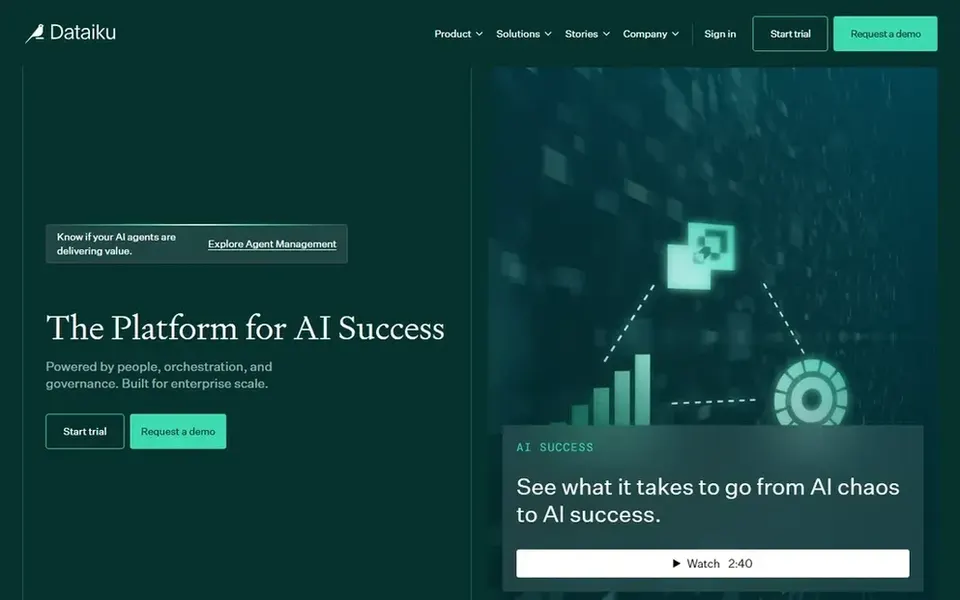
Dataiku targets collaboration and AI governance. Since the homepage emphasizes outcomes and collaboration, teams should confirm how deeply specific agent workflows are supported before committing.
For everyday use, consider Dataiku when cross-team coordination and governance matter most. Pricing for Dataiku is not stated here, so ask the vendor for current figures. Free options: Not stated.
Where Microsoft Azure AI Foundry fits: Cloud-native agent development. Data teams on Azure can treat it as a place to assemble agent applications alongside their existing cloud services, with an emphasis on speeding up development rather than managing infrastructure. Its value is most solid inside the Microsoft cloud ecosystem, and teams elsewhere should weigh migration or integration effort.
Points against: Confirm fit for existing data stack.
Choose it when Azure is already your system. For everyday use, the factory framing also means teams should confirm how governance and data access are handled for their scenarios. Microsoft Azure AI Foundry shows no starting price here, so confirm the cost on the vendor site. Trial and free access: Not stated.
Think of Amazon Bedrock for production-scale generative AI agents. Organizations outside AWS should assess integration effort first.
Pick Bedrock when production-scale generative AI agents on AWS are the goal. Amazon Bedrock shows no starting price here, so confirm the cost on the vendor site. Trial and free access: Not stated.
Drawbacks to consider: Scope centered on generative AI.
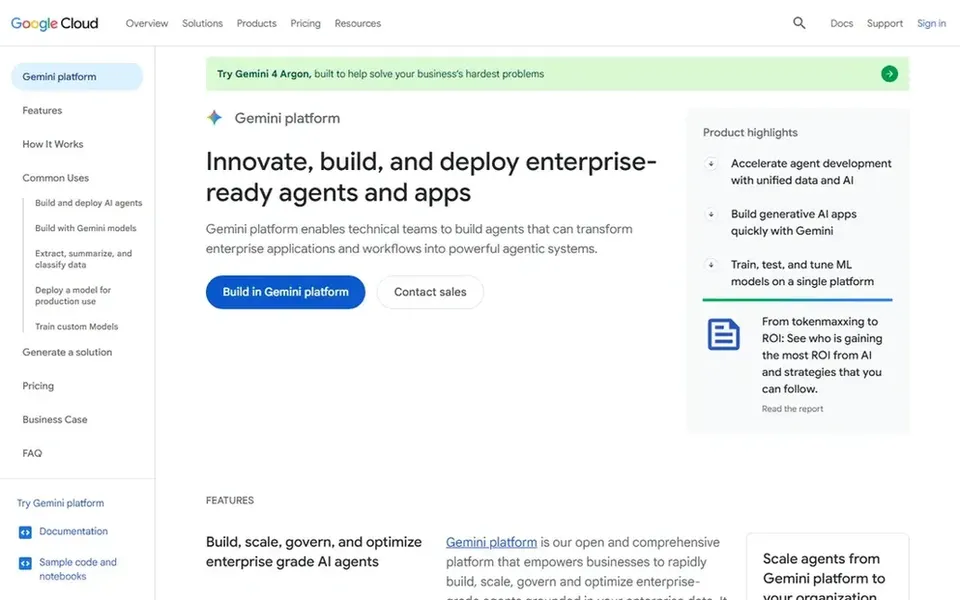
Where Google Cloud Vertex AI fits: developer-led agent building. Data teams working within Google Cloud can use it to move agent projects from prototype to governed production, with tooling geared toward the full lifecycle rather than a single step.
Where Google Cloud Vertex AI stands out: scale and govern agents.
Organizations standardized on other clouds may find integration less natural. No starting price is listed for Google Cloud Vertex AI here; confirm pricing on the vendor site. Free plan details: Not stated. Trade-offs to know: less for business users.
Databricks works best for unified data and AI work. Databricks presents a unified system for data, analytics and AI, built around a data-centric approach. Its homepage flags simplifying ETL, data warehousing, governance and AI on a single Data + AI Platform.
Where it shines: Data-centric approach to AI.
Where it falls short: Wide scope can be complicated to adopt.
For data teams that already run pipelines and warehouses, this means agents can be developed close to the data they depend on, with governance handled in the same environment. For everyday use, if you only need a narrow agent-building tool, a more focused choice may be more straightforward. On top of that, the breadth of the product can mean a steeper ramp-up time for smaller teams or those without existing data engineering practice. Pricing for Databricks is not stated here, so ask the vendor for current figures. Free plan details: Not stated.
Confirm the entry price with every vendor: no tool from H2O.ai to Databricks shows a fixed starting price.
Read the limits listed for H2O.ai first: infrastructure ownership layers on burden.
A short pilot of Microsoft Azure AI Foundry with your real workflow tells you more than a feature table.
Look at the renewal terms for Dataiku: auto-renewal, notice periods and price changes can matter more than the first-year price.
Work out what Amazon Bedrock costs with your real seat count, add-ons and usage, not just the entry price.
How we picked
Ainotely looked at what each vendor publishes: pricing, plan limits, feature coverage for AI agent platforms for data teams and stated drawbacks. No hands-on testing is claimed. Seat minimums, billing terms and add-ons can move the real cost, so the starting prices here are a guide and not a quote. Order on the page follows fit for the typical buyer first, then price transparency and free access. Your own requirements should decide the final pick.
Every price and plan detail on this page comes from the vendors’ own websites. We did not run hands-on tests unless the text says so, and we do not publish star ratings or review scores. See how we score and our disclosure.
Keep your shortlist in one place
Paste prices, trial dates and notes from this guide into Ainotely, our AI note app. It files them into a topic and pulls out tasks like “cancel trial by Friday”. Free 7-day trial, no card needed.
What should data teams check before buying an agent product?
Look at data connectivity, governance controls, deployment choices and post-launch monitoring. Also match the product to your team's technical skill level. From a buyer's view, verifying these on the vendor site avoids surprises after purchase.
Does any tool for AI agent platforms for data teams here have a free plan?
No tool in this list, H2O.ai and Databricks included, has a permanent free plan. Trials and quotes are the usual route, so plan a short evaluation period.
How do the cloud provider products differ?
Google Cloud Vertex AI, Microsoft Azure AI Foundry and Amazon Bedrock each sit within their own cloud ecosystem and emphasize agent development and production scale. The practical choice usually follows where your data already lives. Confirm cross-cloud integration effort before deciding.
Can I try these tools before paying?
Not by default. None of the tools, from H2O.ai to Databricks, lists a free plan or a free trial here, so ask each vendor for a demo before committing.
Do these tools publish their prices?
No. None of the tools, from H2O.ai to Databricks, shows a fixed starting price here, so budget time for quotes.
Is H2O.ai the right pick for everyone comparing AI agent platforms for data teams?
No single tool suits every team. H2O.ai comes first because it fits sovereign and air-gapped deployments, while Dataiku suits collaboration and AI governance and Microsoft Azure AI Foundry suits Cloud-native agent development. Match the tool to your own size, budget and workflow before deciding.