SingleStore leads the list, best for live transactions and analytics together. Listed starting prices: Couchbase from $0.15 per hour per node. If your case is different, Couchbase suits operational data product for AI at scale and MongoDB Atlas suits document-based AI applications and agents. Prices, free plans and limits for all 5 tools follow.
Short on time? The summary and table above give the quick view of 5 AI database management systems, and the profiles that follow give the detail behind each entry.
Key takeaways
Number one here is SingleStore, a fit for live transactions and analytics together.
A fair warning about MongoDB Atlas: document model needs schema discipline.
Google Cloud BigQuery is the one to check for analytics-first AI on cloud data.
Couchbase, MongoDB Atlas: these are the 2 tools out of 5 that offer a free plan.
No starting price is published for SingleStore, MongoDB Atlas, Oracle Autonomous Database and Google Cloud BigQuery; expect a quote.
Best for: Live transactions and analytics together
SingleStore was built for live transactions and analytics together. SingleStore is positioned as a live database for AI, applications and analytics, offering live reads and writes, a single engine for transactions and analytics, and open data access. Very straightforward applications may not need the combined engine.
On top of that, running a converged database still needs operational care and expertise. Its ecosystem is smaller than those of the largest cloud vendors. SingleStore does not show a starting price in this comparison, so check the vendor site for current pricing. Free access: Not stated.
Think of Couchbase for operational data system for AI at scale. Couchbase presents itself as an operational data system for AI, emphasizing sub-millisecond performance, cloud-to-edge sync and support for production AI agents.
In practice, teams designing NoSQL-backed services with AI features will find the operational focus relevant. More specifically, the system leans toward operational workloads, so deep analytical reporting may need complementary tools. Couchbase pricing: $0.15 per hour per node. Couchbase offers a free plan.
Best for: Document-based AI applications and agents
MongoDB Atlas is a good fit for document-based AI applications and agents. It fits teams building application backends where adaptable document schemas and quick iteration matter.
Honest limits: Document model needs schema discipline.
Choose a relational or analytical platform if your core need is complicated joins or large-scale reporting. MongoDB Atlas does not show a starting price in this comparison, so check the vendor site for current pricing. MongoDB Atlas offers a free plan.
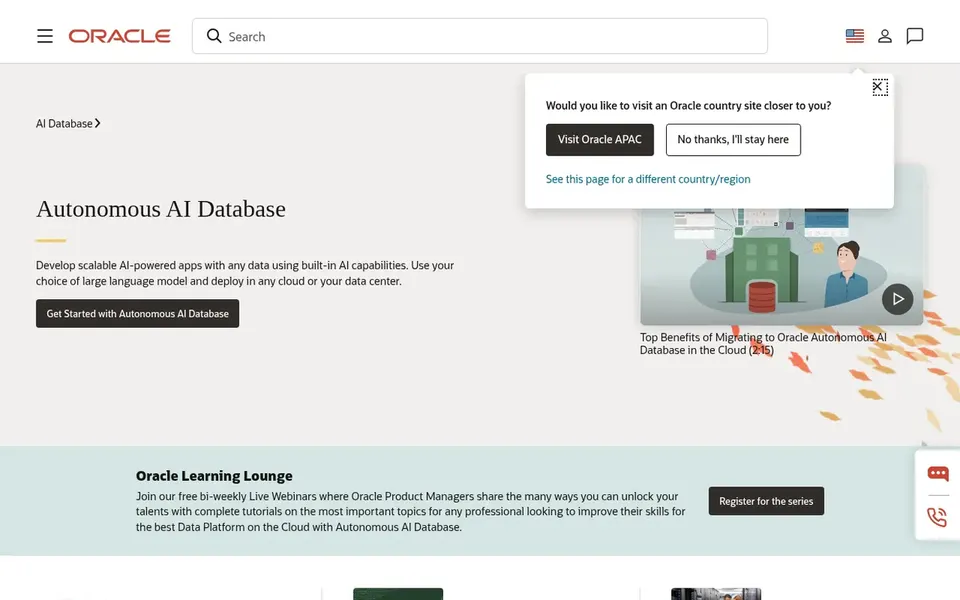
Best for: Automatic, self-driving database operations
Pick Oracle Autonomous Database if this describes you: automatic, self-driving database operations. Consider a lighter or more analytics-focused choice if your priority is ad hoc querying or a straightforward application backend.
More specifically, the product is closely tied to Oracle's cloud and ecosystem, so teams standardized elsewhere may face migration friction. Oracle Autonomous Database does not show a starting price in this comparison, so check the vendor site for current pricing. On free options: Not stated.
Trade-offs to know: Less appealing for non-Oracle shops.
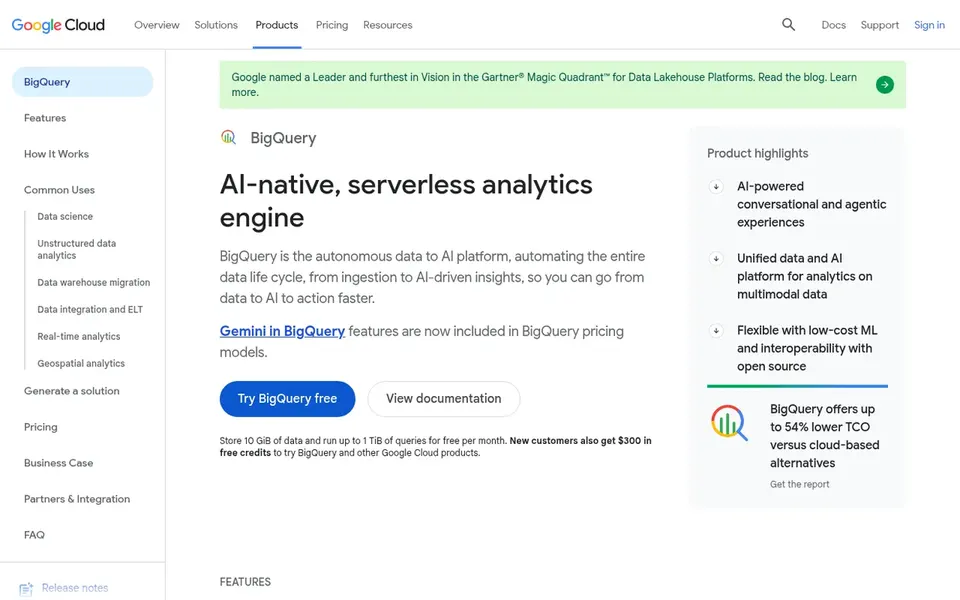
Google Cloud BigQuery is built with analytics-first AI on cloud data in mind. It suits analytics-heavy organizations that want a managed warehouse-style environment where AI work happens close to the data.
Drawbacks to consider: Costs scale with query volume.
More specifically, since it is a Google Cloud service, adopting it deepens cloud dependency and needs attention to query cost management. No starting price is listed for Google Cloud BigQuery here; confirm pricing on the vendor site. As for free access: Not stated.
Ask SingleStore, MongoDB Atlas, Oracle Autonomous Database and Google Cloud BigQuery for a written quote, since no starting price is shown.
Look at free plan limits closely: Couchbase and MongoDB Atlas have one, and the caps decide whether it is usable for real work.
Read the limits listed for SingleStore first: operational tuning still required.
Pick one real project and run it in MongoDB Atlas first; a small pilot shows fit faster than a checklist.
Ask Google Cloud BigQuery whether prices are locked for the first term and what happens at renewal.
How we picked
Selection started from tools commonly considered for AI database management systems, then narrowed to 5 that have clear pricing information or a clear quote process. Figures are shown as the vendors publish them. Billing terms, seat minimums and add-ons can change the real cost. The ranking is editorial: typical fit first, then clear pricing, then free access. If your needs are unusual, read the profiles rather than relying on position.
Every price and plan detail on this page comes from the vendors’ own websites. We did not run hands-on tests unless the text says so, and we do not publish star ratings or review scores. See how we score and our disclosure.
Keep your shortlist in one place
Paste prices, trial dates and notes from this guide into Ainotely, our AI note app. It files them into a topic and pulls out tasks like “cancel trial by Friday”. Free 7-day trial, no card needed.
Not all of them. SingleStore, MongoDB Atlas, Oracle Autonomous Database and Google Cloud BigQuery publish no starting price, so expect a quote request for those. The rest, Couchbase included, show a starting price, though seats and billing terms still change the final cost.
Can I try these options before paying?
Often, yes. Couchbase and MongoDB Atlas have a free plan. Use your own data and a real task during the test, and check what the free tier or trial limits before you rely on it.
How should I evaluate cloud dependency when picking a database?
Managed services for example BigQuery and Oracle Autonomous Database deepen ties to a specific cloud provider. Also, review data residency, portability and integration needs before committing, and confirm current details on the vendor site.
What makes a database an AI database management system?
The label normally includes built-in automation for example tuning and maintenance, integration with analytics and AI models. Support for AI applications like retrieval or agents. Vendors describe these capabilities differently, so compare the specific features you need.
How are the tools for AI database management systems ordered?
SingleStore sits first and Google Cloud BigQuery last because the order follows typical fit for AI database management systems, then price clarity and free access. It is a judgement call, so read each profile for fit and limits.
Is SingleStore the right pick for everyone comparing AI database management systems?
No single tool suits every team. SingleStore comes first because it fits real-time transactions and analytics together, while Couchbase suits operational data platform for AI at scale and MongoDB Atlas suits document-based AI applications and agents. Match the tool to your own size, budget and workflow before deciding.