If you need Fashion ERP with PLM and CRM, ApparelMagic is the first tool to look at here. Listed starting prices: ApparelMagic from $337 a month premium each year. Look at NetSuite for wide cloud ERP with financials, and at AIMS360 for apparel brands needing omnichannel ERP. Details, prices and limits for the rest of the 5 tools are below.
If you are comparing apparel management software, this page covers 5 tools in one place: what each is best for, what it costs to start, whether it has a free plan, and the main limit to know about.
Key takeaways
ApparelMagic sits first on this list: Fashion ERP with PLM and CRM.
For the cheapest start, look at ApparelMagic: $337 per month premium annually.
A permanent free plan is missing from all 5 tools, ApparelMagic and Microsoft Dynamics 365 included; plan for a trial or a premium start.
Microsoft Dynamics 365 suits CRM and ERP in one suite.
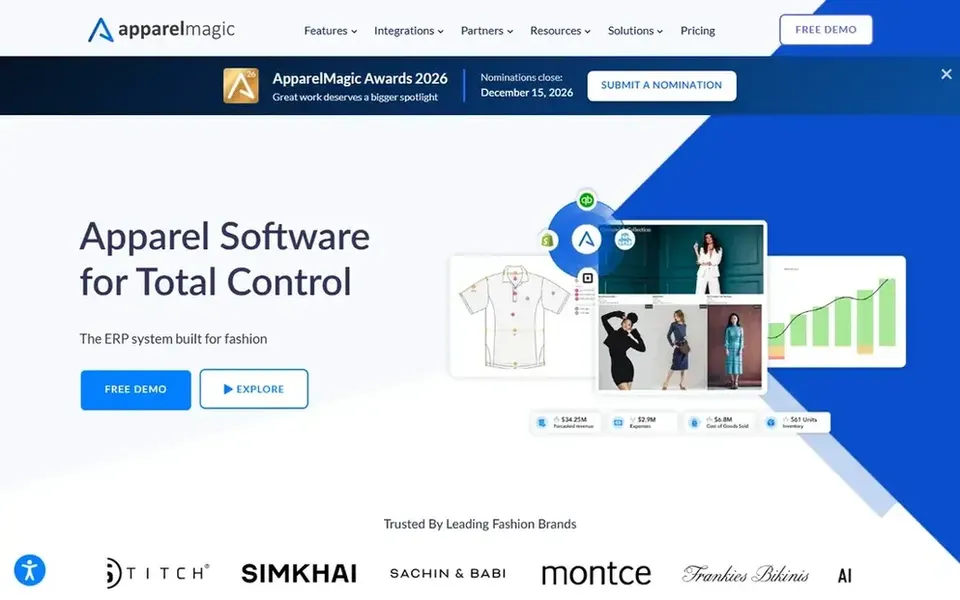
ApparelMagic is a good fit for Fashion ERP with PLM and CRM. ApparelMagic is presented as apparel software handling ERP, PLM, CRM, inventory management and accounting, with training and support included. It is pitched at fashion companies that want one core system for product development, customer relationships, stock and finances.
What ApparelMagic does well: Fashion industry focus.
Limits to weigh: Wide module set may take time to learn.
In practice, brands that have outgrown spreadsheets and separate point tools frequently look at this kind of combined fashion ERP to keep style data and accounting aligned. For everyday use, the broad module coverage means onboarding and training deserve attention before committing. As for the details, very small labels may not need PLM or CRM depth yet. ApparelMagic cost at the entry level: $337 per month premium annually. Trial and free access: Free trial.
Think of NetSuite for wide cloud ERP with financials. For apparel businesses it can serve as a general business system when finance, customer data and stock have to live in one cloud system.
More specifically, choose NetSuite when a general cloud ERP with capable financials is the priority and apparel-specific depth can be addressed through configuration. NetSuite is not designed specifically for apparel, so style, size and season workflows may need customization or add-on tools. NetSuite does not show a starting price in this comparison, so check the vendor site for current pricing. Trial and free access: Not stated.
Limits to weigh: Configuration effort can be significant.
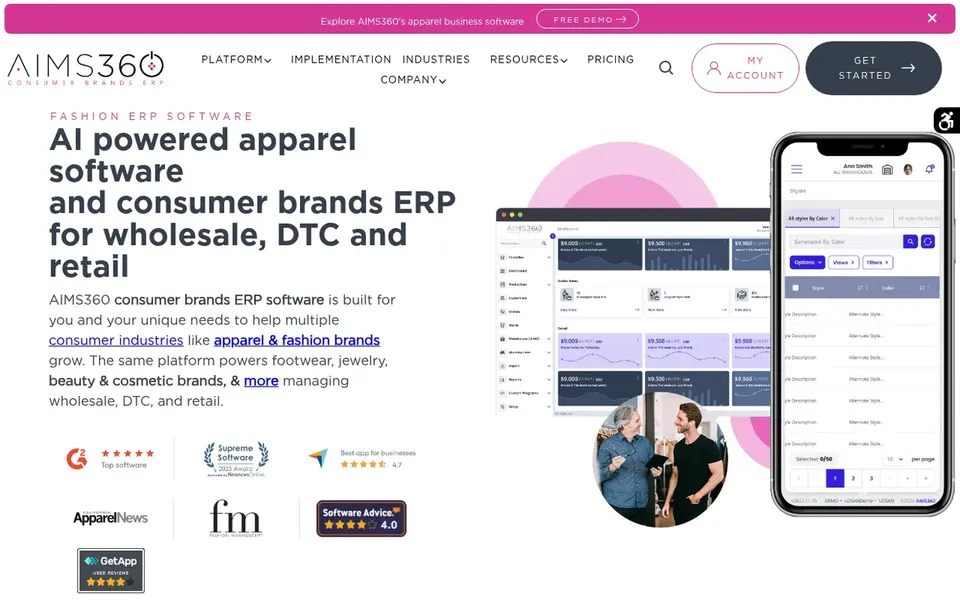
AIMS360 makes the most sense for apparel brands needing omnichannel ERP. It supports wholesale, DTC and retail channels, with Shopify and EDI connections pitched at brands selling to numerous retailers. In daily use, consider AIMS360 when wholesale accounts, EDI and direct channels all have to run from the same product and order data.
Best features of AIMS360: Links Shopify and EDI workflows.
Trade-offs to know: Apparel-specific focus may not suit other industries.
In practice, businesses with very straightforward catalogs might prefer a lighter inventory tool. Since AIMS360 is built around apparel and consumer brands, companies outside that space may find it less relevant. AIMS360 does not show a starting price in this comparison, so check the vendor site for current pricing. Free plan details: Not stated.
SAP S/4HANA is designed for scalable cloud ERP for growth. Apparel firms with expanding operations may consider it as a general ERP backbone for finance and operations.
Smaller brands commonly find the scope heavy relative to their operations. On top of that, consider it when long-term scalability and a modular cloud ERP are more important than fashion-specific features. SAP S/4HANA shows no starting price here, so confirm the cost on the vendor site. Free access: Not stated.
Drawbacks to consider: General ERP instead of fashion-specific.
Microsoft Dynamics 365 is built with CRM and ERP in one suite in mind. The breadth of the suite can make module selection a project in itself. On top of that, pick it when Microsoft integration and a combined CRM and ERP approach matter more than out-of-the-box apparel features.
Points against: Suite breadth can complicate selection.
Dynamics 365 is not apparel-specific, so fashion requirements like line sheets and size grids may need configuration or extras. For everyday use, Microsoft Dynamics 365 supplies CRM and ERP business applications described as agentic, connecting teams, processes and data. Check the vendor site for Microsoft Dynamics 365 pricing; none is listed in this comparison. On free options: Not stated.
Confirm the entry price on the vendor page. For NetSuite, AIMS360, SAP S/4HANA and Microsoft Dynamics 365 that means a quote rather than a fixed price.
Run a trial of ApparelMagic with real work before paying for a year; your own workflow is the best test.
Before choosing ApparelMagic, weigh its main limit: wide module set may take time to learn.
Add up seats, add-ons and usage charges for SAP S/4HANA before comparing it with cheaper entries.
Before rolling out AIMS360, verify the integrations your workflow depends on.
How we picked
The comparison looks at four things: starting price, free access, how well the feature set matches apparel management software, and the main limit of each tool. Plan names, prices and limits change often. Treat the figures here as a starting point and verify them with the vendor. We ordered the tools by general fit, then by how clearly pricing is shown, then by free access. A buyer with unusual needs may reorder them.
Every price and plan detail on this page comes from the vendors’ own websites. We did not run hands-on tests unless the text says so, and we do not publish star ratings or review scores. See how we score and our disclosure.
Keep your shortlist in one place
Paste prices, trial dates and notes from this guide into Ainotely, our AI note app. It files them into a topic and pulls out tasks like “cancel trial by Friday”. Free 7-day trial, no card needed.
Does any tool for apparel management software here have a free plan?
A permanent free plan is not offered by ApparelMagic, Microsoft Dynamics 365 or the other tools here. ApparelMagic offer a trial. Plan a short evaluation period instead.
What is the cheapest option for apparel management software in this list?
On published monthly entry prices, ApparelMagic is the lowest here at $337 per month premium annually. Entry price is only part of the cost, because seats, add-ons and billing terms can change the total.
Is ApparelMagic the right pick for everyone comparing apparel management software?
No single tool suits every team. ApparelMagic comes first because it fits Fashion ERP with PLM and CRM, while NetSuite suits broad cloud ERP with financials and AIMS360 suits apparel brands needing omnichannel ERP. Match the tool to your own size, budget and workflow before deciding.
What should apparel brands look for in management software?
Look for native handling of styles, sizes and seasons, plus inventory and order workflows that match your channels. If you sell wholesale and direct, confirm EDI and ecommerce connections. Accounting and reporting depth matter once order volume grows.
Can I try these options before paying?
Often, yes. ApparelMagic offers a free trial. Use your own data and a real task during the test, and check what the free tier or trial limits before you rely on it.