Our first pick is Informatica Data Quality, best for enterprise cloud data management suites. Listed starting prices: Soda from $750 per month. For a different need, Soda covers automatic quality checks down to records and Bigeye covers large enterprises needing lineage and AI governance. Prices, free plans and limits for all 6 tools follow.
Short on time? The summary and table above give the quick view of 6 data observability software for remote teams, and the profiles that follow give the detail behind each entry.
Key takeaways
Informatica Data Quality sits first on this list: enterprise cloud data management suites.
A fair warning about Bigeye: positioned chiefly at large enterprises.
Soda is the lowest-priced starter here at $750 per month.
Atlan fits governed context layer and data catalog.
Where Informatica Data Quality fits: enterprise cloud data management suites. Informatica, now part of Salesforce, provides enterprise cloud data management options targeted at powering AI with AI-ready data, and its data quality capabilities sit within that wider portfolio.
What to check first: Suite complexity can slow setup.
From a buyer's view, as part of a wide enterprise suite, adoption can involve more configuration and coordination than standalone quality tools. Informatica Data Quality does not show a starting price in this comparison, so check the vendor site for current pricing. Free access: Not stated.
Best for: Automatic quality checks down to records
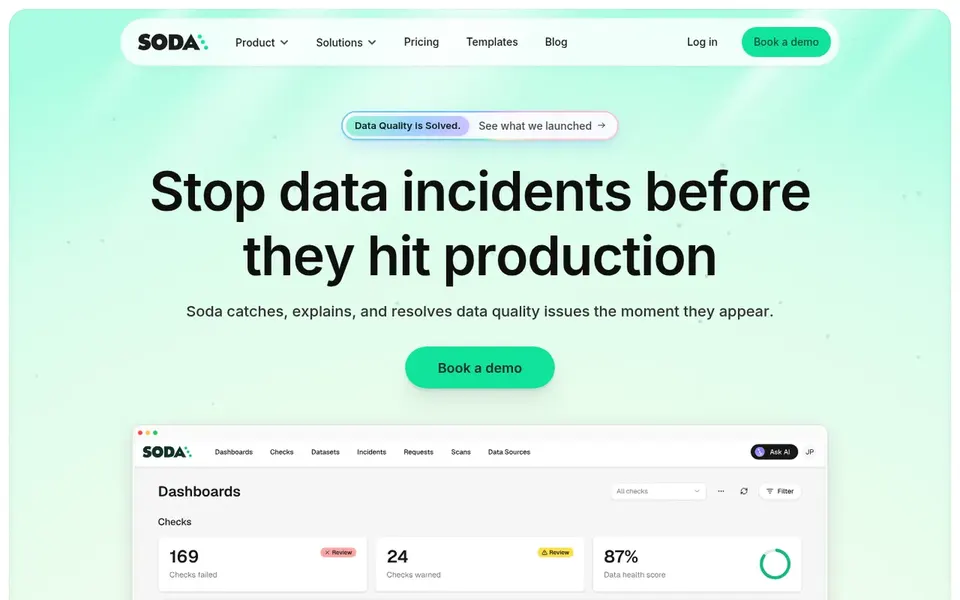
Soda is aimed squarely at automatic quality checks down to records. That makes it a reasonable fit for remote teams that want checks defined and run automatically instead of through manual spot checks, particularly where engineers already own data reliability and prefer quality rules expressed close to their pipelines.
Teams wanting a single product spanning catalog, governance and quality should also look at Atlan or Collibra before deciding. Entry price for Soda: $750 per month. A free plan is available with Soda.
Best for: Large enterprises needing lineage and AI governance
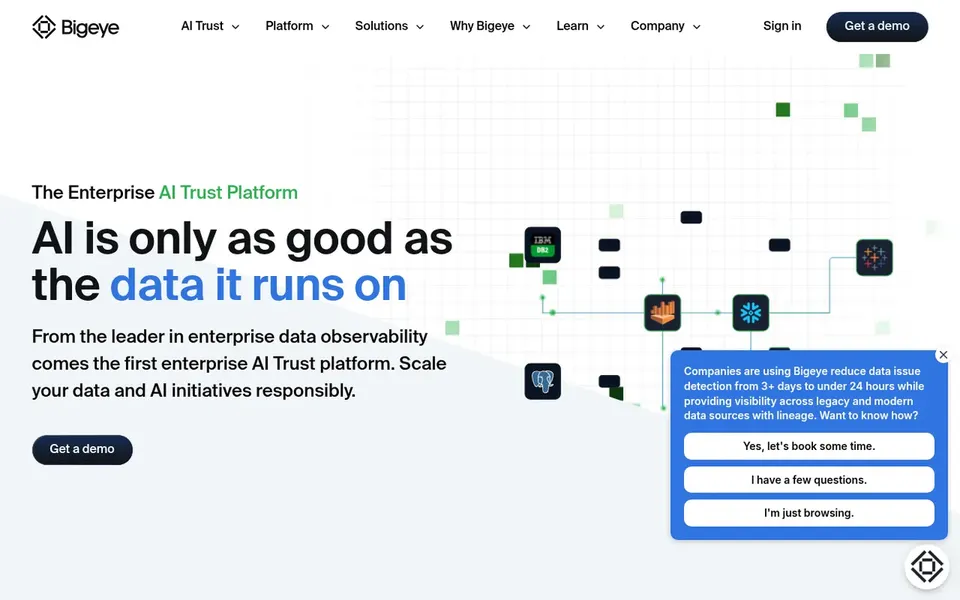
Think of Bigeye for large enterprises needing lineage and AI governance. For remote teams inside larger organizations, that combination helps when troubleshooting needs to trace an issue back through upstream systems and when AI initiatives need oversight of the data feeding them.
The enterprise focus means smaller teams may find the scope heavier than necessary, and setup can demand coordination across data and product owners. If you chiefly need quick, automatic quality checks on individual tables, a narrower tool like Soda may be more straightforward to adopt. This comparison lists no price for Bigeye; ask the vendor. Free plan details: Not stated.
Points against: Breadth may be more than small teams need.
Think of Anomalo for teams centred on anomaly detection. It tends to appeal to analytics and data engineering groups that require monitoring across tables they own but cannot inspect manually each day.
It can complement warehouse and transformation tooling already in place. Check the vendor site for Anomalo pricing; none is listed in this comparison. Free plan details: Not stated.
What to check first: Integration coverage should be confirmed.
Best for: Automatic anomaly detection across pipelines
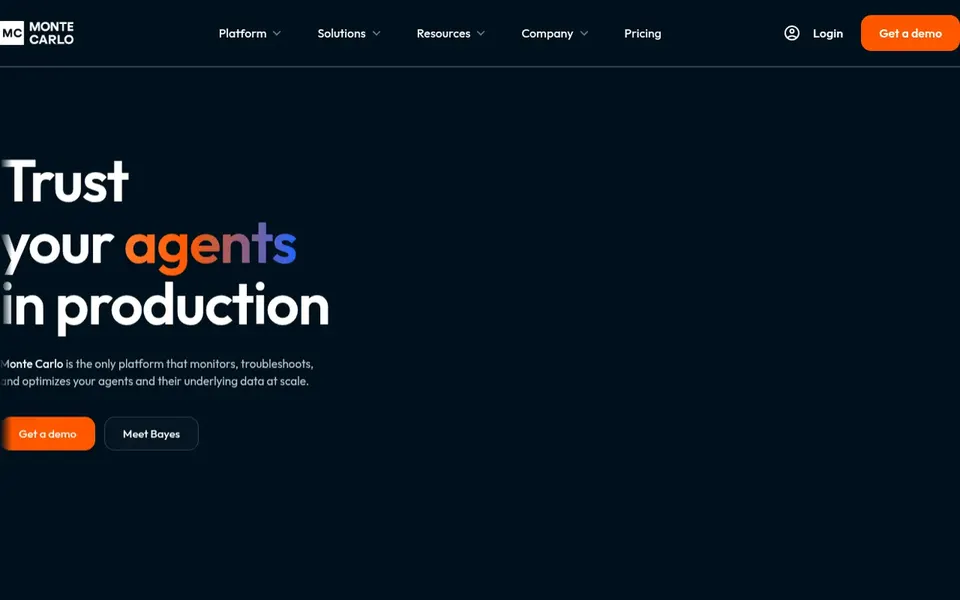
Where Monte Carlo fits: automatic anomaly detection across pipelines. Monte Carlo is a well-known data observability platform built around automatic detection of data quality and freshness issues across pipelines and warehouses.
What to check first: Excerpt details were restricted for verification.
It is usually associated with machine learning driven monitoring, which suits remote teams that cannot watch every table manually and want alerts routed to the people who own the data. No starting price is listed for Monte Carlo here; confirm pricing on the vendor site. On free options: Not stated.
Atlan is aimed squarely at governed context layer and data catalog. For remote teams, that means shared definitions and discoverability that cut back-and-forth, making it a fit for organizations that struggle with scattered documentation and want a governed catalog as the backbone of their data work instead of only alerting.
Honest limits: Adoption relies on metadata discipline.
More specifically, Atlan is not primarily a pipeline anomaly detector. So teams needing automatic freshness and volume monitoring should pair it with an observability tool. Atlan shows no starting price here, so confirm the cost on the vendor site. Trial and free access: Not stated.
Ask Informatica Data Quality, Bigeye, Anomalo and others for a written quote, since no starting price is shown.
Test the free plan from Soda against your real workload before relying on it.
Read the limits listed for Informatica Data Quality first: suite complexity can slow setup.
Ask whether Bigeye integrates with your current software, and whether that comes standard or as an add-on.
See whether Anomalo offers onboarding or training, and whether it is included in the price.
How we picked
Each tool was reviewed on what its vendor publishes: price, plan limits, core features and stated drawbacks. We did not run hands-on tests. Where a price is missing, the vendor does not list one publicly or ties it to a quote. Always confirm before budgeting. The ranking is editorial: typical fit first, then clear pricing, then free access. If your needs are unusual, read the profiles rather than relying on position. The same method was used for each of the 6 data observability software for remote teams picks on this page.
Every price and plan detail on this page comes from the vendors’ own websites. We did not run hands-on tests unless the text says so, and we do not publish star ratings or review scores. See how we score and our disclosure.
Keep your shortlist in one place
Paste prices, trial dates and notes from this guide into Ainotely, our AI note app. It files them into a topic and pulls out tasks like “cancel trial by Friday”. Free 7-day trial, no card needed.
Observability tools like Monte Carlo and Anomalo focus on detecting unexpected changes across pipelines, whereas quality products for example Soda and Informatica Data Quality emphasize rules and checks on the data itself. In practice, numerous teams use both together.
Can I try these tools before paying?
Often, yes. Soda has a free plan. Use your own data and a real task during the test, and check what the free tier or trial limits before you rely on it. The 6 tool cards above repeat this per product for data observability software for remote teams, with the listed price or "pricing on request".
How are the tools for data observability software for remote teams ordered?
The order follows typical fit for data observability software for remote teams, with Informatica Data Quality first and Atlan last, then price clarity and free access. It is editorial judgement, not a score, so another team could rank the tools differently.
Do these tools publish their prices?
Not all of them. Informatica Data Quality, Bigeye, Anomalo and others publish no starting price, so expect a quote request for those. The rest, Soda included, show a starting price, though seats and billing terms still change the final cost.
Is Informatica Data Quality the right pick for everyone comparing data observability software for remote teams?
No single tool suits every team. Informatica Data Quality comes first because it fits enterprise cloud data management suites, while Soda suits automated quality checks down to records and Bigeye suits large enterprises needing lineage and AI governance. Match the tool to your own size, budget and workflow before deciding.