TigerGraph is the first pick on this list for live analytics at larger scale. Listed starting prices: Neo4j from $0.09 per GB per hour. OrientDB is better for multi-model open source projects, and Amazon Neptune is better for AWS-centered managed graph workloads. The other 3 tools in the list cover narrower or pricier cases.
If you are comparing graph databases for small business, this page covers 6 tools in one place: what each is best for, what it costs to start, whether it has a free plan, and the main limit to know about.
Key takeaways
TigerGraph takes the first slot, best suited to live analytics at bigger scale.
Free plans exist at 3 of 6 tools (Amazon Neptune, ArangoDB, Neo4j).
Memgraph fits in-memory live graph work.
For TigerGraph, OrientDB, Amazon Neptune and others, you have to request a quote because no starting price is shown.
Check the limits for TigerGraph before you commit: enterprise focus may overwhelm small teams.
TigerGraph is designed for live analytics at bigger scale. An expanding small business with heavy relationship analysis, for example supplier networks or risk patterns, may value its analytics orientation.
The main drawbacks: More setup complexity.
As for the details, buyers should check that the feature set matches their actual workload instead of the wide marketing scope. On top of that, the enterprise positioning can mean more configuration and operational overhead than a small team wants. TigerGraph does not show a starting price in this comparison, so check the vendor site for current pricing. As for free access: Free trial.
OrientDB makes the most sense for multi-model open source projects. OrientDB is a multi-model database that deals with graph and document style data in one engine.
Drawbacks to consider: Documentation can lag.
If you want deep managed services or a large pool of tutorials, consider the other entries first. OrientDB does not show a starting price in this comparison, so check the vendor site for current pricing. As for free access: Not stated.
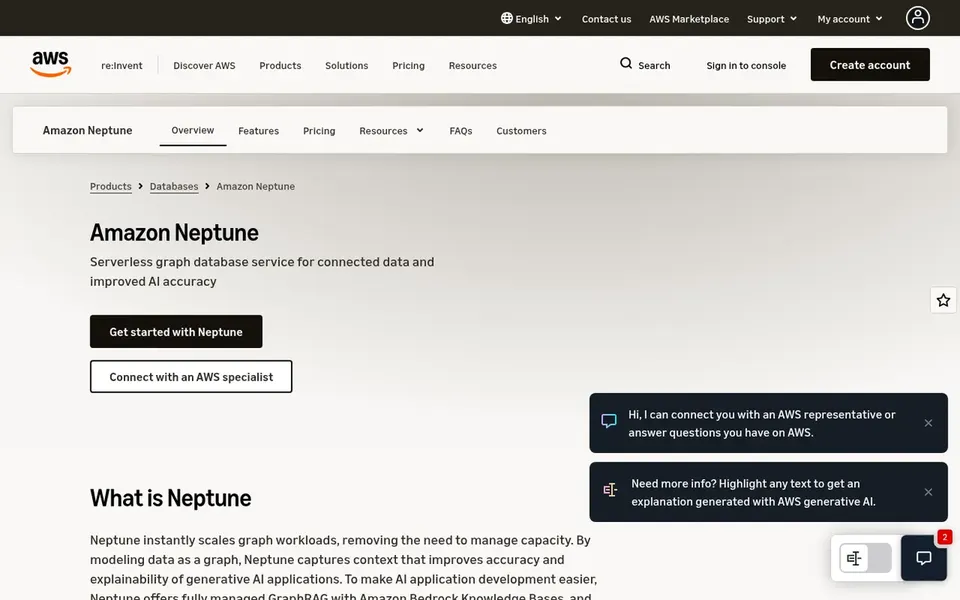
Amazon Neptune is aimed squarely at AWS-centered managed graph workloads. A small business already running workloads on AWS can keep data and access controls in one place and avoid operating graph infrastructure straight.
The service is closely tied to AWS, so teams on other clouds may find the fit awkward. Amazon Neptune does not show a starting price in this comparison, so check the vendor site for current pricing. Amazon Neptune offers a free plan.
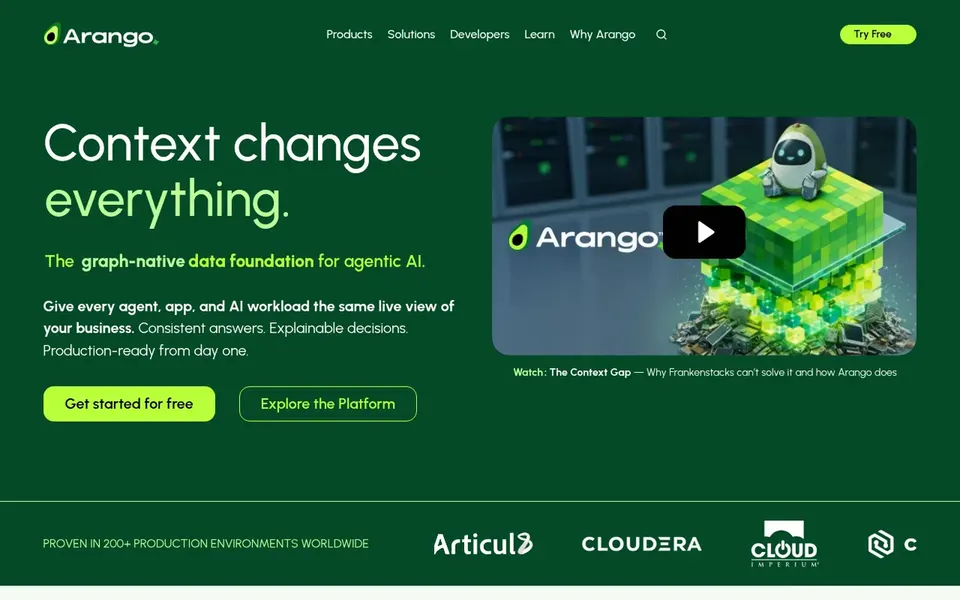
ArangoDB makes the most sense for unified context for AI applications. ArangoDB presents itself as a contextual data system, saying AI agents, assistants and apps need unified, current and trusted business context to reason, decide and act. More specifically, if you only need a straightforward graph store, a narrower tool may be simpler to adopt.
The vendor messaging centers on AI context, so buyers with plain reporting needs may find the value less obvious. Understanding the product's data model takes some study. This comparison lists no price for ArangoDB; ask the vendor. ArangoDB offers a free plan.
In short, Neo4j is for general purpose connected data. Neo4j describes itself as a graph intelligence product that keeps data as connected records and runs complicated queries at scale and speed.
Watch-outs: Needs graph modeling skills.
For a small business mapping relationships like customers, orders and suppliers, this approach can ease questions that would need numerous joins in a relational database. On cost, Neo4j starts like this: $0.09 per GB per hour. Neo4j includes a free tier.
Memgraph is designed for in-memory live graph work. Teams already familiar with Cypher will find the transition simpler.
It is targeted at live and AI workloads instead of general reporting. Check the vendor site for Memgraph pricing; none is listed in this comparison. As for free access: Free trial.
Points against: Less suited to cold archival data.
Confirm the entry price on the vendor page. For TigerGraph, OrientDB, Amazon Neptune and others that means a quote rather than a fixed price.
Check what the free option really includes: Amazon Neptune, ArangoDB and Neo4j offer a free plan, and usage caps differ.
Run a trial of TigerGraph and Memgraph with real work before paying for a year; your own workflow is the best test.
Before choosing TigerGraph, weigh its main limit: enterprise focus may overwhelm small teams.
Check whether the features you need in ArangoDB sit on the entry plan or only on higher tiers.
Add up seats, add-ons and usage charges for Memgraph before comparing it with cheaper entries.
How we picked
Each tool was reviewed on what its vendor publishes: price, plan limits, core features and stated drawbacks. We did not run hands-on tests. Treat prices as a snapshot: vendors change plans often, so check the vendor site for the figure that applies today. We ordered the tools by general fit, then by how clearly pricing is shown, then by free access. A buyer with unusual needs may reorder them. Keep it in mind while reading the 6 graph databases for small business profiles on this page.
Every price and plan detail on this page comes from the vendors’ own websites. We did not run hands-on tests unless the text says so, and we do not publish star ratings or review scores. See how we score and our disclosure.
Keep your shortlist in one place
Paste prices, trial dates and notes from this guide into Ainotely, our AI note app. It files them into a topic and pulls out tasks like “cancel trial by Friday”. Free 7-day trial, no card needed.
Model a small slice of your real data and run the queries your business would actually ask. Confirm current capabilities and terms straight with the vendor before deciding.
What should a small business look for in a graph database?
Start with the query language your team can learn rapidly, then check the deployment model and how much operational work you can absorb. Also confirm that the data model matches your connected-data questions.
Can a graph database deal with AI and live use cases?
Multiple choices position themselves for these workloads. TigerGraph targets live analytics and connection analysis. Match the tool to the specific workload you plan to run.
Do these tools publish their prices?
Not all of them. TigerGraph, OrientDB, Amazon Neptune and others publish no starting price, so expect a quote request for those. The rest, Neo4j included, show a starting price, though seats and billing terms still change the final cost.
Is TigerGraph the right pick for everyone comparing graph databases for small business?
No single tool suits every team. TigerGraph comes first because it fits real-time analytics at larger scale, while OrientDB suits multi-model open source projects and Amazon Neptune suits AWS-centered managed graph workloads. Match the tool to your own size, budget and workflow before deciding.
Which options for graph databases for small business have a free plan?
Amazon Neptune, ArangoDB and Neo4j offer a free plan in this list. Free plans usually cap users, projects or features, so check the limits on the vendor page. Several others offer a trial instead.