This list puts Google Cloud Healthcare API first for managing FHIR, HL7v2 and DICOM data. Listed starting prices: Tableau from $15 per user a month. Oracle Health fits secure, people-centric healthcare data options; Health Catalyst fits dedicated healthcare analytics improvement programs. Details, prices and limits for the rest of the 6 tools are below.
Short on time? The summary and table above give the quick view of 6 healthcare analytics platforms, and the profiles that follow give the detail behind each entry.
Key takeaways
Number one here is Google Cloud Healthcare API, a fit for managing FHIR, HL7v2 and DICOM data.
Epic Systems fits organizations already on Epic clinical software.
Tableau is the only tool of the 6 with a free plan.
The lowest published monthly entry price here is $15 per user per month, from Tableau.
Google Cloud Healthcare API is a good fit for managing FHIR, HL7v2 and DICOM data. Google Cloud Healthcare API is a secure, compliant, completely managed service for managing healthcare data in FHIR, HL7v2 and DICOM formats, plus unstructured text in natural language.
For everyday use, organizations use it as the data layer beneath reporting and machine learning work. It is an API and data service, not a dashboard or analytics application, so visualization and clinical reporting must come from other tools. Google Cloud Healthcare API shows no starting price here, so confirm the cost on the vendor site. On free options: Not stated.
Drawbacks to consider: Needs cloud engineering effort.
Best for: Secure, people-centric healthcare data options
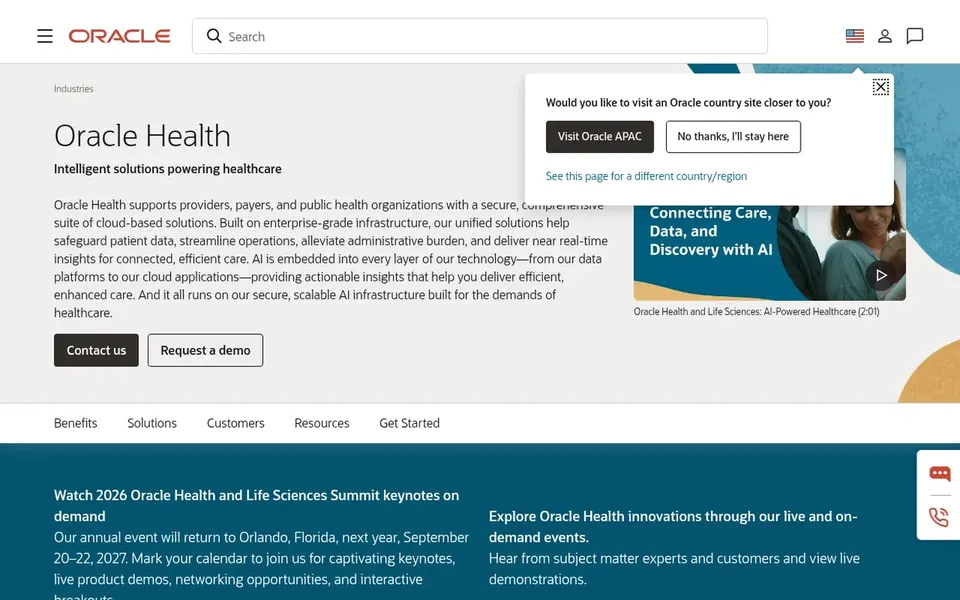
Oracle Health serves secure, people-centric healthcare data options. It fits healthcare organizations looking for a vendor with wide infrastructure and application reach that also wants analytics connected to clinical and operational workflows.
As for the details, buyers commonly pair it with existing Oracle technology investments. Oracle Health does not show a starting price in this comparison, so check the vendor site for current pricing. Trial and free access: Not stated.
What users get: Emphasis on healthcare insights.
What to check first: Overlapping product lines can confuse buyers.
Best for: Dedicated healthcare analytics improvement programs
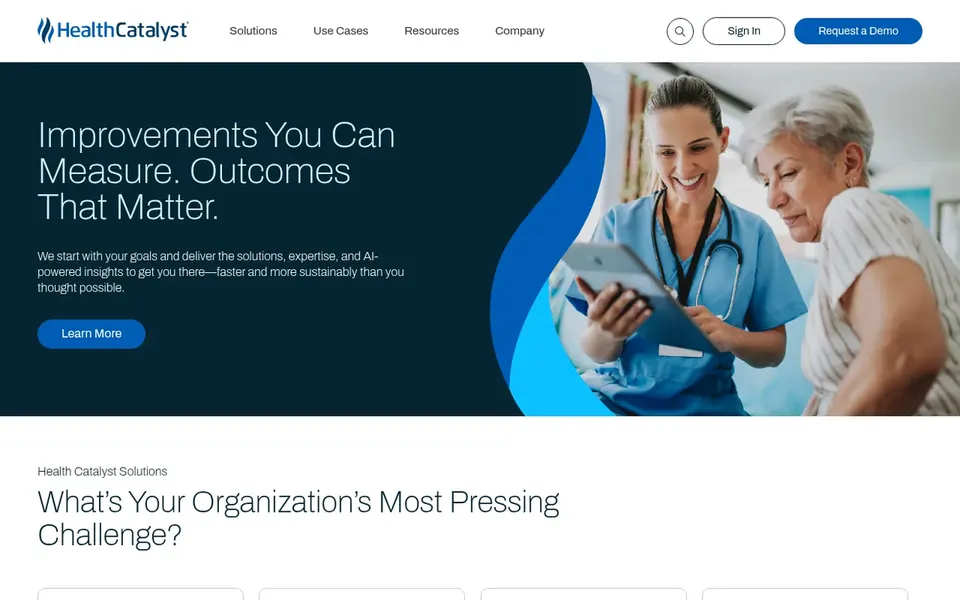
Health Catalyst is aimed squarely at dedicated healthcare analytics improvement programs. As for the details, numerous buyers combine its technology with its advisory services.
Points against: Implementation relies on data readiness.
Its healthcare specialization means it is not the natural choice for organizations outside the sector or for teams wanting only light visualization. In daily use, success also relies on how clean and accessible your underlying data already is. Check the vendor site for Health Catalyst pricing; none is listed in this comparison. Trial and free access: Not stated.
Databricks is designed for large-scale data engineering and AI. Databricks supplies a unified product for data, analytics and AI, with a data-centric approach that eases ETL, data warehousing, governance and AI work. Beyond that, the system is infrastructure instead of a healthcare analytics product, so clinical logic, dashboards and compliance workflows must be built on top.
Reasons to shortlist it: Governance built into the system; analytics and AI product.
Organizations without dedicated engineering staff should consider managed healthcare analytics vendors instead. Healthcare organizations use it to consolidate large volumes of clinical, claims and operational data before building models and reports. Pricing for Databricks is not stated here, so ask the vendor for current figures. On free options: Not stated. Where it falls short: Not a clinical application.
Best for: Self-service visual analysis of health data
Tableau is built with self-service visual analysis of health data in mind. Tableau is business intelligence and analytics software that helps people see and understand their data, link to almost any database, and build visualizations by dragging and dropping.
Where it falls short: Not a clinical system itself.
It suits analyst teams that want adaptable visual exploration without a healthcare-only vendor. Entry price for Tableau: $15 per user per month. Tableau has a free plan.
Best for: Organizations already on Epic clinical software
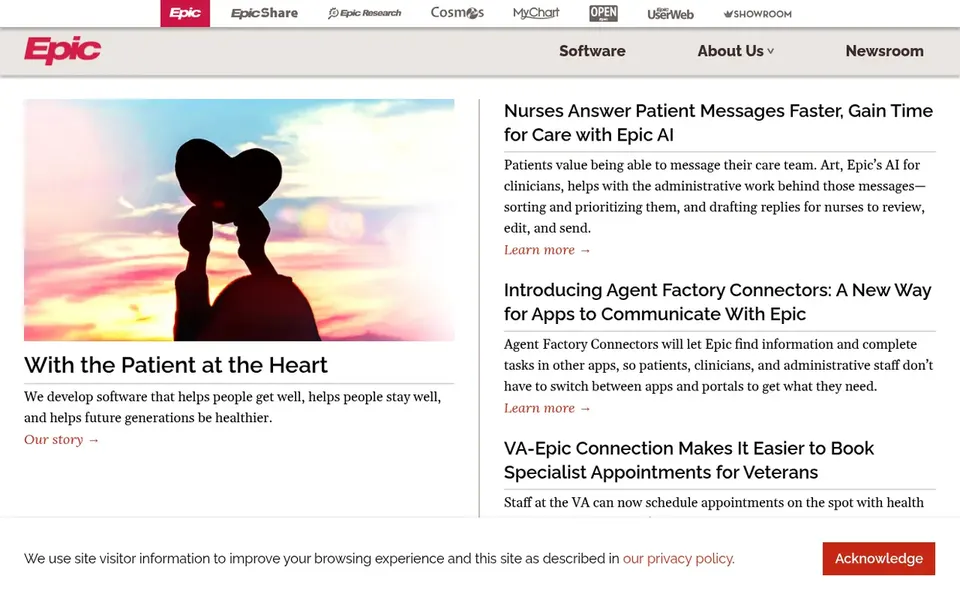
Epic Systems makes the most sense for organizations already on Epic clinical software. Epic Systems develops software geared toward helping people get well, stay well and support future generations.
Where it is weaker: Best value inside Epic environments.
Its analytics capabilities sit alongside its clinical records environment, so organizations already running Epic workflows can analyze patient and operational data without stitching together separate systems. More specifically, since the system is built around Epic's own ecosystem, organizations running other clinical systems may find integration and fit harder to justify. Check the vendor site for Epic Systems pricing; none is listed in this comparison. Free access: Not stated.
Get a written quote from Google Cloud Healthcare API, Oracle Health, Health Catalyst and others; the list shows no starting price for them.
Test the free plan from Tableau against your real workload before relying on it.
Before choosing Google Cloud Healthcare API, weigh its main limit: developer-oriented, not end-user BI.
Before rolling out Health Catalyst, verify the integrations your workflow depends on.
Pick one real project and run it in Google Cloud Healthcare API first; a small pilot shows fit faster than a checklist.
How we picked
The comparison looks at four things: starting price, free access, how well the feature set matches healthcare analytics platforms, and the main limit of each tool. Figures are shown as the vendors publish them. Billing terms, seat minimums and add-ons can change the real cost. The sequence is a judgement call: typical use case first, then pricing transparency, then free access. Use the profiles to check fit.
Every price and plan detail on this page comes from the vendors’ own websites. We did not run hands-on tests unless the text says so, and we do not publish star ratings or review scores. See how we score and our disclosure.
Keep your shortlist in one place
Paste prices, trial dates and notes from this guide into Ainotely, our AI note app. It files them into a topic and pulls out tasks like “cancel trial by Friday”. Free 7-day trial, no card needed.
How are the tools for healthcare analytics platforms ordered?
Google Cloud Healthcare API sits first and Epic Systems last because the order follows typical fit for healthcare analytics platforms, then price clarity and free access. It is a judgement call, so read each profile for fit and limits.
Is Google Cloud Healthcare API the right pick for everyone comparing healthcare analytics platforms?
No single tool suits every team. Google Cloud Healthcare API comes first because it fits managing FHIR, HL7v2 and DICOM data, while Oracle Health suits secure, people-centric healthcare data solutions and Health Catalyst suits dedicated healthcare analytics improvement programs. Match the tool to your own size, budget and workflow before deciding.
Do these tools publish their prices?
Not all of them. Google Cloud Healthcare API, Oracle Health, Health Catalyst and others publish no starting price, so expect a quote request for those. The rest, Tableau included, show a starting price, though seats and billing terms still change the final cost.
What should healthcare organizations look for in an analytics platform?
Prioritize support for standard clinical data formats, clear governance and privacy controls, and a path from raw data to usable dashboards. Also confirm whether you need a clinical-system-native tool or a general BI layer on top of a warehouse.
What is the cheapest option for healthcare analytics platforms in this list?
On published monthly entry prices, Tableau is the lowest here at $15 per user per month. Entry price is only part of the cost, because seats, add-ons and billing terms can change the total. For the full picture, the cards above cover all 6 entries of this healthcare analytics platforms list, including price, free plan and limits.