Looker leads the list, best for embedded analytics and semantic modeling. Listed starting prices: Tableau from $15 per user a month. TIBCO Spotfire fits complicated industry-specific analytics; Tableau fits visual analytics and dashboards. Prices, free plans and limits for all 5 tools follow.
Short on time? The summary and table above give the quick view of 5 operational reporting software for logistics, and the profiles that follow give the detail behind each entry.
Key takeaways
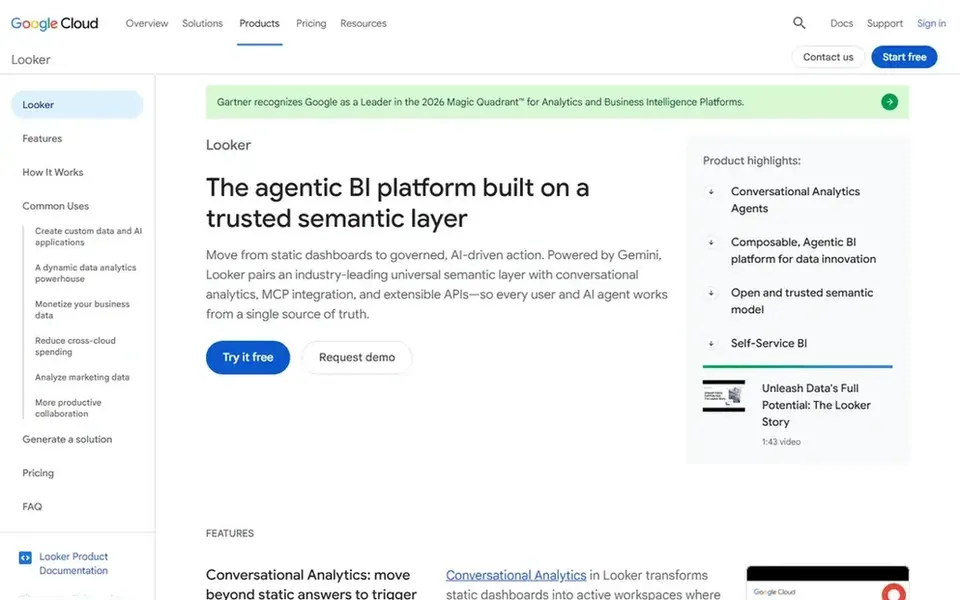
Number one here is Looker, a fit for embedded analytics and semantic modeling.
Before buying Domo, weigh this: may need training for full utilization.
Just one of the 5 tools, Tableau, has a free plan.
Tableau is the lowest-priced starter here at $15 per user per month.
Best for: Embedded analytics and semantic modeling
Looker is built with embedded analytics and semantic modeling in mind. If you prefer a more self-service, visual-first approach without deep modeling, other tools might be more straightforward to adopt.
Trade-offs to know: May be complicated for small teams.
More specifically, for logistics, it makes it possible for consistent reporting across departments by defining metrics once and reusing them. Looker does not show a starting price in this comparison, so check the vendor site for current pricing. Trial and free access: Not stated.
TIBCO Spotfire targets complicated industry-specific analytics. Spotfire's advanced capabilities come with a steeper ramp-up time, and it may need specialized skills to completely use.
From a buyer's view, if your team lacks dedicated analysts, a more straightforward BI tool could be more practical. In daily use, in logistics, it can be used for deep analysis of routes, demand patterns, or risk factors. Pricing for TIBCO Spotfire is not stated here, so ask the vendor for current figures. On free options: Not stated.
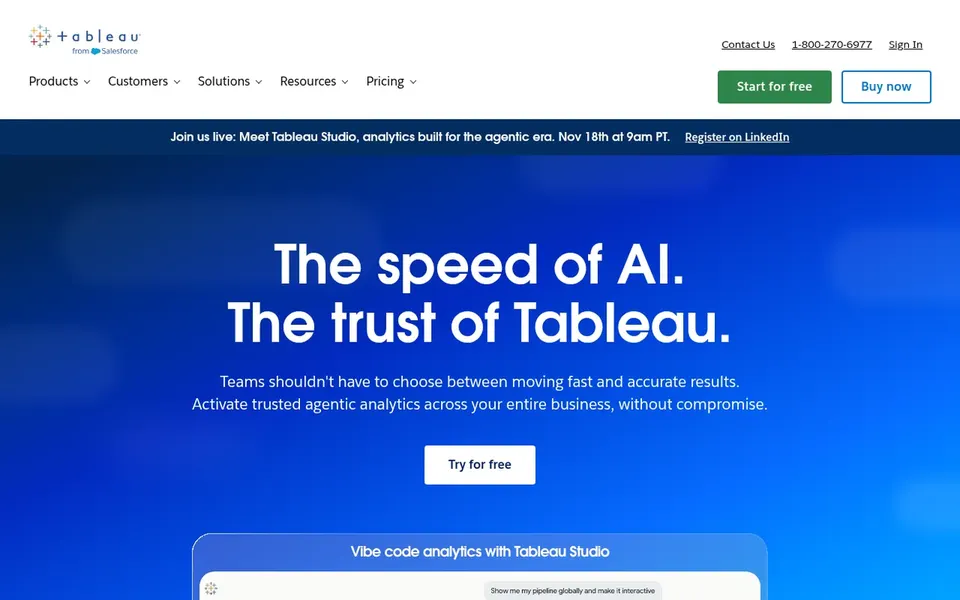
Where Tableau fits: visual analytics and dashboards. For logistics, it supports building interactive dashboards that track key metrics like delivery times and inventory levels. It may not be the best choice if you need deep embedded analytics within customer-facing applications.
In practice, Tableau is a business intelligence and analytics system that lets users link to almost any database, drag-and-drop to build visualizations, and share insights with a click. Consider alternatives if your priority is a governed semantic layer or AI-driven insights from day one. Price to start with Tableau: $15 per user per month. Tableau has a free plan.
Honest limits: Can need training for advanced use.
Domo serves end-to-end data journey with AI. Domo supplies AI and data products that strengthen the whole data journey, from connecting and moving data to preparing it for exploration and accelerating insights. More specifically, consider more straightforward alternatives if you primarily need entry-level dashboards without deep data integration.
In practice, in logistics, this can simplify reporting by integrating data from several operational systems and supplying a unified view. It may not be the most economical choice for very small operations. Domo does not show a starting price in this comparison, so check the vendor site for current pricing. As for free access: Free trial.
Drawbacks to consider: Can be complicated to configure initially.
Where Sisense fits: embedded analytics with adaptability. If you need a traditional BI product for internal analysts, other choices may be more straightforward.
What to check first: Focus on embedding may not suit all.
Sisense does not show a starting price in this comparison, so check the vendor site for current pricing. On free options: Free trial.
Confirm the entry price on the vendor page. For Looker, TIBCO Spotfire, Domo and Sisense that means a quote rather than a fixed price.
Test the free plan from Tableau against your real workload before relying on it.
Use real work to test the free trial from Domo and Sisense, rather than a demo project.
Read the limits listed for Looker first: needs setup of LookML models.
Before rolling out Domo, verify the integrations your workflow depends on.
Look at the renewal terms for Tableau: auto-renewal, notice periods and price changes can matter more than the first-year price.
How we picked
Ainotely looked at what each vendor publishes: pricing, plan limits, feature coverage for operational reporting software for logistics and stated drawbacks. No hands-on testing is claimed. Where a price is missing, the vendor does not list one publicly or ties it to a quote. Always confirm before budgeting. The ranking is editorial: typical fit first, then clear pricing, then free access. If your needs are unusual, read the profiles rather than relying on position.
Every price and plan detail on this page comes from the vendors’ own websites. We did not run hands-on tests unless the text says so, and we do not publish star ratings or review scores. See how we score and our disclosure.
Keep your shortlist in one place
Paste prices, trial dates and notes from this guide into Ainotely, our AI note app. It files them into a topic and pulls out tasks like “cancel trial by Friday”. Free 7-day trial, no card needed.
How are the tools for operational reporting software for logistics ordered?
Looker sits first and Sisense last because the order follows typical fit for operational reporting software for logistics, then price clarity and free access. It is a judgement call, so read each profile for fit and limits.
Can these tools manage live logistics data?
Numerous modern BI systems support live or near-real-time data connections, but capabilities vary. Check each vendor's documentation for data refresh choices and streaming support to ensure timely reporting for your operations.
Can I try these tools before paying?
Often, yes. Tableau has a free plan and Domo and Sisense offer a free trial. Use your own data and a real task during the test, and check what the free tier or trial limits before you rely on it. Each of the 5 options in this operational reporting software for logistics guide has its own card above with the price, free plan and limits.
What is operational reporting software for logistics?
Operational reporting software for logistics helps teams track and analyze daily activities like shipments, inventory, and delivery performance. It usually comes with dashboards, data visualization, and connectivity to logistics to offer live insights.
What is the cheapest option for operational reporting software for logistics in this list?
On published monthly entry prices, Tableau is the lowest here at $15 per user per month. Entry price is only part of the cost, because seats, add-ons and billing terms can change the total. All 5 picks in this operational reporting software for logistics comparison show their pricing, free plan details and main limits on the cards above.
Is Looker the right pick for everyone comparing operational reporting software for logistics?
No single tool suits every team. Looker comes first because it fits embedded analytics and semantic modeling, while TIBCO Spotfire suits complex industry-specific analytics and Tableau suits visual analytics and dashboards. Match the tool to your own size, budget and workflow before deciding.