If you need optical design search and optimization, SYNOPSYS is the first tool to look at here. TracePro fits illumination and stray light analysis; Zemax OpticStudio fits general optical, illumination, and laser design. The full list of 6 tools follows, with prices and free plan facts.
Ainotely compared 6 tools for optical design software. The goal is a practical shortlist: published prices, free plan facts, best-fit use cases and honest limits for every entry.
Key takeaways
Number one here is SYNOPSYS, a fit for optical design search and optimization.
The main caution on Zemax OpticStudio: wide feature set may take time to learn.
Neither SYNOPSYS nor Ansys Speos, nor any of the other 4 tools, has a permanent free plan; trials and quotes are the norm.
Ansys Speos suits optical system design and validation.
Pricing across the list, from SYNOPSYS to Ansys Speos, is by quote only.
Choose SYNOPSYS for optical design search and optimization. Pick SYNOPSYS when optical search and optimization are central and a perpetual license suits your procurement.
Where it falls short: Narrower than multiphysics systems.
The vendor notes a perpetual license at a competitive rate. From a buyer's view, teams that want a single system for structural, thermal, and optical effects should compare broader simulation choices. SYNOPSYS shows no starting price here, so confirm the cost on the vendor site. Free access: Not stated.
In short, TracePro is for illumination and stray light analysis. TracePro from Lambda Research Corporation models illumination and stray light with Monte Carlo ray tracing. More specifically, pick TracePro when illumination and stray light modeling are the core questions.
As for the details, if your project needs combined optical and mechanical simulation, check how it suits your workflow. TracePro is centered on illumination and stray light, so teams that primarily need lens layout and optimization may prefer a lens design package. TracePro shows no starting price here, so confirm the cost on the vendor site. Free options: Not stated.
Points against: May not replace a dedicated lens design tool.
Best for: General optical, illumination, and laser design
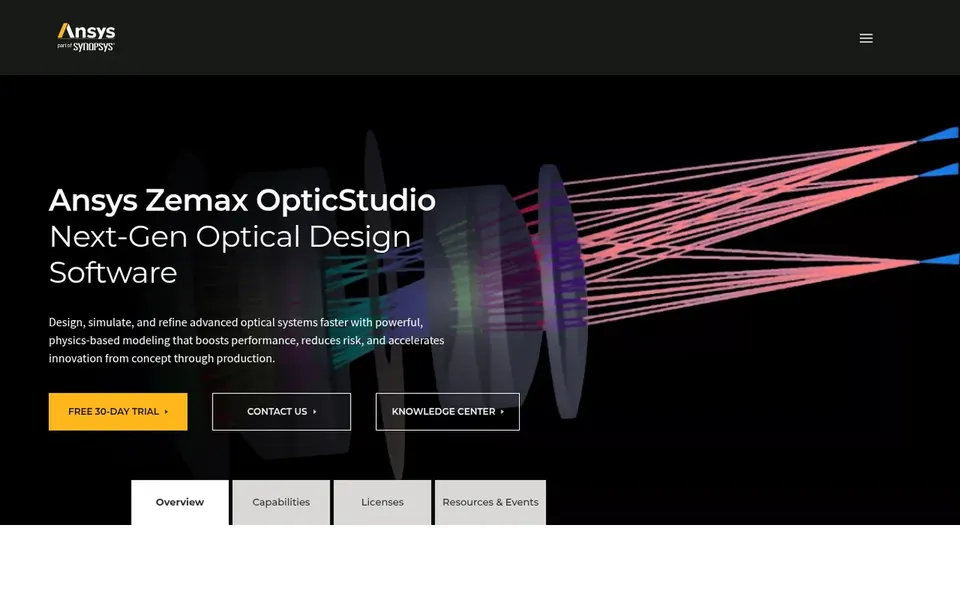
Zemax OpticStudio makes the most sense for general optical, illumination, and laser design. Ansys Zemax OpticStudio is described as the standard software for optical, illumination, and laser system design. It lets you simulate, optimize, and tolerance designs within a single environment.
More specifically, choose OpticStudio when you want an established optical design environment that brings simulation, optimization, and tolerancing together. For everyday use, if your work is primarily illumination or stray light analysis, a dedicated tool may be more direct. Check the vendor site for Zemax OpticStudio pricing; none is listed in this comparison. On free options: Not stated.
Highlights: Simulation, optimization. Downsides: Not concentrated on multiphysics beyond optics.
Best for: Multiphysics simulation including optics
COMSOL Multiphysics is built with Multiphysics simulation including optics in mind. Choose COMSOL when coupling optics with other physics is the priority and you can invest in learning the product.
For optical work, it suits teams that require to couple optical effects with thermal, structural, or other physics in one model. Worth adding: if your primary need is optical design, a focused tool may be more efficient. COMSOL Multiphysics shows no starting price here, so confirm the cost on the vendor site. As for free access: Not stated.
Drawbacks to consider: Optical design may need add-on modules.
OSLO is aimed squarely at lens design and optimization. If you need multiphysics coupling, a general simulation platform may be a better fit.
OSLO is oriented toward lens design, so illumination and stray light studies may call for a different tool. Its vendor describes it as an established industry standard that is easy-to-learn and straightforward to use, helping move an optical project from conception through to prototype. OSLO shows no starting price here, so confirm the cost on the vendor site. Free options: Free trial.
Limits to weigh: Less emphasis on illumination and stray light.
Ansys Speos works best for optical system design and validation. Choose Speos when you need design, optimization, visualization, and validation of optical systems in one environment.
In daily use, if your work is purely lens layout and optimization, a focused lens design tool may be more direct. Ansys Speos shows no starting price here, so confirm the cost on the vendor site. Free options: Not stated.
Request quotes from SYNOPSYS, Ansys Speos and the others; the list shows no fixed prices.
Use real work to test the free trial from OSLO, rather than a demo project.
Before choosing SYNOPSYS, weigh its main limit: narrower than multiphysics products.
Confirm minimum seats and billing terms with SYNOPSYS before you commit to an annual plan.
A short pilot of Ansys Speos with your real workflow tells you more than a feature table.
How we picked
For each of the 6 tools we noted price, free plan or trial, fit for optical design software and the main limit, using vendor pages and documentation. Plan names, prices and limits change often. Treat the figures here as a starting point and verify them with the vendor. Tools are placed by general fit for optical design software, with price clarity and free access as tie-breakers. A different team can reasonably rank them differently.
Every price and plan detail on this page comes from the vendors’ own websites. We did not run hands-on tests unless the text says so, and we do not publish star ratings or review scores. See how we score and our disclosure.
Keep your shortlist in one place
Paste prices, trial dates and notes from this guide into Ainotely, our AI note app. It files them into a topic and pulls out tasks like “cancel trial by Friday”. Free 7-day trial, no card needed.
Start with SYNOPSYS if you need optical design search and optimization. TracePro is the better match for illumination and stray light analysis, and Zemax OpticStudio for general optical, illumination, and laser design. The best choice depends on budget, team size and workflow.
Is SYNOPSYS the right pick for everyone comparing optical design software?
No single tool suits every team. SYNOPSYS comes first because it fits optical design search and optimization, while TracePro suits illumination and stray light analysis and Zemax OpticStudio suits general optical, illumination, and laser design. Match the tool to your own size, budget and workflow before deciding.
Can I try these options before paying?
Often, yes. OSLO offers a free trial. Use your own data and a real task during the test, and check what the free tier or trial limits before you rely on it.
How are the tools for optical design software ordered?
SYNOPSYS sits first and Ansys Speos last because the order follows typical fit for optical design software, then price clarity and free access. It is a judgement call, so read each profile for fit and limits.
Do these tools publish their prices?
No. None of the tools, from SYNOPSYS to Ansys Speos, shows a fixed starting price here, so budget time for quotes.