If you need Cloud-native AI app and agent development, Microsoft Azure AI Foundry is the first tool to look at here. Look at Palantir Foundry for operating the business through an ontology, and at Google Cloud Vertex AI for building and governing agents on Google Cloud. Details, prices and limits for the rest of the 5 tools are below.
This Ainotely guide covers 5 options for platform for enterprise AI data. Each profile lists a starting price, free plan details, strengths and drawbacks, so you can drop poor fits quickly.
Key takeaways
Number one here is Microsoft Azure AI Foundry, a fit for Cloud-native AI app and agent development.
None of the 5 tools, from Microsoft Azure AI Foundry to C3 AI Platform, has a free plan, so budget for a subscription or use a trial.
Palantir Foundry comes with a trade-off: conceptual model takes commitment.
C3 AI Platform fits enterprise AI and agentic apps at scale.
Best for: Cloud-native AI app and agent development
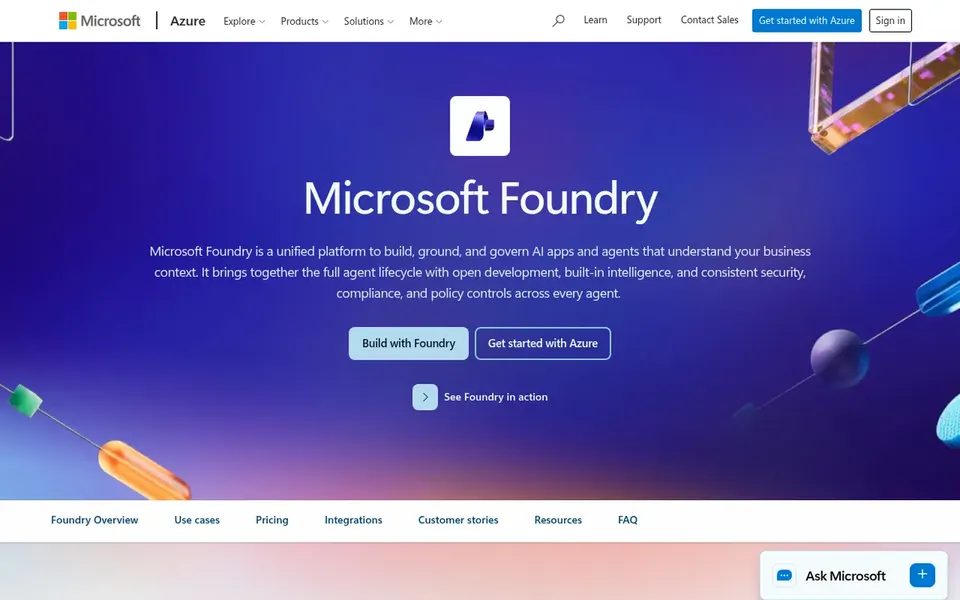
For Cloud-native AI app and agent development, Microsoft Azure AI Foundry is a natural candidate. Microsoft Azure AI Foundry is positioned as an AI app and agent factory meant to accelerate AI-driven, cloud-native development across industries.
Limits to weigh: Value relies on Azure alignment.
From a buyer's view, pick Azure AI Foundry when rapid cloud-native AI application development is the central goal. Worth adding: organizations outside the Microsoft ecosystem should assess integration and governance fit first. Microsoft Azure AI Foundry shows no starting price here, so confirm the cost on the vendor site. Trial and free access: Not stated.
Best for: Operating the business through an ontology
In short, Palantir Foundry is for operating the business through an ontology. Palantir Foundry is presented as an ontology and AI-powered operating system for the modern enterprise, with the idea of running your business as code.
Beyond that, the ontology concept links data to the real-world objects and decisions a business handles, which fits complicated operational environments where AI must link straight to workflows. Palantir Foundry is the better choice when operational decision-making, not general-purpose data science, is the priority. Palantir Foundry shows no starting price here, so confirm the cost on the vendor site. Free access: Not stated.
Where it is weaker: Best value in complicated operational settings.
Best for: Building and governing agents on Google Cloud
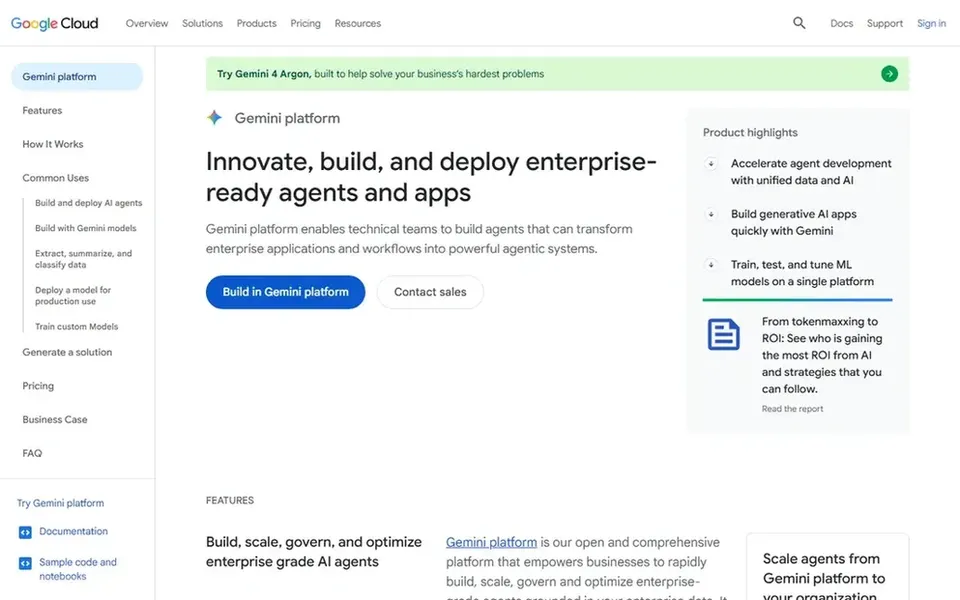
Google Cloud Vertex AI is built with building and governing agents on Google Cloud in mind. Google Cloud Vertex AI is described on its homepage as a full product for developers to build, scale, govern and optimize agents. More specifically, the emphasis on the full agent lifecycle, from creation through governance and optimization, makes it a natural consideration for engineering teams that treat agents as first-class applications.
Watch-outs: Agent focus may not include all data needs.
Organizations standardized on other clouds should weigh integration effort carefully. In practice, since the positioning centers on agents and developers, teams looking primarily for wide data warehousing or business-facing analytics may need complementary services. Check the vendor site for Google Cloud Vertex AI pricing; none is listed in this comparison. Trial and free access: Not stated.
Databricks Data Intelligence Platform is aimed squarely at unified data, analytics and AI work. Its homepage flags simplifying ETL, data warehousing, governance and AI on a single Data + AI Platform.
Where it is weaker: Overlaps with existing warehouse stacks.
The breadth is also the central caution: organizations with a mature, separate warehouse or BI stack may find overlap and duplication. Databricks is the more solid fit when data engineering, governance and AI genuinely belong on one foundation. No starting price is listed for Databricks Data Intelligence Platform here; confirm pricing on the vendor site. On free options: Not stated.
C3 AI Platform is designed for enterprise AI and agentic apps at scale. The C3 Agentic AI Platform, as described on its homepage, lets organizations build, deploy and operate enterprise AI and agentic applications at scale. For everyday use, choose C3 AI when production-grade agentic applications are the primary objective.
In practice, smaller deployments may not need the scale orientation. The emphasis on operating applications, not just building them, fits enterprises planning to run numerous AI workloads in production. It is a sensible candidate for organizations whose roadmap centers on agentic applications that must hold up under enterprise operating demands. No starting price is listed for C3 AI Platform here; confirm pricing on the vendor site. On free options: Not stated.
Honest limits: Narrower than full data platform suites.
Ask each vendor, from Microsoft Azure AI Foundry to C3 AI Platform, for a written quote; none of them publishes a starting price.
Read the limits listed for Microsoft Azure AI Foundry first: value relies on Azure alignment.
Check the integration list for C3 AI Platform against the tools you run today, and note which ones need a higher plan.
Verify that exporting from Databricks Data Intelligence Platform is possible on your plan and covers all your records.
Test how quickly Palantir Foundry answers a pre-sales question; it hints at how support will feel later.
How we picked
For each of the 5 tools we noted price, free plan or trial, fit for platform for enterprise AI data and the main limit, using vendor pages and documentation. Where a price is missing, the vendor does not list one publicly or ties it to a quote. Always confirm before budgeting. Order on the page follows fit for the typical buyer first, then price transparency and free access. Your own requirements should decide the final pick.
Every price and plan detail on this page comes from the vendors’ own websites. We did not run hands-on tests unless the text says so, and we do not publish star ratings or review scores. See how we score and our disclosure.
Keep your shortlist in one place
Paste prices, trial dates and notes from this guide into Ainotely, our AI note app. It files them into a topic and pulls out tasks like “cancel trial by Friday”. Free 7-day trial, no card needed.
What should an enterprise prioritize in an AI data system?
Start with how well the product links data engineering, governance and AI workloads instead of any single feature. Governance and trusted data matter most where AI outputs feed regulated or high-stakes decisions.
Is Microsoft Azure AI Foundry the right pick for everyone comparing platform for enterprise AI data?
No single tool suits every team. Microsoft Azure AI Foundry comes first because it fits Cloud-native AI app and agent development, while Palantir Foundry suits operating the business through an ontology and Google Cloud Vertex AI suits building and governing agents on Google Cloud. Match the tool to your own size, budget and workflow before deciding.
Does any tool for platform for enterprise AI data here have a free plan?
A permanent free plan is not offered by Microsoft Azure AI Foundry, C3 AI Platform or the other tools here. Plan a short evaluation period instead.
Do these tools publish their prices?
No. None of the tools, from Microsoft Azure AI Foundry to C3 AI Platform, shows a fixed starting price here, so budget time for quotes.
Are agent-focused products enough for enterprise AI data needs?
Systems like Google Cloud Vertex AI, Azure AI Foundry and C3 AI emphasize building, governing and operating agents and applications. They can anchor an AI strategy, but plenty of enterprises still pair them with broader data engineering and warehousing tools.
How are the tools for platform for enterprise AI data ordered?
The order follows typical fit for platform for enterprise AI data, with Microsoft Azure AI Foundry first and C3 AI Platform last, then price clarity and free access. It is editorial judgement, not a score, so another team could rank the tools differently.