For adaptable cross-team business modeling, Pigment is where this list starts. OneStream is the stronger choice for unified finance and operations EPM, while Anaplan suits enterprise-wide connected scenario planning. The other 3 tools in the list cover narrower or pricier cases.
Ainotely compared 6 tools for scenario planning software. The goal is a practical shortlist: published prices, free plan facts, best-fit use cases and honest limits for every entry.
Key takeaways
Pigment is the opening pick, best for adaptable cross-team business modeling.
The main caution on Workday Adaptive Planning: deep customization may need planning expertise.
Pricing across the list, from Pigment to SAP Analytics Cloud, is by quote only.
Pigment, SAP Analytics Cloud and the 4 others all need a premium plan or a trial, since no free plan is listed.
Pigment is aimed squarely at adaptable cross-team business modeling. From a buyer's view, teams that want a fixed, finance-only planning structure may find a more prescriptive product simpler to standardize.
The main drawbacks: May be more than small teams need.
Adaptable modeling environments can sprawl without clear ownership, so governance matters. Pigment does not show a starting price in this comparison, so check the vendor site for current pricing. Free options: Not stated.
OneStream is designed for unified finance and operations EPM. If your team needs a fast, narrow modeling tool instead of a full EPM environment, a lighter product may be more practical.
OneStream positions itself as an AI operating system for modern finance and a unified EPM product that links finance and operations so leaders see the full picture instead of one department's view. A unified enterprise product generally means a longer implementation and continuing administrative commitment. OneStream does not show a starting price in this comparison, so check the vendor site for current pricing. Free plan details: Not stated.
The main drawbacks: Needs planning and admin resources.
Best for: Enterprise-wide connected scenario planning
For enterprise-wide connected scenario planning, Anaplan is a natural candidate. Since Anaplan spans numerous functions, setup and model governance can take real effort, and smaller teams may find the scope bigger than they need.
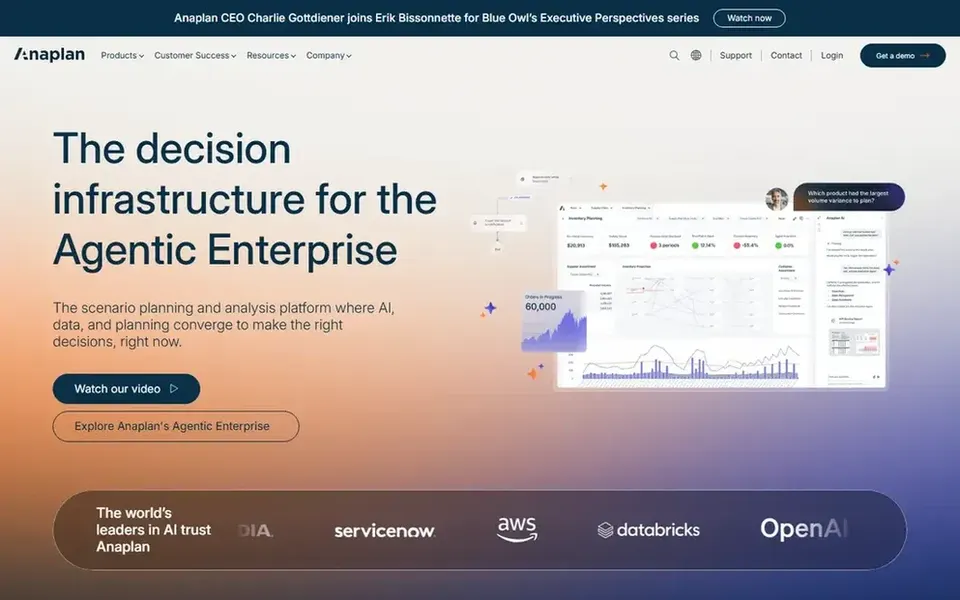
In practice, Anaplan is a scenario planning and analysis platform where AI, data, and planning converge, positioned as decision infrastructure for modern enterprises. Anaplan shows no starting price here, so confirm the cost on the vendor site. On free options: Not stated.
Points against: Wide product may take time to configure.
Best for: Finance, workforce, and operations planning
Workday Adaptive Planning targets finance, workforce, and operations planning. Collaborative budgeting and forecasting cycles are a typical use.
For everyday use, teams needing only light, occasional modeling may prefer a more straightforward choice. Workday Adaptive Planning does not show a starting price in this comparison, so check the vendor site for current pricing. Free access: Not stated.
Drawbacks to consider: Deep customization may need planning expertise.
What Workday Adaptive Planning does well: operations data.
Best for: Integrated planning with financial close
Oracle Fusion Cloud EPM is a good fit for integrated planning with financial close. The breadth of modules means implementation and administration need dedicated resources, and organizations outside the Oracle ecosystem may face additional integration work.
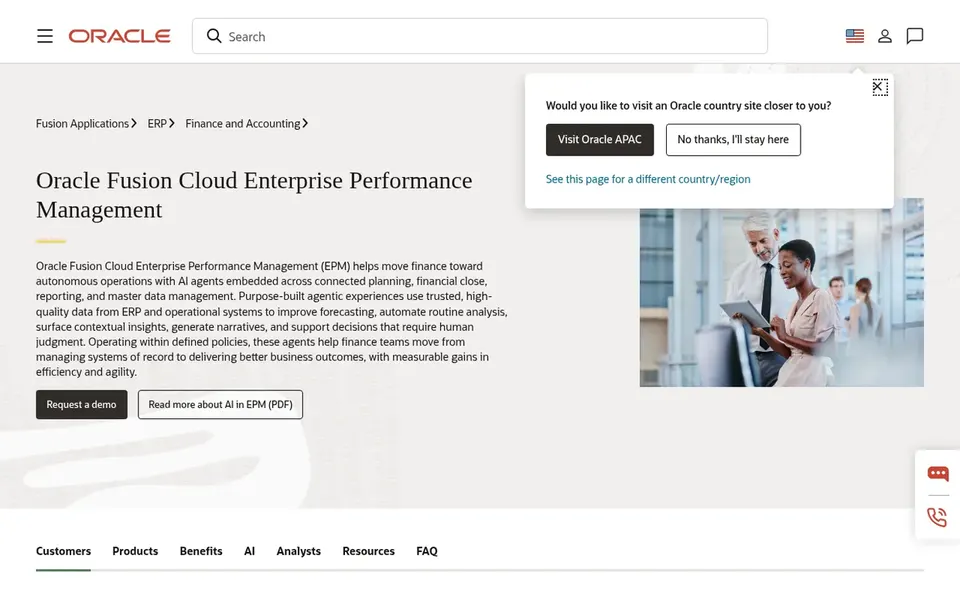
Oracle Fusion Cloud EPM is an enterprise performance management suite that embeds AI agents for planning, financial close, reporting, tax, and enterprise data management. Also, for a single-department planning need, a more focused system can be more straightforward to run. Oracle Fusion Cloud EPM does not show a starting price in this comparison, so check the vendor site for current pricing. Free options: Not stated.
Drawbacks to consider: Wide suite can be complicated to administer.
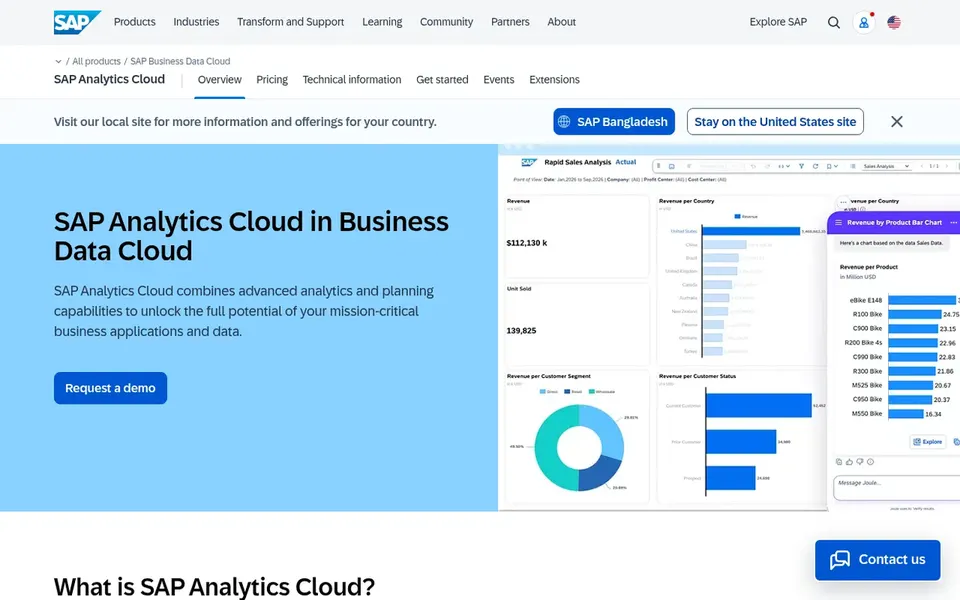
SAP Analytics Cloud is aimed squarely at Analytics-led planning and prediction. The product handles lots of ground, so advanced planning models may need careful configuration and skilled administrators.
It suits teams that want scenario planning to sit alongside dashboards and data visualization instead of in a separate tool. SAP Analytics Cloud shows no starting price here, so confirm the cost on the vendor site. Trial and free access: Not stated.
Trade-offs to know: Planning depth relies on configuration. Where it shines: Supports business intelligence alongside planning.
Ask each vendor, from Pigment to SAP Analytics Cloud, for a written quote; none of them publishes a starting price.
Read the limits listed for Pigment first: wide modeling scope needs governance.
See whether OneStream offers onboarding or training, and whether it is included in the price.
Ask the daily users to test Oracle Fusion Cloud EPM on a live task before you roll it out to everyone.
Read the plan comparison for SAP Analytics Cloud carefully; key features often start on a higher tier.
How we picked
Each tool was reviewed on what its vendor publishes: price, plan limits, core features and stated drawbacks. We did not run hands-on tests. Where a vendor does not publish a price, the entry says quote. Where a price depends on seats or billing term, the entry says so. The order reflects how well each tool fits the most common buying scenario for scenario planning software, then price clarity, then free plan access. It is a starting point, not a verdict.
Every price and plan detail on this page comes from the vendors’ own websites. We did not run hands-on tests unless the text says so, and we do not publish star ratings or review scores. See how we score and our disclosure.
Keep your shortlist in one place
Paste prices, trial dates and notes from this guide into Ainotely, our AI note app. It files them into a topic and pulls out tasks like “cancel trial by Friday”. Free 7-day trial, no card needed.
No. None of the tools, from Pigment to SAP Analytics Cloud, shows a fixed starting price here, so budget time for quotes.
How do these systems differ from spreadsheets?
Spreadsheet models are hard to govern and version as teams grow. Dedicated planning systems add connected data, controlled models, and reporting, which cuts manual reconciliation across scenarios.
What is scenario planning software used for?
It lets finance and operations teams model several future outcomes, for example demand shifts or budget changes, before committing to a plan. These products link data, drivers, and reporting so comparisons stay consistent.
Can I try these options before paying?
Not by default. None of the tools, from Pigment to SAP Analytics Cloud, lists a free plan or a free trial here, so ask each vendor for a demo before committing.
Is Pigment the right pick for everyone comparing scenario planning software?
No single tool suits every team. Pigment comes first because it fits flexible cross-team business modeling, while OneStream suits unified finance and operations EPM and Anaplan suits enterprise-wide connected scenario planning. Match the tool to your own size, budget and workflow before deciding.
What should I check before buying?
Confirm integrations with your existing systems, how models are administered, and the reporting you need. Also review implementation effort and training, since enterprise products frequently need dedicated planning resources.